Kazakhstan, Italy partner on sustainable aviation fuel production
Kazakhstan and Italy agreed to back SAF production, building on a 54,000-tonne-a-year project tied to BioOperations bioethanol. Demand could reach 70,000 tonnes by 2030.

Kazakhstan and Italy agreed on June 24 to cooperate on sustainable aviation fuel production, as Samruk-Kazyna and MAIRE S.p.A. signed a deal after the Kazakhstan-European Union Round Table.
The partnership follows an October 8, 2024 agreement in Milan, when NEXTCHEM and KazMunayGas-Aero said they would work together on SAF, low-carbon hydrogen through CO2 capture and circular solutions. That earlier pact was signed by Ildar Shamsutdinov, general director of KMG AERO, and Alessandro Bernini, MAIRE’s chief executive, in the presence of Kazakhstan’s Minister of Trade and Integration Arman Shakkaliev and Lombardy President Attilio Fontana.
The project has already moved beyond diplomacy into feasibility work. The European Bank for Reconstruction and Development said in June 2024 that a study completed with ICF, KazMunayGas and Air Astana pointed to a first SAF production facility in Central Asia by 2029. Kazakhstan’s Civil Aviation Committee said the country became the first CIS member to join ICAO’s ACT-SAF program, and officials tied SAF to the Carbon Neutrality Strategy through 2060 and Kazakhstan’s Paris Agreement commitments.
Feedstock selection has also been narrowed. KazMunayGas-Aero said consultants recommended alcohol-to-jet technology using bioethanol produced by BioOperations LLP. KazFoodProducts said in April 2025 that the full feasibility study for Kazakhstan’s first SAF plant was expected to be finalized by the end of 2025, with BioOperations expected to supply the bioethanol feedstock.
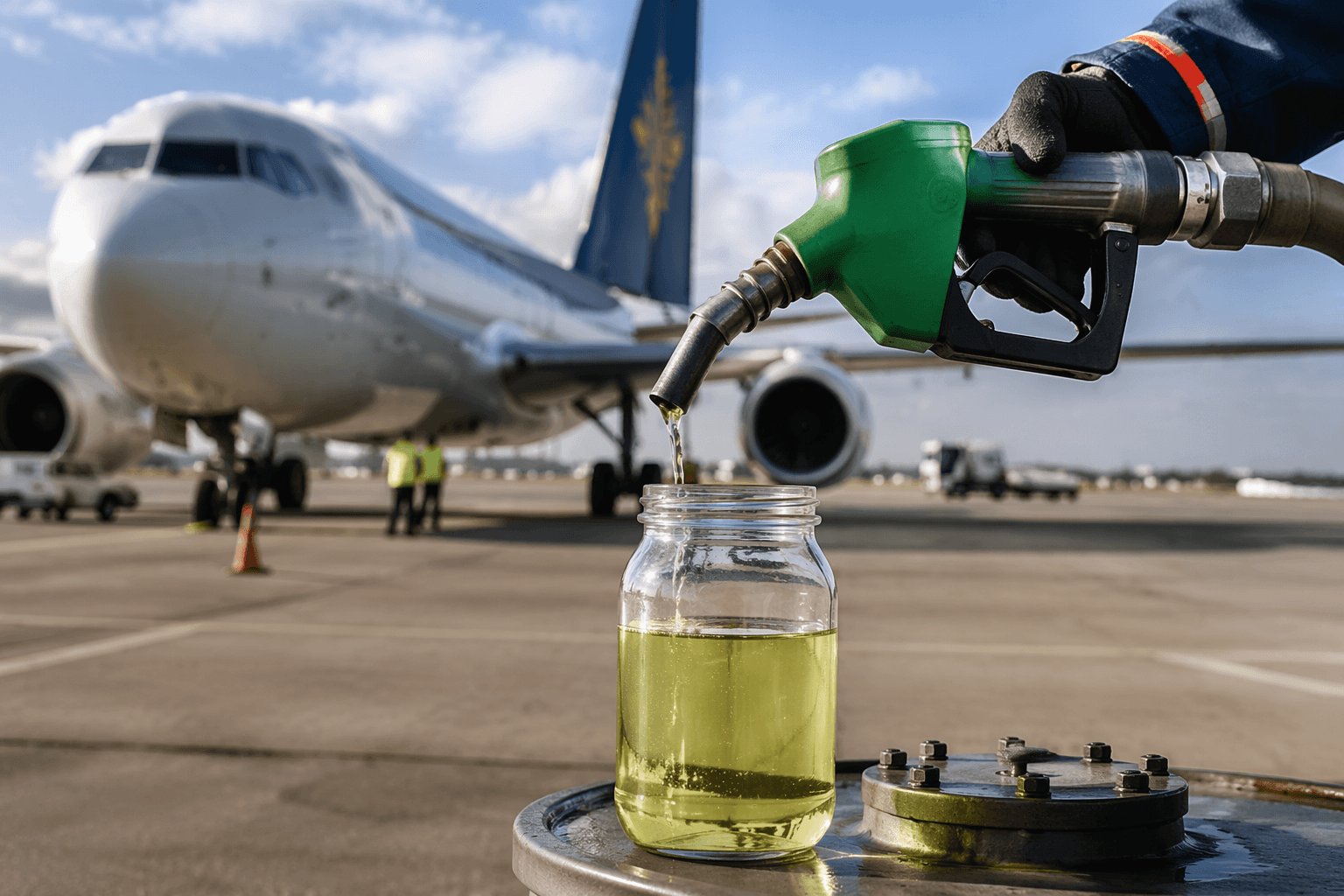
Capacity estimates still look modest against demand projections, but they give the project a concrete industrial scale. KazMunayGas-Aero said preliminary production capacity was estimated at 54,000 tonnes of aviation fuel a year, while later official and trade estimates put Kazakhstan’s SAF demand at as much as 70,000 tonnes annually by 2030.
That leaves the project at a familiar crossroads for new SAF buildouts: it has a named feedstock, a preferred conversion pathway and repeated institutional backing, but the next step will be turning those technical agreements into plant design, financing and commercial offtake.
This article was produced by Prism’s automated news system from verified source data, official records, and press releases, then run through automated quality and moderation checks before publishing. The system is built and supervised by the people who set the standards it runs under. Read our full AI policy.
Did this article answer your question?