LG Chem to demo carbon dioxide to sustainable aviation fuel technology
LG Chem will demo CO2-to-SAF technology under South Korea’s CCU Mega Project, joining a push that remains at early demonstration stage.
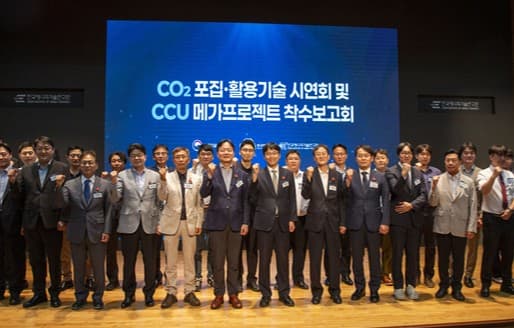
LG Chem on June 24 said it will join South Korea’s Carbon Capture and Utilization Mega Project to demo carbon dioxide-to-sustainable aviation fuel technology. The move puts the company into a government-backed CCU push that South Korea’s Ministry of Science and ICT says is meant to speed industrialization of carbon capture and utilization.
The ministry launched its broader Carbon Capture and Utilization Initiative on April 4, 2025, at the Korea Science and Technology Center in Seoul, with more than 150 participants, including First Vice Minister Lee Chang-yune. MSIT defines CCU as technology that captures carbon dioxide from industrial sources or the atmosphere and converts it into useful materials, a framing that puts LG Chem’s SAF work inside a wider push to turn emissions into products rather than waste streams.
For LG Chem, the project sits alongside a broader climate program that the company says is aimed at zero carbon emissions by 2050. The company has also said it developed a dry reforming of methane facility in Korea, which it describes as the first of its kind in the country, and that it is pursuing a CCU mega-project with Posco Holdings and the Korea Research Institute of Chemical Technology to convert carbon dioxide into valuable resources.

That portfolio shows where LG Chem is placing its bets on carbon utilization, but the SAF demo also shows how early the field remains. Sustainable aviation fuel is one of the few near-term decarbonization tools available to airlines, and e-SAF made from captured carbon dioxide is still at the demonstration stage rather than commercial scale. LG Chem’s project keeps the technology in the pilot lane, where the key questions remain the same across the sector: how much carbon dioxide can actually be converted, what power source feeds the process, and whether the carbon balance can compete with established HEFA and other SAF pathways.
This article was produced by Prism’s automated news system from verified source data, official records, and press releases, then run through automated quality and moderation checks before publishing. The system is built and supervised by the people who set the standards it runs under. Read our full AI policy.
Did this article answer your question?