Maersk completes first voyage powered entirely by ethanol
Maersk’s Laura Mærsk ran a 100% ethanol voyage, proving the fuel can work on board, not that it is ready to scale.
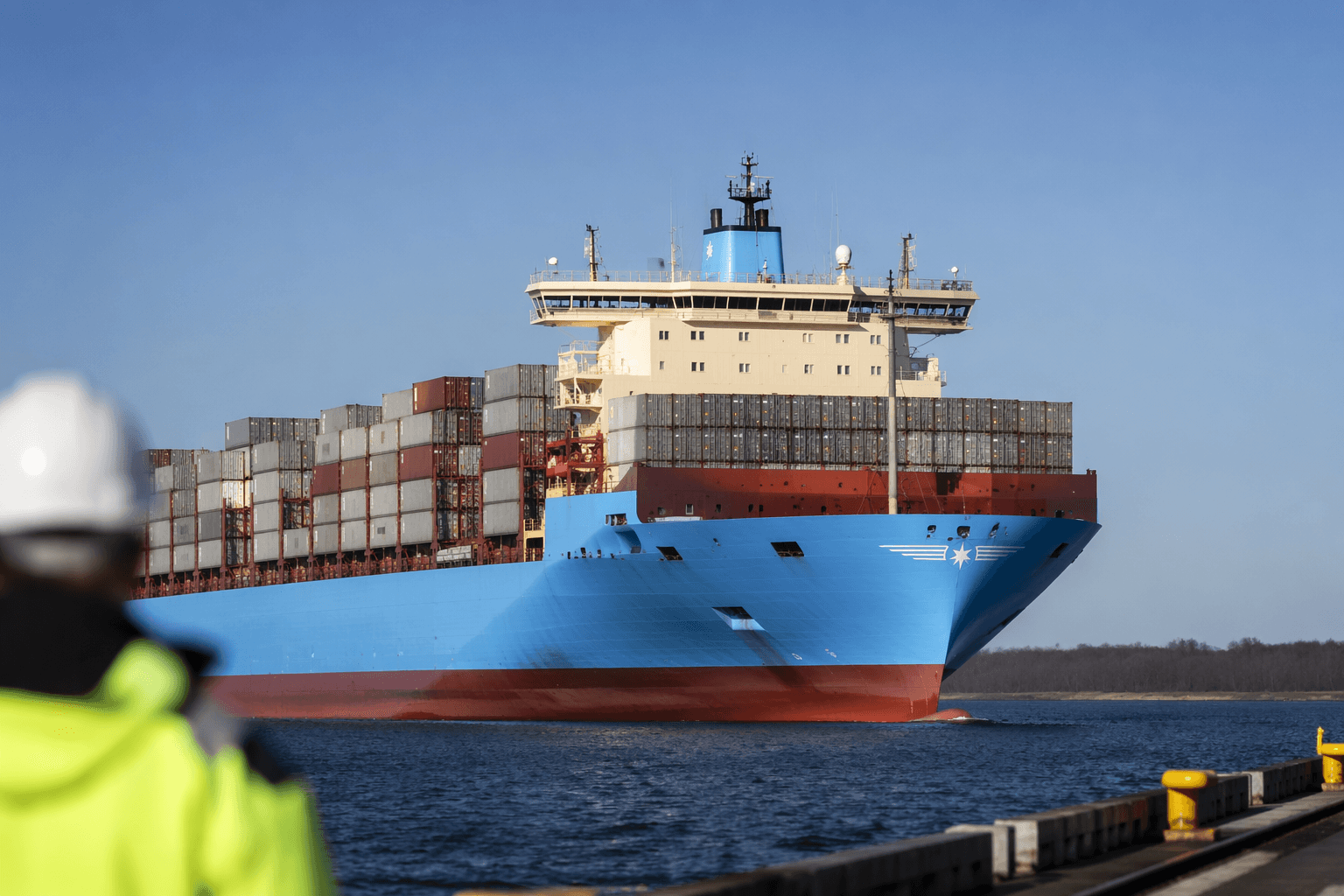
A.P. Moller - Maersk on May 20 said Laura Mærsk completed the company’s first voyage powered entirely by ethanol in the first quarter of 2026, a 100% ethanol run that tested whether another liquid fuel can operate reliably at sea.
Maersk said the vessel used sustainably sourced ethanol and that the fuel performed reliably throughout the journey. The carrier described the sailing as a milestone in maritime decarbonization, but the result reads more like an operational proof point than a commercial pivot. The test showed ethanol can be handled and burned on board in a marine setting, while the harder questions of fuel availability, engine compatibility, cost and lifecycle emissions remain in front of the market.
That caution fits Maersk’s broader fuel strategy. The Copenhagen-based carrier says it is targeting net-zero greenhouse-gas emissions by 2040 from a 2022 base year, with decarbonization built around efficiency measures and energy shifts. Rather than betting on one molecule, Maersk has been building a portfolio around methanol and other alternative fuels, a hedge that reflects how slowly marine fuel supply chains are being assembled.
Laura Mærsk has been central to that learning curve. Maersk said an initial trial in October and November 2025 used a 10% ethanol and 90% e-methanol blend, then the company moved to a 50-50 ethanol-methanol blend before the all-ethanol voyage. Maersk also said Laura Mærsk received the first e-methanol from European Energy’s Kassø facility in Aabenraa, Denmark, on May 13, 2025, linking the vessel’s tests to one of the few commercial-scale e-methanol projects now in operation.
The ethanol work also comes against a backdrop of rapid but still limited fleet changes. Maersk said it had 21 dual-fueled vessels in service at the end of the first quarter of 2026. The company ordered its first dual-fuel methanol vessel in 2021, followed by six more in June 2023. It later said Maersk Halifax became the first large vessel in the industry converted to dual-fuel methanol in 2024, while ten dual-fuel methanol vessels joined the fleet in 2025 and six more were due in 2026.
Maersk has said the first volumes of some alternative fuels are expected in 2027, underscoring that the ethanol voyage is still part of a scaling process, not evidence of a finished fuel transition. For now, the main takeaway is operational: ethanol can run a ship. The unanswered part is whether it can be supplied in enough volume, at a competitive cost and with the emissions profile shipping regulators and charterers will require.
This article was produced by Prism’s automated news system from verified source data, official records, and press releases, then run through automated quality and moderation checks before publishing. The system is built and supervised by the people who set the standards it runs under. Read our full AI policy.
Did this article answer your question?