Malaysia weighs B50 biodiesel rollout as depot upgrade costs loom
Malaysia is weighing B50 against depot upgrade costs, while B30 would need 1.60 million tonnes of palm oil a year.

Malaysia's Ministry of Plantation and Commodities will assess a B50 biodiesel rollout after reviewing depot upgrade costs and blending readiness on June 23. Any expansion beyond current blends depends on infrastructure investment and the financial burden of modernising existing fuel sites.
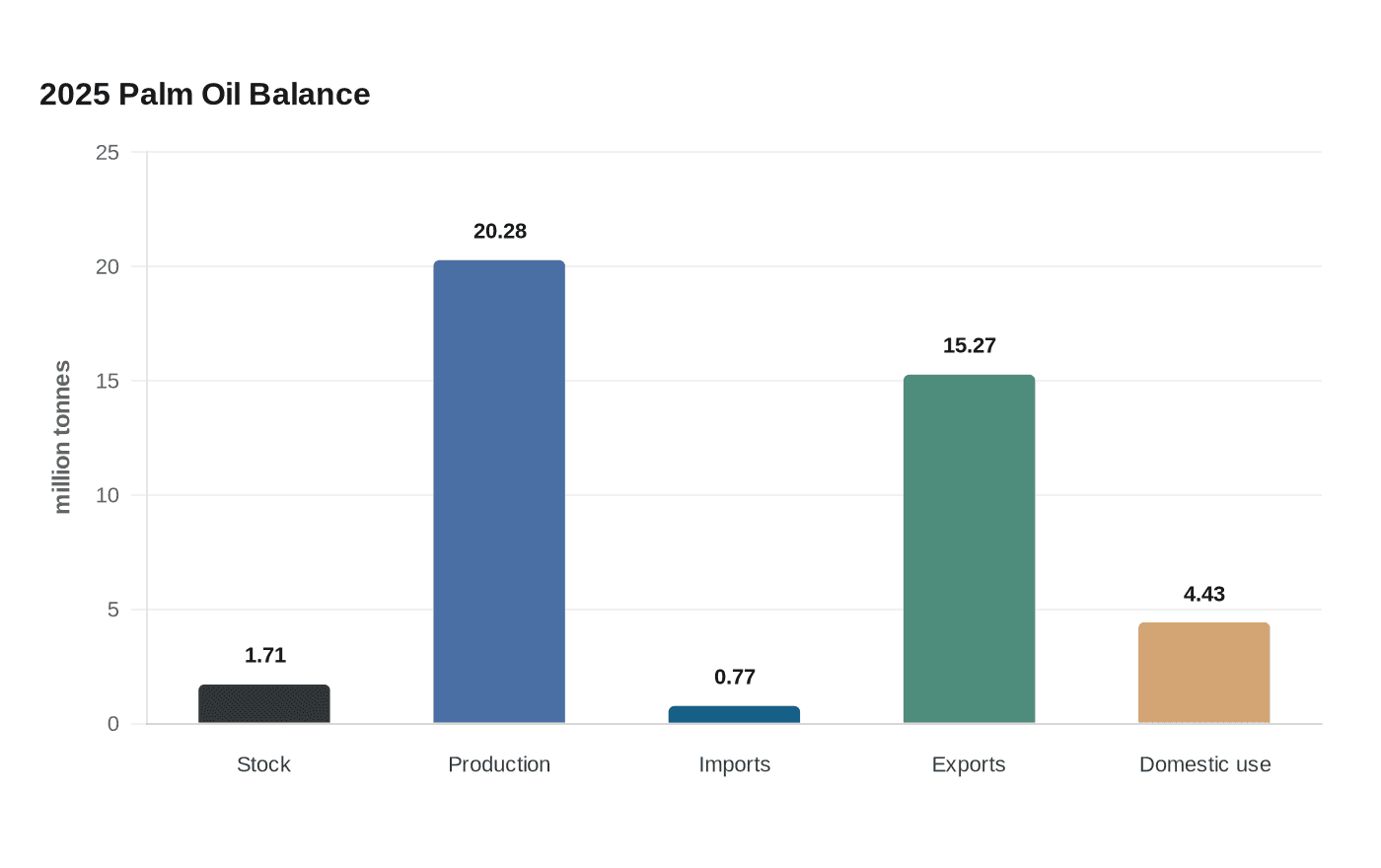
In a written reply to Parliament, Malaysia's Ministry of Plantation and Commodities set the country's 2025 palm oil supply balance at 22.76 million tonnes, including 1.71 million tonnes of preliminary stock, 20.28 million tonnes of production and 0.77 million tonnes of imports. Of that total, 15.27 million tonnes were earmarked for export demand and 4.43 million tonnes for domestic use, including biodiesel. On that basis, a nationwide B30 blend would require 1.60 million tonnes of palm oil a year, or about 7.0% of total supply.
Malaysia's longer-term policy points to B30 by 2030. The National Biodiesel Programme will be expanded in phases across Malaysia to reach B30 for land transportation by 2030, alongside the National Agricommodity Policy, the National Transport Policy 2019-2030 and the National Energy Transition Roadmap. The National Transport Policy 2019-2030 calls for a greener transport ecosystem, with evidence-based planning and infrastructure upgrades. Malaysia's biofuel industry began in the 1980s, the first palm biodiesel pilot plant launched in 1986, the National Biofuels Policy was introduced in March 2006, B7 was implemented nationwide in December 2014 and B10 was approved in November 2018 before becoming mandatory on February 1, 2019.

B20 is already in place in Labuan, Langkawi and Sarawak, excluding Bintulu. The Ministry of Plantation and Commodities began targeted B20 planning in 2020, but higher blends have stayed limited because of infrastructure constraints. In February 2025, Plantation and Commodities Minister Johari Abdul Ghani said there was insufficient infrastructure or investment to implement B20 nationally. The ministry put a nationwide B20 rollout at about RM643 million in infrastructure spending.
The Malaysian Biodiesel Association has urged the government to accelerate higher-blend implementation, arguing that locations with technically capable blending systems should move immediately to B10 or B20. B7 remains the applicable industrial blend.
This article was produced by Prism’s automated news system from verified source data, official records, and press releases, then run through automated quality and moderation checks before publishing. The system is built and supervised by the people who set the standards it runs under. Read our full AI policy.
Did this article answer your question?