Mercedes-AMG Petronas covers 99% of European logistics with HVO100
Mercedes-AMG Petronas said HVO100 covered 99% of its European truck logistics in 2025, avoiding more than 1,190 tonnes of CO2e since 2022.
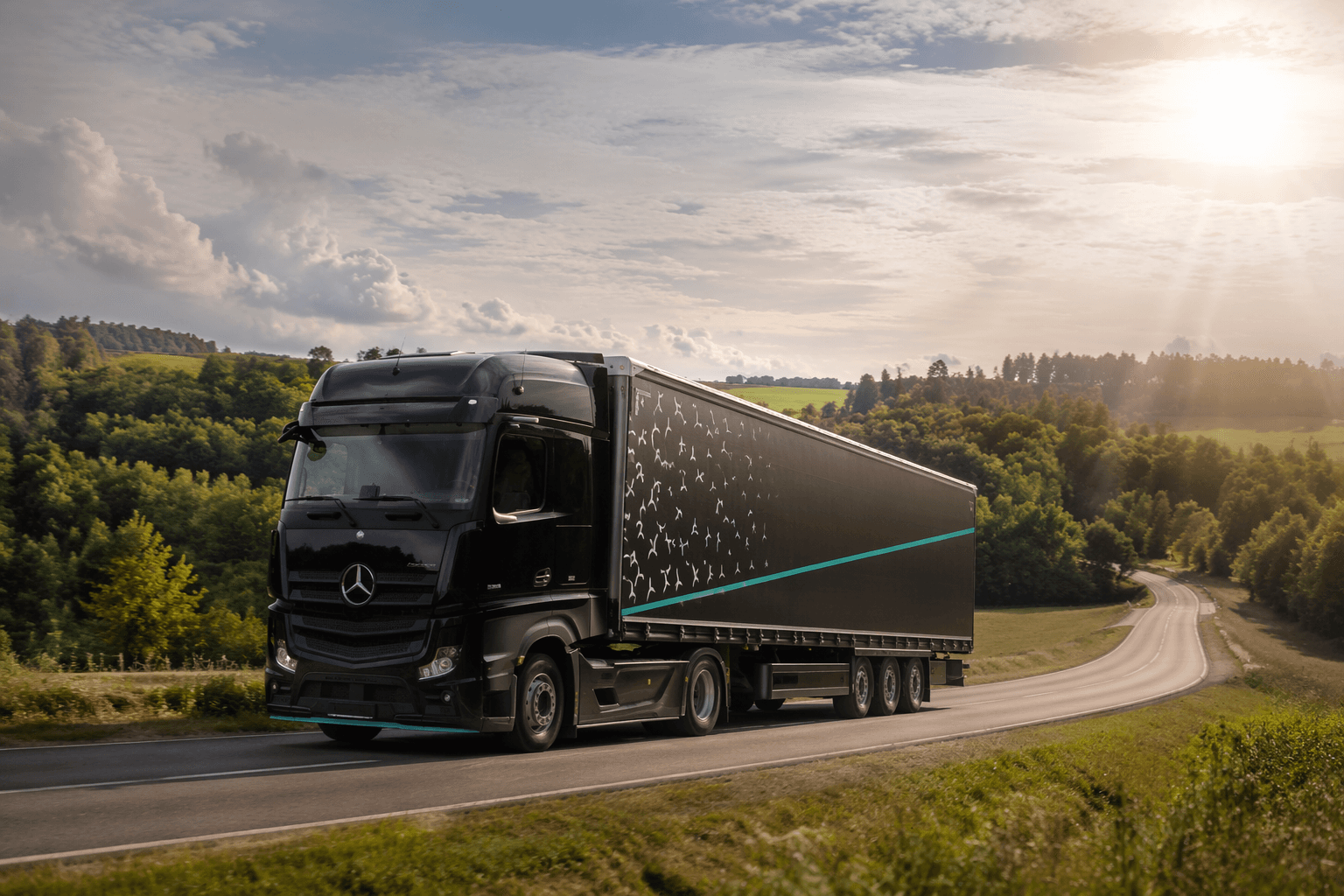
Mercedes-AMG PETRONAS F1 Team on June 29 said 99% of its European race and marketing truck logistics ran on HVO100 in 2025. The team said the biofuel rollout, which began with a 2022 pilot, has avoided more than 1,190 tonnes of CO2e across those freight movements.
Mercedes says HVO100 is a second-generation, drop-in biofuel that can cut lifecycle emissions by up to 81% versus standard diesel. Alice Ashpitel, the team’s head of sustainability, has tied every kilometre driven on biofuel to the squad’s Net Zero by 2040 goal, while the broader programme now targets net zero for total Race Team Control emissions by 2030 and across all scopes by 2040. The initiative is being run with PETRONAS and the team’s logistics partners as part of a title-partner-led decarbonization push.

The 2025 result builds on an earlier freight trial that Mercedes said delivered an 89% reduction in CO2 emissions. Formula1.com reported in 2023 that Mercedes-Benz Actros trucks would move freight across nine European races on HVO100, with each truck expected to cover about 9,000 to 10,000 kilometres. Mercedes said that programme reduced per-kilometre freight emissions by 89%, giving the team a concrete benchmark rather than a general sustainability claim.
Mercedes said it saved more than 410 tonnes of CO2e from European race and marketing truck logistics in 2025 alone. The company also said it achieved 100% generator coverage for the first time, while expanding the logistics effort into sustainable aviation fuel and electric trucking. That includes deployment of the Mercedes-Benz Trucks eActros 600 across all nine European races, alongside plans to extend HVO100 use outside Europe in future seasons.
Mercedes published its 2025 Sustainability Report on June 29, framing the logistics shift as part of a wider push to cut emissions across racing freight, generators and aviation. For HVO suppliers, the programme shows that certified renewable diesel is already being used in a high-utilization, time-sensitive fleet that depends on repeatable fuel performance as much as emissions accounting.
This article was produced by Prism’s automated news system from verified source data, official records, and press releases, then run through automated quality and moderation checks before publishing. The system is built and supervised by the people who set the standards it runs under. Read our full AI policy.
Did this article answer your question?