Platts changes Ethanol T2 Rotterdam loading window from July 1
Platts tightened Rotterdam ethanol pricing on July 1, cutting the loading window to 5-15 days and lifting the benchmark’s minimum GHG savings to 75%.
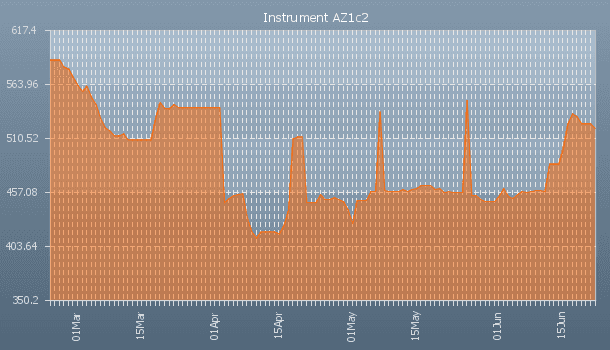
Platts on July 1 changed the Ethanol T2 FOB Rotterdam loading window to a single 5-15 day forward strip, tightening the timing for bids, offers and barge nominations in the European ethanol market.
Under the new methodology, buyers must nominate a five-day laycan within that 5-15 day strip at least 48 hours before the first day of the laycan, and they must also nominate the barge ETA at least 48 hours before arrival. Platts said the move was aimed at the loading delays and logistical limits that have been evident in Rotterdam, where a narrower strip is intended to give the market a clearer window for price discovery and execution.

The change sits alongside a broader recalibration of the benchmark’s carbon spec. From July 1, Platts raised the minimum greenhouse gas savings reflected in Ethanol T2 FOB Rotterdam barge assessments to 75% from 64.3%, which lowers the maximum carbon intensity to 23.5 g CO2e/MJ using a 94 g CO2e/MJ fossil fuel comparator under the European Commission’s RED II framework. Platts said individual Proof of Sustainability certificates should not fall below 64.3% GHG savings unless mutually agreed otherwise, and that averaging of GHG savings across PoS certificates will be standard until Dec. 31, 2028.
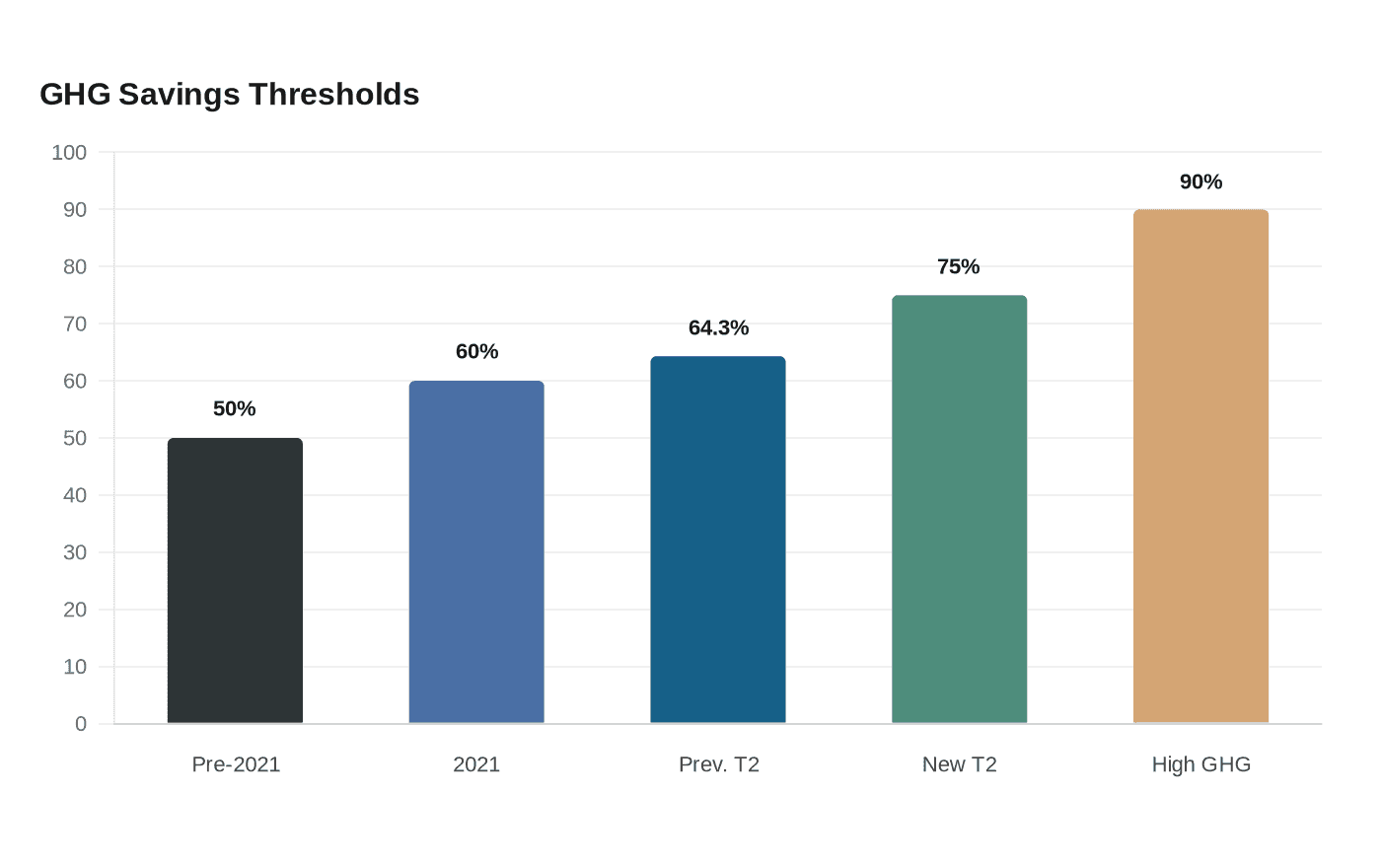
The tighter carbon bar also follows a longer policy run-up. Platts opened consultation on the GHG change on Aug. 27, 2024, extended it on May 21, 2025, published a proposal on July 17, 2025 and issued a decision note on Sept. 29, 2025. Platts had already been ratcheting the benchmark upward over time, lifting the minimum GHG savings threshold for T2 FOB Rotterdam from 50% to 60% effective Jan. 4, 2021.
Platts also expanded the higher-spec leg of the market last year. On Sept. 22, 2025, it renamed the former Ethanol T2 FOB Rotterdam Premium assessment as Ethanol T2 High GHG savings, FOB Rotterdam, and raised its minimum GHG savings requirement to 90%, equal to 9.4 g CO2e/MJ. On Oct. 15, 2025, Platts added that High GHG Savings assessment to eWindow and made Nabisy-registered Proof of Sustainability documentation a standard requirement. Nabisy is Germany’s web-based sustainable biomass application, operated by the Federal Office for Agriculture and Food.
The methodology shift matters beyond physical barrels. ICE Futures Europe lists Ethanol T2 FOB Rotterdam Barges (Platts) futures that settle against the Platts daily assessment, so changes to the benchmark can feed directly into contract settlement, hedging behavior and the way producers and blenders price cargoes tied to Rotterdam.
This article was produced by Prism’s automated news system from verified source data, official records, and press releases, then run through automated quality and moderation checks before publishing. The system is built and supervised by the people who set the standards it runs under. Read our full AI policy.
Did this article answer your question?