POET breaks ground on Shelbyville expansion to double ethanol output
POET broke ground on a Shelbyville expansion that will lift annual ethanol output to 193 million gallons and add demand for 32 million bushels of Indiana corn.

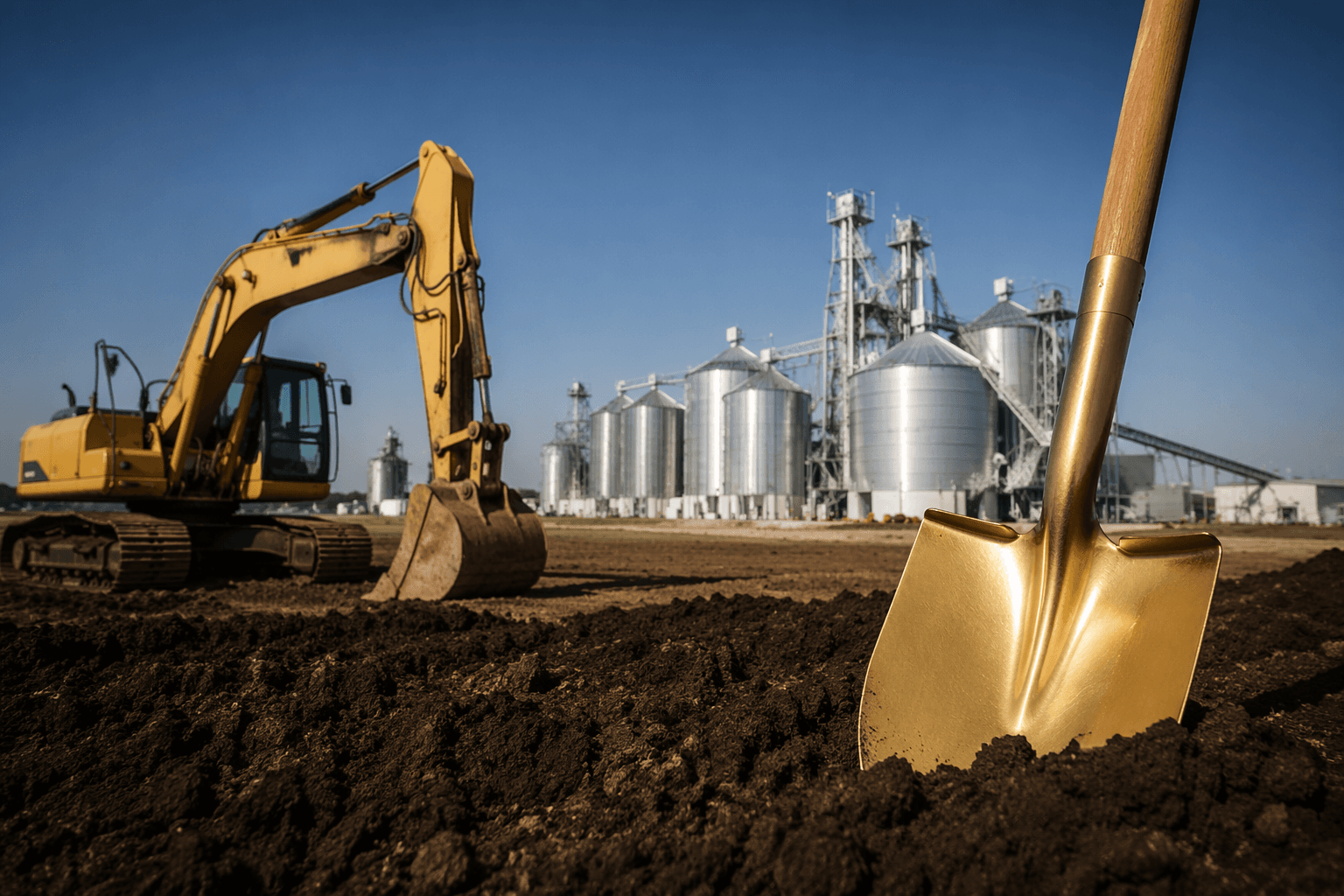
POET on June 16 broke ground on a Shelbyville, Indiana expansion that will double ethanol capacity at POET Bioprocessing – Shelbyville. The project will raise annual output from 98 million gallons to 193 million gallons, add 25 full-time jobs and double dried distillers grains and corn oil production.
The ceremony drew area farmers, community members, city officials and state officials, putting the plant’s role in the local grain economy on display. Mayor Scott Furgeson of Shelbyville and POET executives from Sioux Falls, South Dakota, joined the program, along with U.S. Rep. Jefferson Shreve, who cast the project as a long-term demand driver for Indiana corn.
Shreve said the expansion creates “stable domestic demand for 32 million additional bushels of Indiana corn each year.” That figure matters in Shelby County and across central Indiana, where a larger ethanol draw can support corn basis, shuttle loading, truck traffic and the local elevator system that moves crop from field to plant.
POET said the Shelbyville project will be completed by the end of 2027. The company first announced the expansion on Jan. 7 and said then that it operates five bioethanol facilities in Indiana. POET framed the investment as support for American agriculture, domestic energy production and the wider bioeconomy, while also pointing to growing demand for American-made biofuel and bioproducts.
For the ethanol sector, the Shelbyville buildout shows where capital is still flowing: into existing Midwestern plants with established corn supply, coproduct streams and logistics. Doubling a facility like Shelbyville does more than add gallons. It also expands DDGS and corn oil output, deepens local corn demand and gives POET a larger base of operating barrels without the delay and cost of a new greenfield site. That is the kind of scale-up that can keep a plant competitive as producers weigh margin pressure, policy upside and the need to stay efficient enough for the next growth cycle.
This article was produced by Prism’s automated news system from verified source data, official records, and press releases, then run through automated quality and moderation checks before publishing. The system is built and supervised by the people who set the standards it runs under. Read our full AI policy.
Did this article answer your question?