Ricketts leads bipartisan push backing renewable fuels month in Nebraska
Pete Ricketts led a bipartisan Senate resolution marking May 2026 as Renewable Fuels Month, a symbolic boost as EPA and Treasury pressure points loom.

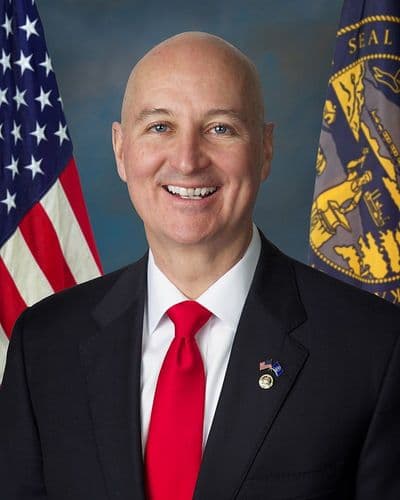
Pete Ricketts on May 21 led a bipartisan U.S. Senate resolution designating May 2026 as Renewable Fuels Month, giving the biofuels industry a public show of support at a moment when policy decisions on the Renewable Fuel Standard and Section 45Z still matter far more than symbolism.
The resolution did not alter compliance obligations, RIN demand or tax-credit rules. Even so, it landed as a useful political signal for an industry trying to keep its case in front of lawmakers while the EPA’s 2026-2027 RFS rule moves into effect in mid-June and Treasury continues sorting through 45Z implementation questions. For renewable fuels advocates, the timing mattered as much as the text: it put senators on record backing an industry that now has to defend volumes, credits and market access on several fronts at once.

Supporters have been trying to tie that policy fight to both agriculture and energy. Renewable fuels remain a market for corn, soybeans and other feedstocks, while also serving as a tool for cutting carbon intensity in transportation and aviation fuels. That dual role has become central to the industry’s pitch in Washington and in farm country, where producers want stable domestic demand, stronger farm income and a clearer line of sight on fuel price stability.
The resolution also fit into a broader effort to keep bipartisan messaging alive around the Renewable Fuel Standard, the 45Z clean fuel production credit and state and federal low-carbon fuel programs. Those policy lanes are increasingly linked for producers, refiners and traders, particularly as compliance season approaches and harvest planning gets closer. In practice, that means the industry is looking for more than a month-long resolution: it wants mandate certainty under the RFS, clearer tax-credit treatment under 45Z and continued access for renewable fuels in state and federal carbon programs.
The Nebraska-backed push underscored how renewable fuels remain politically relevant in 2026, even when the immediate action is largely declaratory. For biofuels supporters, the resolution was not the finish line. It was a reminder that the real market-moving decisions are still in front of EPA and Treasury.
This article was produced by Prism’s automated news system from verified source data, official records, and press releases, then run through automated quality and moderation checks before publishing. The system is built and supervised by the people who set the standards it runs under. Read our full AI policy.
Did this article answer your question?