Section 45Z could reward lower-carbon corn and soybeans
45Z ties producer pay to carbon intensity, creating a path for lower-carbon corn and soybeans to earn premiums as Treasury rules take shape.
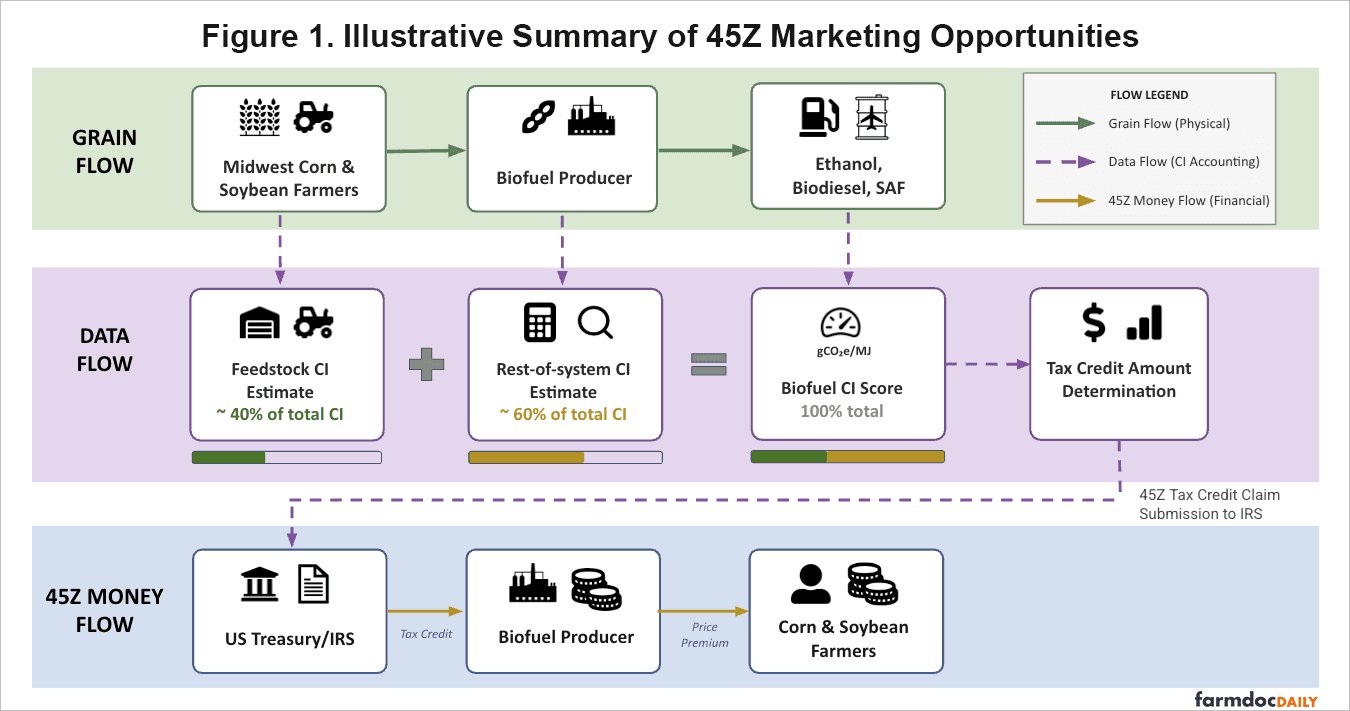
farmdoc daily on June 18 said Section 45Z could steer value toward lower-carbon corn and soybeans as producers chase a credit tied to carbon intensity. The Clean Fuel Production Credit is aimed at biofuel producers, not farmers, but its payout rises and falls with the carbon profile of the final fuel. That leaves grain handling, feedstock sourcing and production practices in the pricing conversation.
How 45Z is built
Section 45Z, also called the Clean Fuel Production Credit, was created by Congress in the Inflation Reduction Act of 2022 and codified in 26 U.S.C. 45Z. Treasury describes it as a per-gallon, or gallon-equivalent, credit for clean transportation fuel producers, with the size of the credit determined by carbon intensity. The IRS says the credit is available beginning January 1, 2025, which makes it a live planning issue for plants, marketers and feedstock suppliers.
That structure matters because the credit is not written as a direct payment to corn and soybean growers. Instead, it is captured by the fuel producer, who may then have an incentive to lower the carbon intensity of the finished fuel by changing inputs, process energy or sourcing decisions. In practice, that creates a possible premium for grain that can be shown to have a lower feedstock carbon intensity score.
Why carbon intensity is the money metric
Under 45Z, carbon intensity is the number that determines who gets paid and how much. If a producer can bring down the CI of the fuel, the per-gallon credit improves, so lower-carbon feedstocks become part of the margin stack. That is why the farmdoc daily analysis, by Zhangliang Chen and Jonathan Coppess of the University of Illinois Urbana-Champaign, treats feedstock CI as the key open question for corn and soybeans.

For the Midwest grain belt, the issue is practical rather than theoretical. A lower CI score on corn or soybeans could reward production practices that reduce greenhouse-gas emissions, including changes in fertilization, tillage, cover-crop use and other on-farm choices that feed into the final score. The market test is whether biofuel producers will translate that lower score into a cash premium, or whether the benefit stays inside the plant gate.
The same logic applies across the biomass base. If the producer can document lower-carbon inputs, the fuel path becomes more attractive under the credit. If not, the value of the tax credit will be driven by the baseline CI of the fuel and the emissions profile of the production chain.
Where Treasury and IRS stand
Treasury and IRS released initial Section 45Z guidance on January 10, 2025, then followed with proposed regulations published in the Federal Register on February 4, 2026. Those proposed rules address emissions-rate calculations, certification and registration requirements, giving the industry its first detailed map of how the credit is likely to be administered. The regulatory framework is still the central reference point for developers and tax teams trying to understand what qualifies.
The IRS guidance makes one requirement especially important: taxpayers must be registered with the IRS using Form 637 at the time of production to claim the credit. That registration step puts a compliance gate in front of the credit and turns tax administration into an operating issue, not just a filing exercise. Producers that miss the registration timing could find themselves out of the credit window even if the fuel itself qualifies.
The proposed regulations also reinforce that the credit depends on documented emissions rates. That pushes producers toward better data collection on feedstocks, process energy and certification records. For grain suppliers, that means the discussion is no longer only about bushels and basis, but about traceability, verification and the carbon score attached to the crop.
What the grain market could see
The biggest commercial question is whether lower-carbon corn and soybeans will command a premium. The farmdoc daily piece frames that as the central policy and market debate, because the tax credit is designed to reward the fuel producer but could spill value back into the supply chain if producers decide lower-CI feedstocks improve the economics enough to pay more for them. That would change the incentive structure for growers in the Midwest and for biofuel plants competing for the best feedstock slate.
If that happens, the winners would likely be growers who can document practices that lower CI, and plants that can assemble supply chains with cleaner carbon profiles. The losers would be producers tied to higher-emissions feedstock systems that cannot clear the same credit value. The split would not be about acreage alone, but about the carbon footprint attached to that acreage.
The policy debate is still open because 45Z sits at the intersection of tax law, fuel compliance and farm production. Chen and Coppess place the issue in a broader question facing the biofuels sector: whether markets will begin paying for grain production practices that reduce greenhouse-gas emissions. Their June 18 piece, part of a farmdoc daily series on 45Z and carbon intensity, follows an introductory discussion published May 27 and signals that the methodology around CI scoring will decide who captures the upside.
For now, the commercial signal is clear. Section 45Z does not write checks to farmers, but it can alter the price of the grain they grow if biofuel producers decide carbon intensity deserves a premium. The credit’s value will flow through the supply chain only if the industry can measure it, certify it and turn it into a bid.
This article was produced by Prism’s automated news system from verified source data, official records, and press releases, then run through automated quality and moderation checks before publishing. The system is built and supervised by the people who set the standards it runs under. Read our full AI policy.
Did this article answer your question?