Shanghai Port sets national record with 3,000-tonne green methanol bunkering
Shanghai Port moved 3,000 tonnes of green methanol at anchor on June 21, its first ship-to-ship bunkering in anchorage waters and a national record.
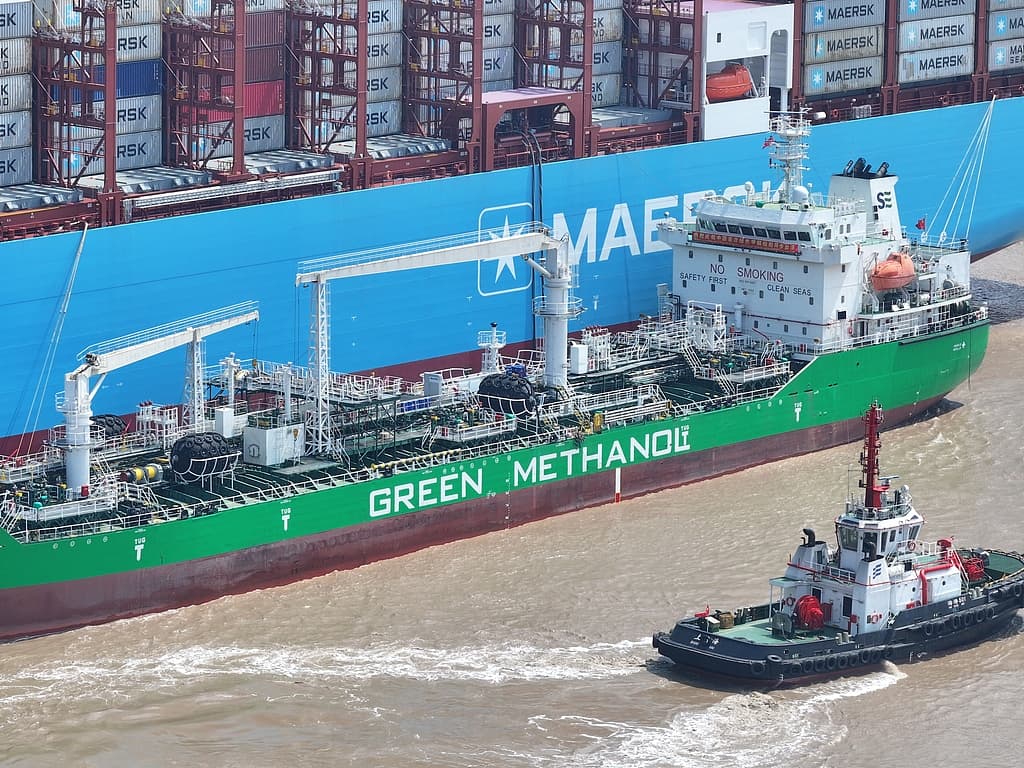
Shanghai Port on June 21 delivered 3,000 tonnes of green methanol at the Lvhuashan South anchorage, a national record for anchorage bunkering. The ship-to-ship transfer, carried out by the methanol bunker vessel Haijang Zhiyuan to the container ship Han Xin Qing Mao, was Shanghai Port’s first methanol operation in anchorage waters.
China’s first ship-to-ship green methanol bunkering at Yangshan Port came in April 2024, when Haigang Zhiyuan supplied 504 tonnes to Astrid Maersk. In March 2025, Shanghai Port bunkered about 2,902.5 tonnes of domestically produced green methanol to HMM Green at Yangshan, the port’s first use of domestic green methanol.
On May 20, 2026, the port completed a SIMOPS methanol bunkering at Haitong Terminal in Waigaoqiao Port Area, with Hai Gang Zhi Yuan supplying 1,000 cubic meters of methanol to the 9,300-CEU roll-on/roll-off ship CM HONG KONG while cargo work continued alongside the refueling.
Shanghai can now synchronously bunker LNG and green methanol. Shanghai’s energy and maritime safety authorities want to tighten safety-management specifications and normalize service procedures for methanol ship-to-ship refueling as they build Shanghai into a regional green methanol bunkering center.

Shanghai media have cited more than 130,000 foreign ship calls a year as part of the case for expanding green-fuel services for vessels calling at the port.
Shanghai Electric said on June 13, 2026, that its integrated green methanol demonstration project in Taonan, Jilin province, would deliver its first batch to Shanghai Port in July, and that it is China’s first full-cycle commercial green methanol chain, from research and production through application.
This article was produced by Prism’s automated news system from verified source data, official records, and press releases, then run through automated quality and moderation checks before publishing. The system is built and supervised by the people who set the standards it runs under. Read our full AI policy.
Did this article answer your question?