U.S. council courts Indian buyers for DDGS export opportunity
U.S. Grains & BioProducts Council took Indian feed buyers through four states to size up a potential 700,000-metric-ton DDGS market.
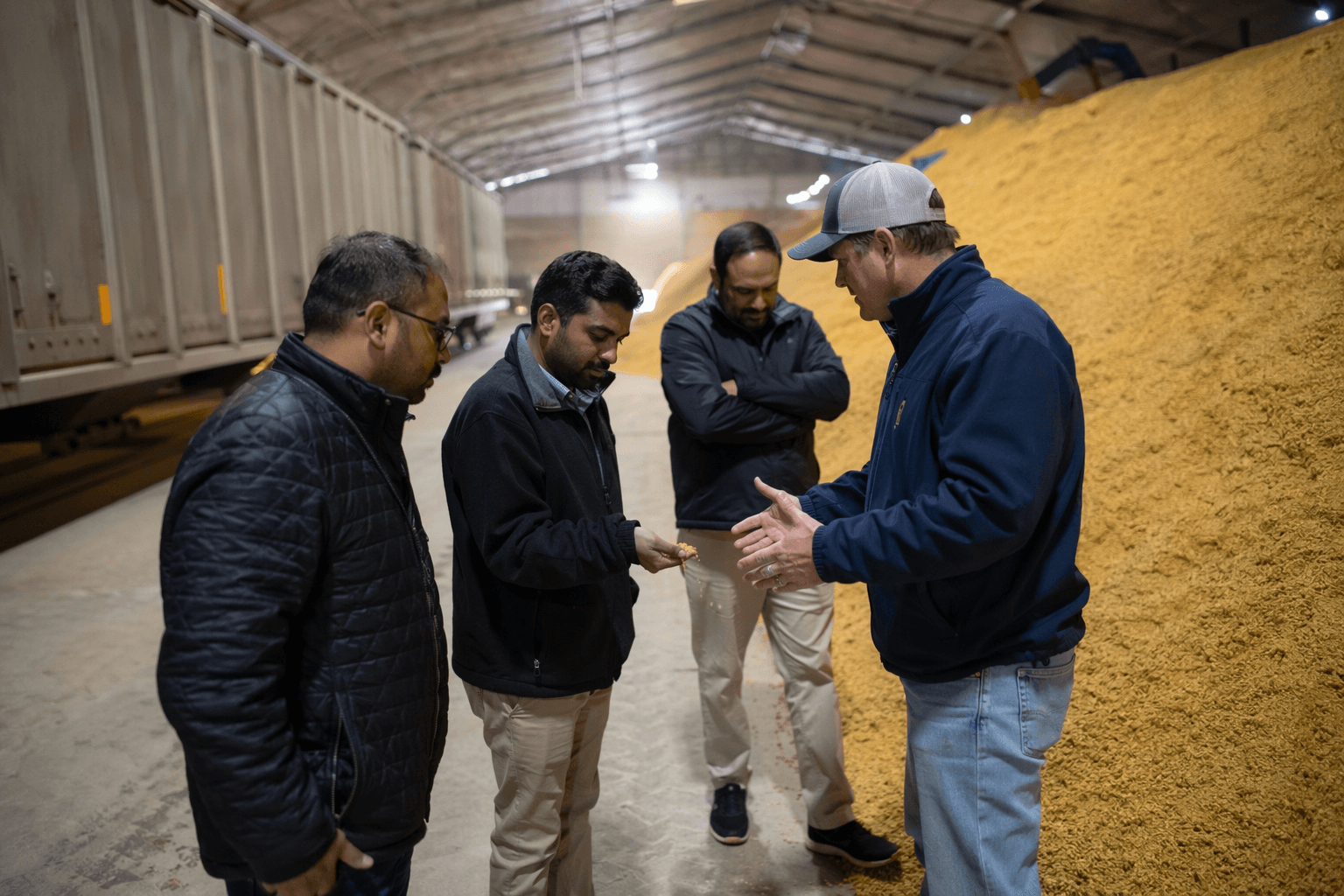
The U.S. Grains & BioProducts Council on July 14 led Indian feed-grain buyers through Illinois, Minnesota, South Carolina and Georgia to pitch a potential market for more than 700,000 metric tons of U.S. distillers dried grains with solubles a year. The multi-state tour put ethanol plants, farms, port facilities and logistics nodes in front of the delegation as the council promoted DDGS as a co-product with export value.
Reece Cannady, the council’s regional director for South Asia, led the trip to show how U.S. DDGS are produced, dried, handled and shipped through the corn co-product chain. The group visited ethanol plants, farms and logistics nodes, then stopped at a farm to see corn production practices first-hand. The itinerary also took buyers to Charleston, South Carolina, and Savannah, Georgia, where port handling and transport reliability were part of the discussion alongside feed value and price.
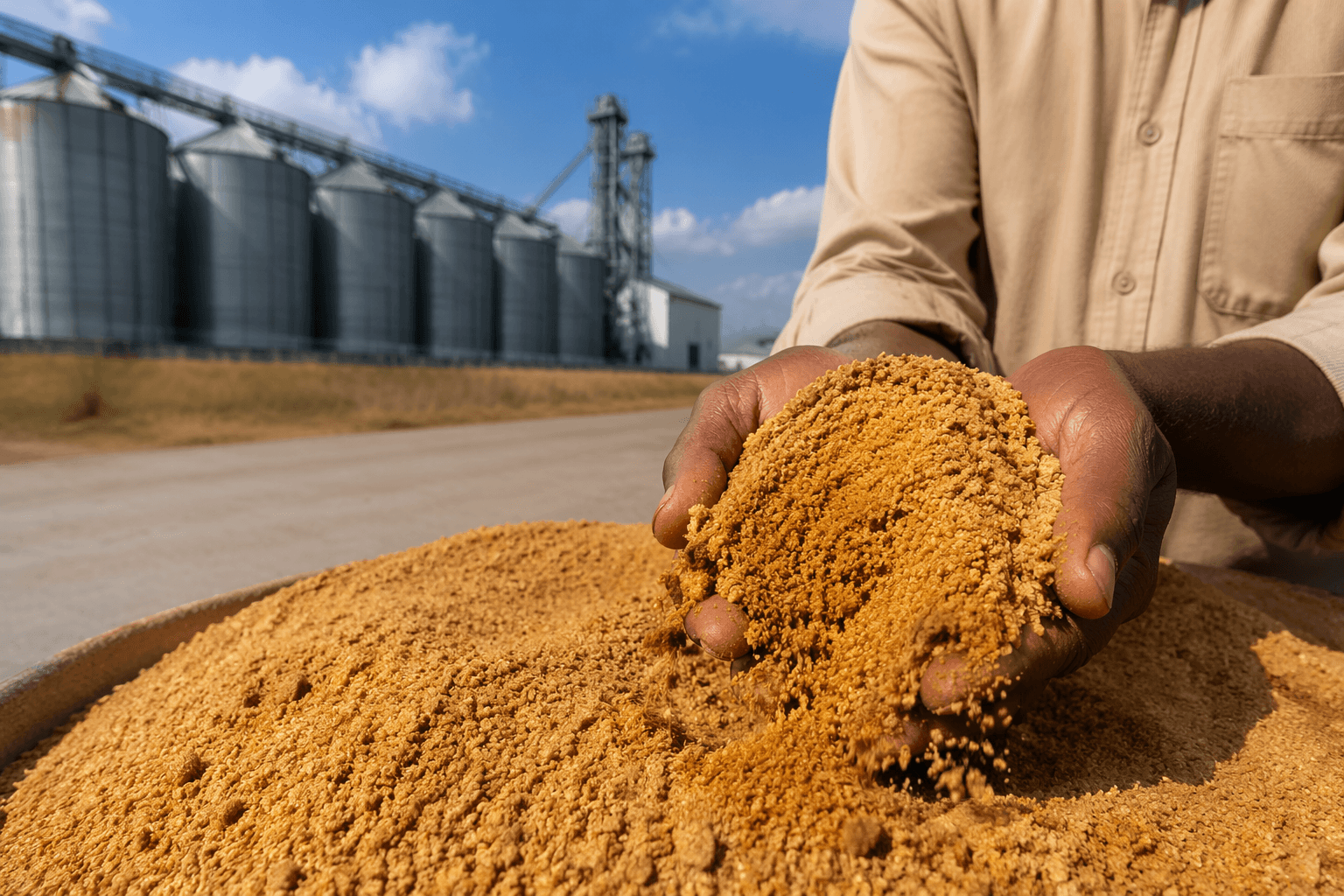
The council has worked for more than 20 years with Indian feed, starch, energy and dairy industries. Cannady said Indian buyers face high vegetable protein prices and could view U.S. DDGS as a competitively priced feed ingredient.
India is the world's fourth-largest feed producer and home to the world's largest dairy herd, while USDA's Foreign Agricultural Service put India's grain production at a record 376.6 million metric tons in the 2025/2026 crop year. USDA put India's 2025/2026 corn exports at 2.4 million metric tons and imports at 50,000 metric tons.
The council has previously taken U.S. and Indian delegations to Gujarat to explore DDGS sales into the dairy sector. Earlier outreach drew interest from Indian livestock stakeholders because of difficulties sourcing quality DDGS. India’s import system remains layered, with FSSAI, DGFT and the Ministry of Agriculture and Farmers Welfare all part of the process, which keeps moisture, mycotoxin control, documentation and shipping consistency at the center of any deal. In February 2026, an interim India-U.S. trade framework could lower or eliminate duties on some farm products, including DDGS.
This article was produced by Prism’s automated news system from verified source data, official records, and press releases, then run through automated quality and moderation checks before publishing. The system is built and supervised by the people who set the standards it runs under. Read our full AI policy.
Did this article answer your question?