U.S. dairy biogas systems double to 496 as manure capture grows
U.S. dairy biogas systems reached 496 farms, with 38 new projects in 2025 adding about 9 Bcf of annual capture capacity.
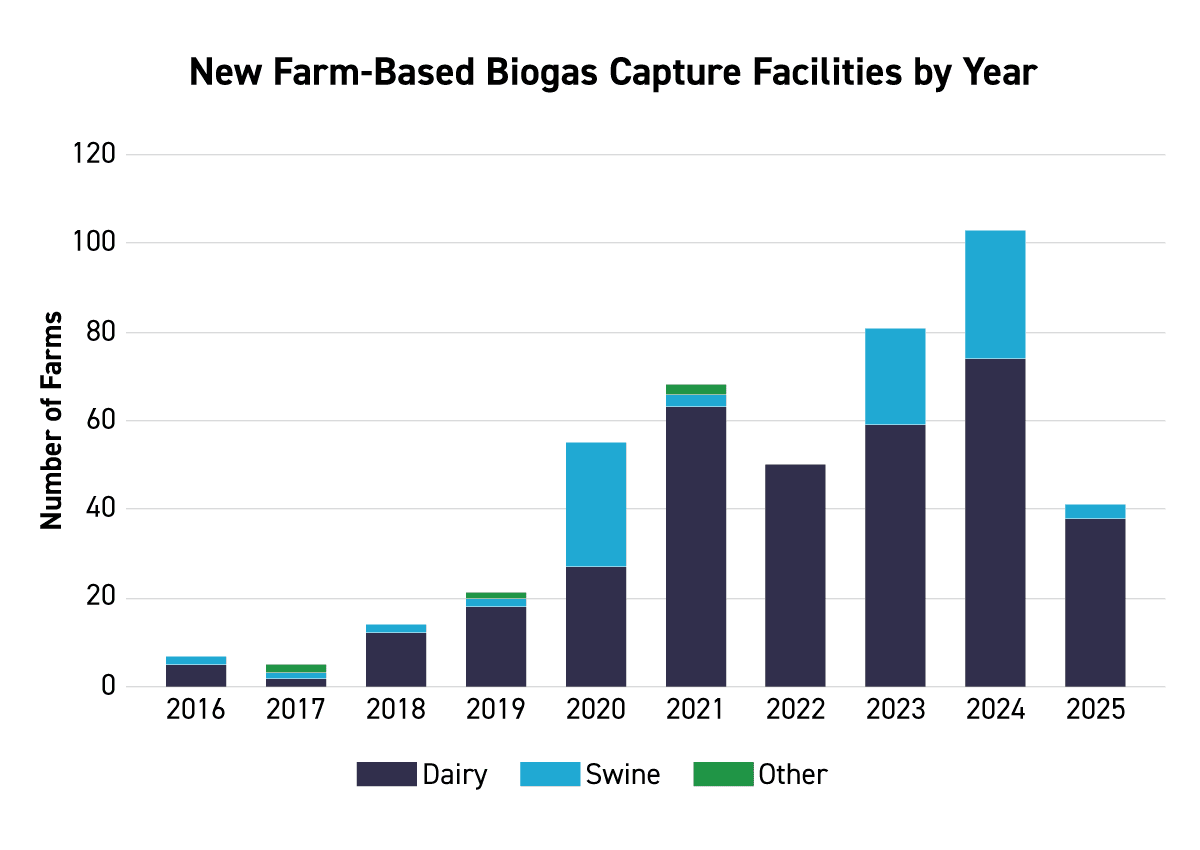
The American Biogas Council on June 11 said 496 U.S. dairy farms were capturing energy from manure, twice the count in 2020. The group said 38 farms joined in 2025 alone, adding about 9 Bcf a year and pushing total dairy biogas capture to roughly 84 Bcf annually.
The council used National Dairy Month to frame the expansion as a farm-economics story as much as a methane story. It said dairy biogas systems now recycle manure from about 2.5 million cows and put more than 16 billion gallons of manure to beneficial use each year, turning waste handling into a source of renewable gas, fertilizer and bedding. Patrick Serfass, executive director of the American Biogas Council, cast the growth as major rural investment that helps farmers turn manure into renewable energy and natural fertilizer while reducing emissions and opening new revenue streams for rural operations.

The market has followed that shift. The council said nearly $4 billion has flowed into dairy biogas projects since 2020, including about $800 million in facilities that opened in 2025. Texas, Idaho and Wisconsin accounted for more than half of last year’s investment activity, a concentration that underscores how the buildout is tracking regions with large dairy herds, project developers and pipeline or end-use access.
Most of the gas is now headed into fuel markets. The council said about 65% of operational dairy biogas systems upgrade captured biogas into renewable natural gas, while 35% use it to generate electricity or heat. It said 59% of dairy biogas facilities are tank-based digesters and 41% are covered lagoons, with an average system supported by 5,137 cows. Even so, 68% of U.S. dairy biogas systems are tied to herds under 5,000 cows, suggesting the technology is spreading beyond the very largest dairies.
There is still room to grow. The council said 2,955 additional U.S. dairy farms with at least 500 cows could potentially add biogas systems, including 559 in Wisconsin alone. That aligns with EPA AgSTAR’s view that anaerobic digestion of dairy manure has environmental and economic benefits and remains underutilized, while the agency says dairy manure is the nation’s largest source of methane from livestock manure management. A University of California, Riverside study also warned that digesters can deliver large methane cuts, but leaks can erase climate gains, putting monitoring and maintenance at the center of the next phase of expansion.
This article was produced by Prism’s automated news system from verified source data, official records, and press releases, then run through automated quality and moderation checks before publishing. The system is built and supervised by the people who set the standards it runs under. Read our full AI policy.
Did this article answer your question?