U.S. ethanol production holds steady as inventories slip to a fresh June low
U.S. ethanol output held at 1.108 million barrels per day while stocks slipped to 24.45 million barrels, a fresh multi-week low.

U.S. ethanol plants held output at 1.108 million barrels per day in the week ending June 5, while inventories slipped to 24.45 million barrels from 24.61 million barrels the week before. The flat production rate came alongside a small rise in Midwest output to 1.049 million barrels per day from 1.047 million, a sign the nation’s biggest ethanol region stayed near full stride even as stockpiles thinned.
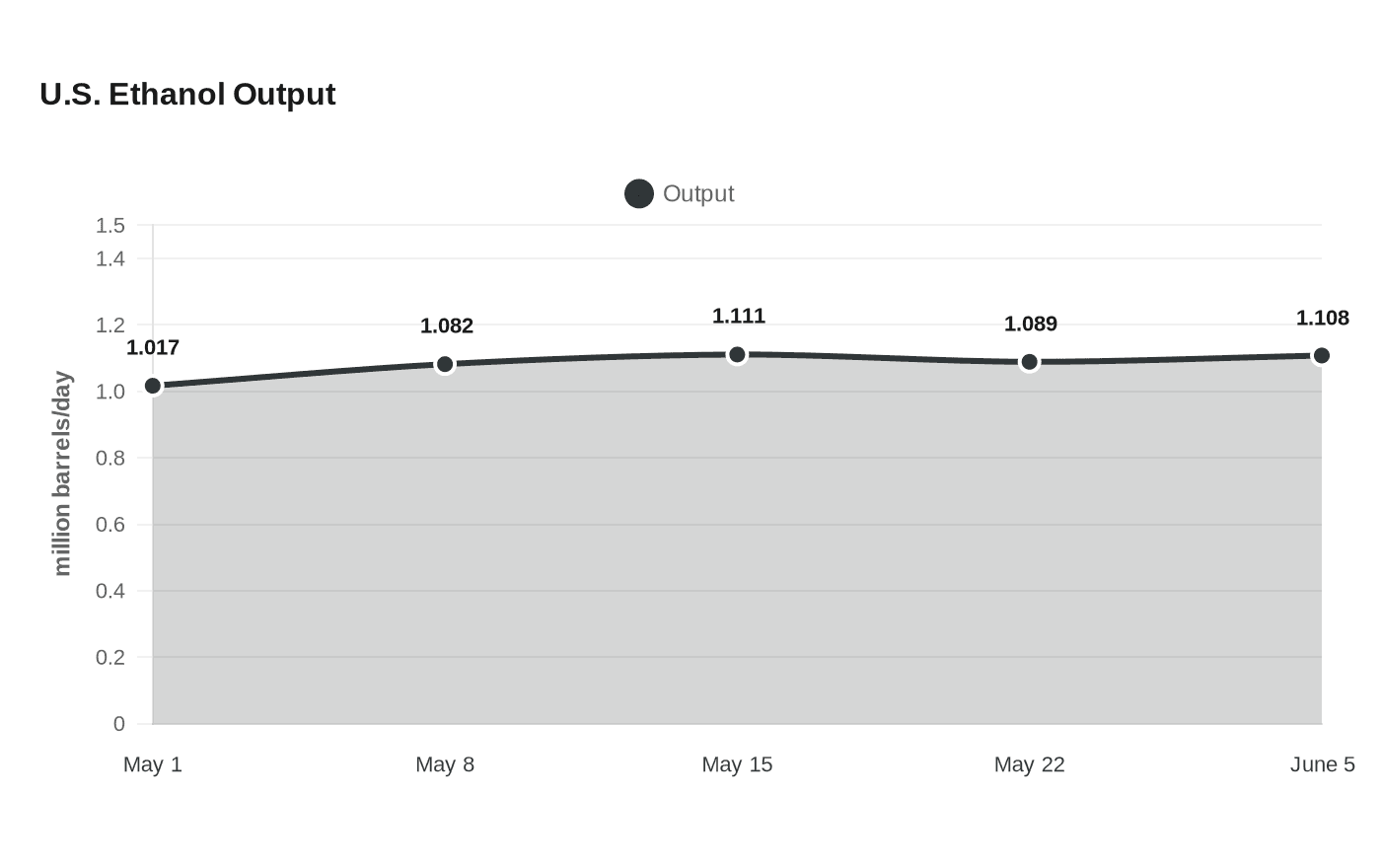
The U.S. Energy Information Administration released the weekly production data on June 10 and set the next update for June 17. Its table shows fuel ethanol output moving from 1.017 million barrels per day on May 1 to 1.082 million on May 8, 1.111 million on May 15, 1.089 million on May 22, and then 1.108 million in each of the last two reported weeks. That run of steady production against falling stocks points to firmer demand or a tighter balance sheet, and it can support ethanol pricing power if inventories continue to draw down.
The inventory slide is also visible in the Renewable Fuels Association’s weekly supply-and-demand data. U.S. ethanol stocks fell from 1,091,622,000 gallons on March 27 to 1,033,452,000 gallons on May 29, while gasoline demand over the spring ranged from 359,688,000 to 388,752,000 gallons per day. For plant operators, that kind of draw can matter for crush margins, especially if stronger blending demand or exports are helping clear barrels faster than production replaces them.
Export demand remains a key part of the backdrop. The EIA says the United States is the world’s largest producer and exporter of fuel ethanol, and it said U.S. fuel ethanol exports were on track in 2025 for a second straight annual record. Through the first seven months of 2025, 13% of domestic ethanol production was exported, with Canada remaining the top destination and the Netherlands accounting for much of the increase.
The broader policy and gasoline market backdrop has also tightened. The Environmental Protection Agency said in June that gasoline inventories remained 5% below the five-year average and noted that compliance credits for biomass-based diesel and ethanol had doubled in value since the start of the year as higher U.S. biofuel blending targets lifted RIN prices. If inventories keep shrinking while output holds steady, the market gives producers more leverage and less room for slack.
This article was produced by Prism’s automated news system from verified source data, official records, and press releases, then run through automated quality and moderation checks before publishing. The system is built and supervised by the people who set the standards it runs under. Read our full AI policy.
Did this article answer your question?