USMCA review could open Mexico market to U.S. ethanol exports
USMCA review talks may press Mexico's 5.8% ethanol cap, with industry eyeing a 10% blend and 1.2 billion gallons of new demand.

The Office of the United States Trade Representative on May 27 opened bilateral USMCA review rounds that could put Mexico's 5.8% ethanol cap under pressure. The June 16-17 talks in Washington included agriculture and a level playing field, pushing ethanol market access into the trade file.
USDA's Foreign Agricultural Service reported in January 2026 that Mexico's 2025 biofuels laws centralized oversight but left NOM-016-CRE-2016 unchanged. Under that standard, Mexico still caps ethanol blending at 5.8% and bars blending in Mexico City, Guadalajara and Monterrey, three cities that account for a large share of gasoline use. Mexico's energy ministry signaled in April that it wants at least a 10% blend, with a preference for 15% or 20%, a shift that would require those rules to change.
Geoff Cooper, president and chief executive of the Renewable Fuels Association, said the review could boost U.S. ethanol exports because Mexico still has regulatory barriers in place, even as there appears to be growing openness to opening the market. The first U.S.-Mexico negotiating round took place in Mexico City on May 28-29, and a third round is planned for the week of July 20 in Mexico City.
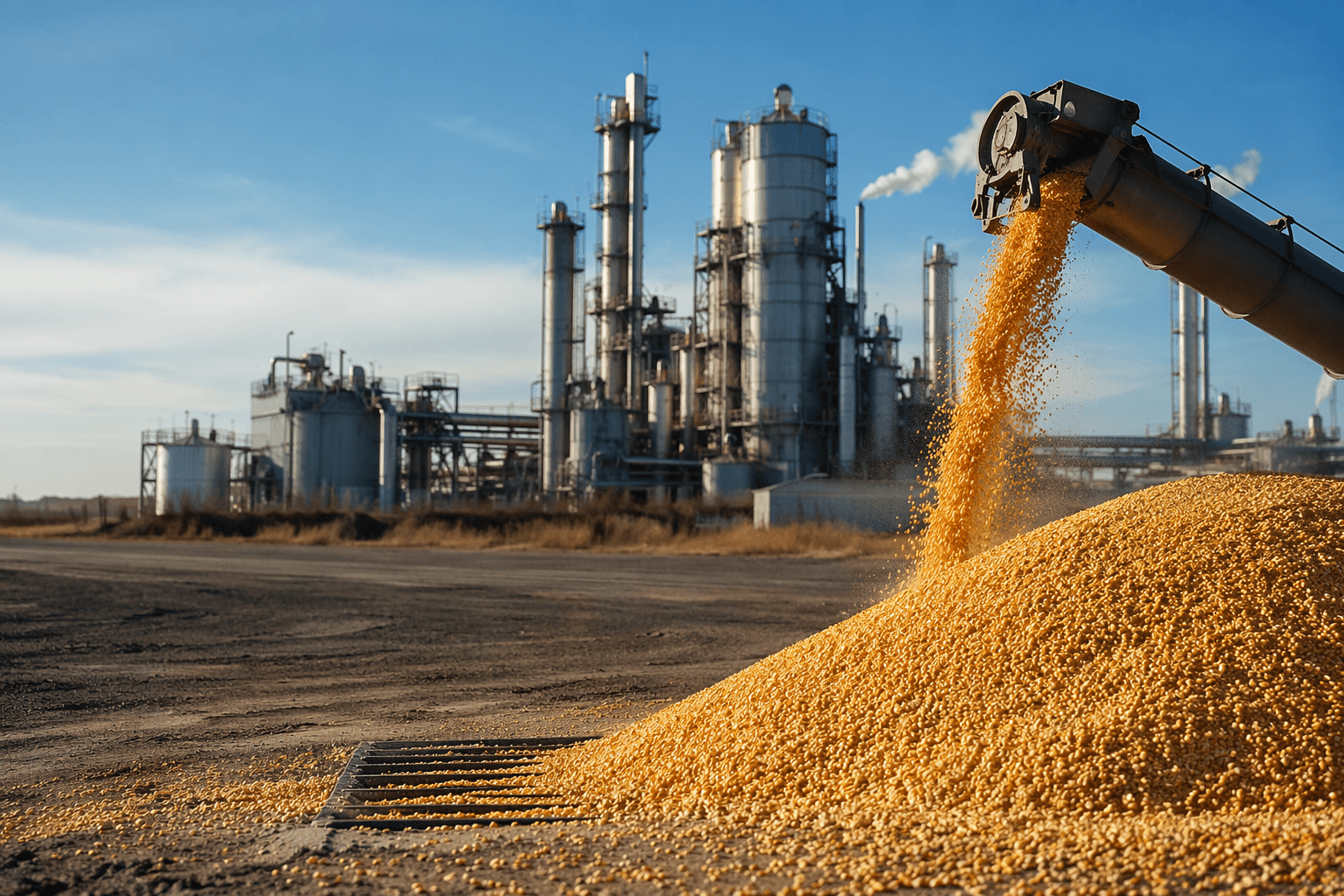
The numbers behind the push are substantial. Missouri Corn Growers Association president Jay Schutte said in November 2025 that a 10% blend rate in Mexico would increase U.S. ethanol demand by 1.2 billion gallons. He also said Canada imported more than 603 million gallons of U.S. ethanol in the 2022 marketing year, showing how quickly export demand can scale when market rules allow it.
Matt Raben, director of the Illinois Corn Marketing Board, said in May 2026 that Mexico is the top market for U.S. corn exports and Canada is the top market for U.S. ethanol exports. He added that corn exports were up 50.5% year over year and ethanol exports were up 7.2% year over year at that point, reinforcing the export pull already running through the market before the full USMCA review plays out.
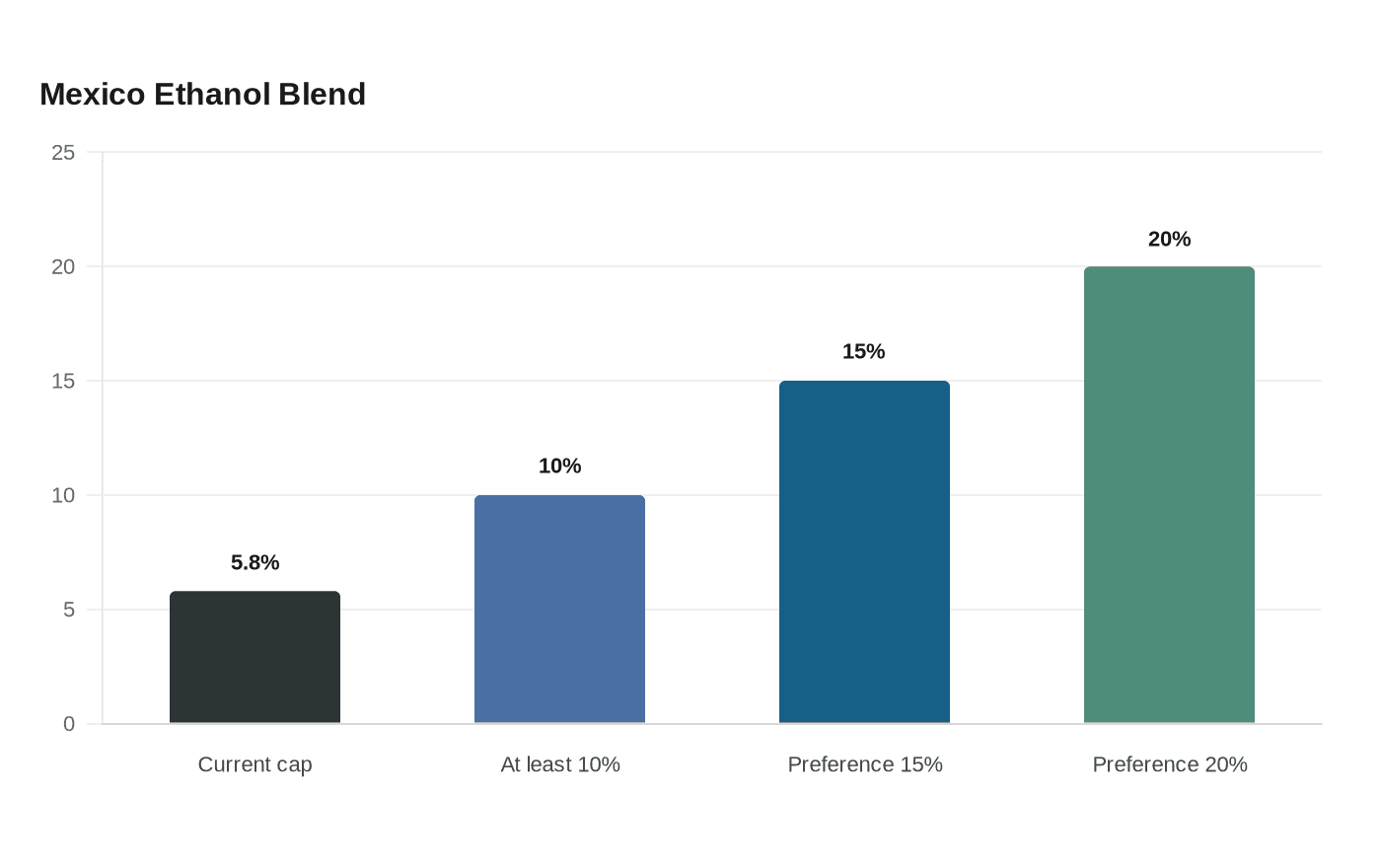
AS/COA said the review is a formal opportunity to assess the agreement and identify updates, and noted that the United States is holding bilateral talks with each trading partner rather than a purely trilateral process. For ethanol producers, the real test is whether that process produces changes to NOM-016 and Mexico's city-level blending bans, or only more policy momentum without near-term gallons.
This article was produced by Prism’s automated news system from verified source data, official records, and press releases, then run through automated quality and moderation checks before publishing. The system is built and supervised by the people who set the standards it runs under. Read our full AI policy.
Did this article answer your question?