Agent 360 needs carrier data integration, not just another dashboard
Agent 360 fails when the carrier still runs on broken records. The real fix is a unified data layer, not a shinier portal.
The problem is not the dashboard
An agent should not need five tabs, repeated logins, and duplicate data entry just to answer a simple question about a policy, a claim, or a renewal. That is the blunt point Decerto makes in its updated Agent 360 guide, and it is the right starting point because the pain is not visual, it is structural.

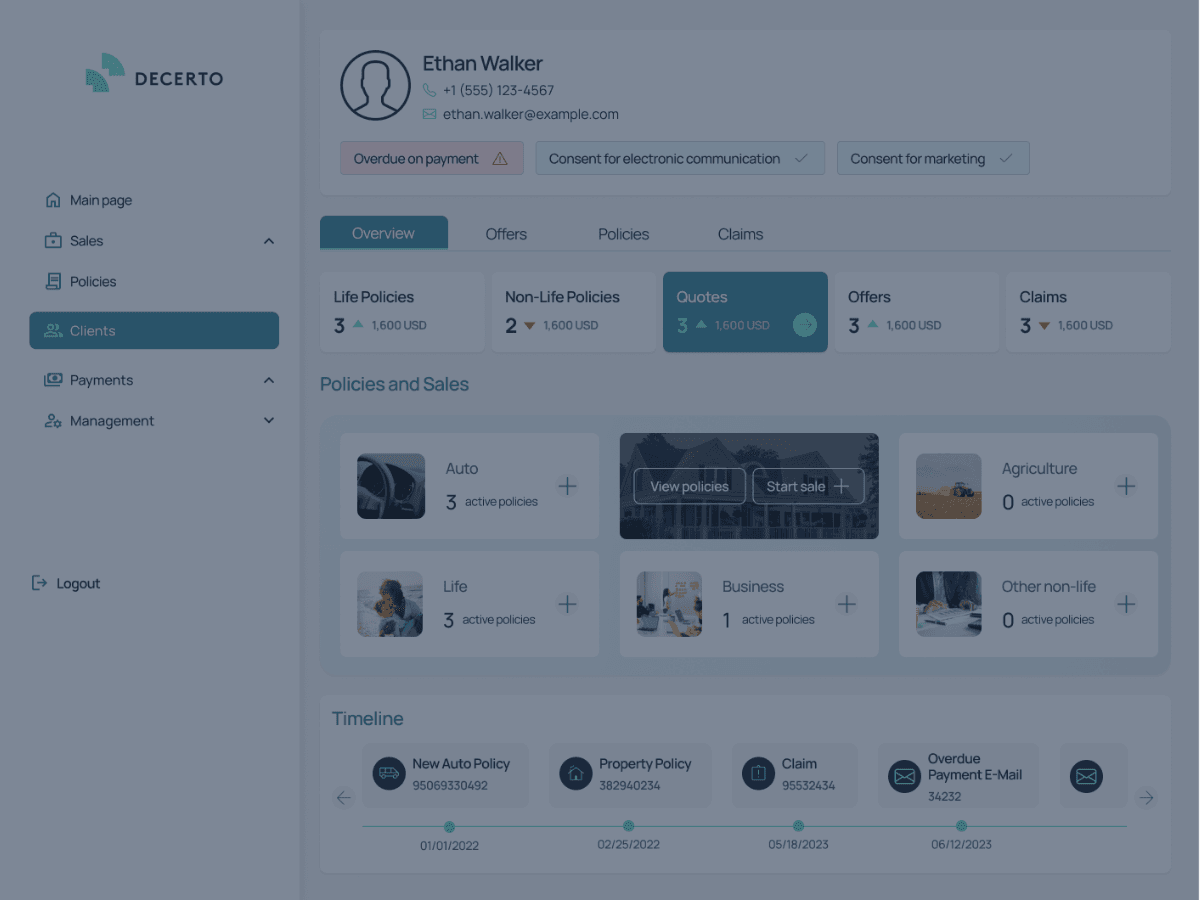
The usual mistake is to treat Agent 360 like a front-end project. Build a nicer screen, stitch in a few widgets, call it a producer view, and hope the workflow magically improves. Decerto’s argument is sharper than that: Agent 360 only works when the carrier can unify policy, claims, billing, CRM, and related activity into a single working surface for producers, service reps, and sales managers. If the underlying records do not agree, the dashboard becomes a display of contradictions.
Why fragmented carrier data breaks producer work
Producer-facing work in property and casualty insurance depends on context. A producer needs to know not just the current policy status, but the claim history, billing condition, service interactions, and recent activity across the relationship. When those details live in separate systems, the producer experience turns slow and error-prone, and the cost shows up everywhere: missed cross-sell signals, longer service calls, weaker agent relationships, and avoidable friction at renewal.
That is why Decerto frames Agent 360 as a systems-integration story, not a UX story. The carrier is not just trying to show information more attractively; it is trying to reconcile it accurately. The hard part is entity resolution, matching the same customer, policyholder, or account across policy administration, claims, billing, and CRM so that the surfaced history is trustworthy. Without that foundation, even a polished portal is still forcing people to hunt for the truth.
Agent 360 is really a data engineering project
Decerto is unusually direct about the scale of the work. Its guide says Agent 360 is usually a data engineering project more than a software purchase, and carriers that treat it as a quick dashboard rollout often end up rebuilding the whole thing later. That warning matters because many modernization programs are still organized around visible deliverables, not the plumbing underneath them.
The guide recommends a phased integration project lasting 12 to 18 months, with staged delivery instead of a big-bang launch. That is a more realistic operating model for carriers that have accumulated policy, billing, claims, and portal data over years of separate builds and vendor decisions. It also reflects a simple truth: if the carrier cannot create a reliable shared view of entities and activity, no amount of presentation-layer work will produce a durable producer 360.
What the data foundation has to include
A usable Agent 360 environment needs more than a merged screen. It needs a set of connected data layers that can continuously pull from the carrier’s PAS, CRM, claims, billing, and portal history, then reconcile those records into one coherent producer view. That means the carrier has to solve for identity, activity sequencing, and system of record questions before it worries about layout or feature polish.
In practical terms, the foundation has to answer questions like these:
- Which account is the real source of truth for this customer?
- Which policy change came from service, and which came from the producer?
- Which claim, billing issue, or endorsement should the producer see first?
- Which interactions belong to this relationship, and which belong to another entity with a similar name?
If the answer to those questions is fuzzy, the producer will feel it immediately. They will lose time rechecking status, service teams will spend longer on the phone, and managers will have weaker visibility into which producers are actually active and effective.
Why the business case is bigger than producer convenience
This is not a niche workflow problem. Decerto says Aite-Novarica research puts agent portal capability among the top three IT priorities for mid-tier carriers, which makes sense in a market where distribution still runs heavily through human relationships. A recent industry summary says 75 percent of commercial P&C sales are generated by human insurance agents, so producer tooling is not a side bet. It is part of the carrier’s core distribution engine.
That also means the upside has to be measured in operating terms. Decerto cites an Aite-Novarica impact case study in which Columbia Insurance saw 60 percent growth in average written premium per policy, a 46 percent reduction in average quote time, and a 310 percent increase in portal use after a cloud-based agent portal rollout. Those are not cosmetic gains. They are evidence that when the producer workspace is built on cleaner data and better integration, the carrier can improve quote speed, deepen usage, and push more business through the channel.
Warta shows what scale looks like when the architecture holds
Decerto’s own deployment experience reinforces the point. Its eAgent system for Warta, a Talanx Group company, was built for a network of over 40,000 agents. Decerto says that platform became the foundation for serving millions of customers and policies, and it helped Warta become the second-largest player in the Polish market.
That is the kind of example worth paying attention to because it shows what happens when producer-facing technology is tied to actual operating scale. The lesson is not that every carrier needs Warta’s footprint. The lesson is that a producer workspace becomes meaningful only when it sits on top of an architecture that can support real volume, real service demand, and real distribution complexity.
What carriers should take from the Guidewire model
Guidewire’s core P&C suite is described as a connected system covering policy, billing, claims, underwriting, and pricing. That framing lines up with Decerto’s argument: producer visibility only works when the carrier’s architecture is connected, not stitched together ad hoc. A dashboard layered over disconnected systems still leaves the producer doing the integration work by hand.
That is why the right sequence matters. First comes the data and application alignment across policy, claims, billing, CRM, and related activity. Then comes the producer surface that can expose it cleanly. If you reverse that order, you get a pretty screen that still forces people to ask around for answers.
The real test of Agent 360
The best way to judge an Agent 360 program is not by how many widgets it has, but by how little work it asks from the producer to understand the customer. If the carrier has to keep reconciling identities, re-entering data, and patching together activity history from multiple systems, the program has not solved the core problem.
Decerto’s updated guide lands on the right conclusion: producer experience in P&C now depends on data unification. In a market where carriers still rely on human agents for a large share of commercial business, the carrier that gets the integration right will move faster, service better, and hold relationships longer. The dashboard is the last mile. The foundation is the whole game.
This article was produced by Prism’s automated news system from verified source data, official records, and press releases, then run through automated quality and moderation checks before publishing. The system is built and supervised by the people who set the standards it runs under. Read our full AI policy.
Did this article answer your question?