Allianz report signals more premium, more complexity for insurers
Allianz’s 2026 report shows global premiums rising 7.1% to EUR6.9 trillion, while P&C growth slowed to 3.8%, raising the bar for core systems and automation.
Allianz Research’s latest Global Insurance Report landed on a simple but uncomfortable message for software teams: the market is getting bigger and messier at the same time. Global premiums rose 7.1% in 2025 to EUR6.9 trillion, adding EUR456 billion to the pool, and Allianz projects another 5.3% annual expansion over the next decade. For P&C carriers, that is not just a growth story. It is a systems story.
The report’s P&C numbers make the pressure clearer. Global P&C premiums grew 3.8% in 2025, down from the prior year and below the segment’s long-run pace, while penetration stayed stuck around 2.5% of GDP. North America still accounted for 52% of global P&C premiums, but its growth cooled to 2.2% from 9.7% in 2024. Western Europe grew 5.3% and Asia 4.0%, a split that tells software leaders exactly what they are dealing with: multiple pricing climates, different claims patterns, and no single operating model that fits every market.

That fragmentation is why modern policy administration, claims, billing, and reporting platforms matter more now, not less. A carrier that is writing more premium across North America, Western Europe, and Asia has more endorsements to issue, more claims to route, more reinsurance data to reconcile, and more regulatory reports to generate. Allianz’s report points to a market that is expanding by EUR5,260 billion over the next decade, with health expected to grow fastest at 6.7% annually, life at 4.9%, and P&C at 4.7%. That kind of mix pushes insurers toward configurable product engines, cleaner workflow orchestration, and data layers that can survive regional variation without a custom build for every line.
The report also puts Singapore in sharp relief. Its insurance market grew 10.7% in 2025, driven by double-digit gains in life and health. That is the kind of market that rewards fast product configuration and disciplined distribution integration, because growth there does not come with fewer moving parts. Allianz’s broader outlook also ties future insurability pressure to climate risk, affordability, and a changing risk landscape, all of which point back to the same technology demand: better pricing tools, faster claims automation, stronger reinsurance reporting, and analytics that can keep pace when markets turn volatile.
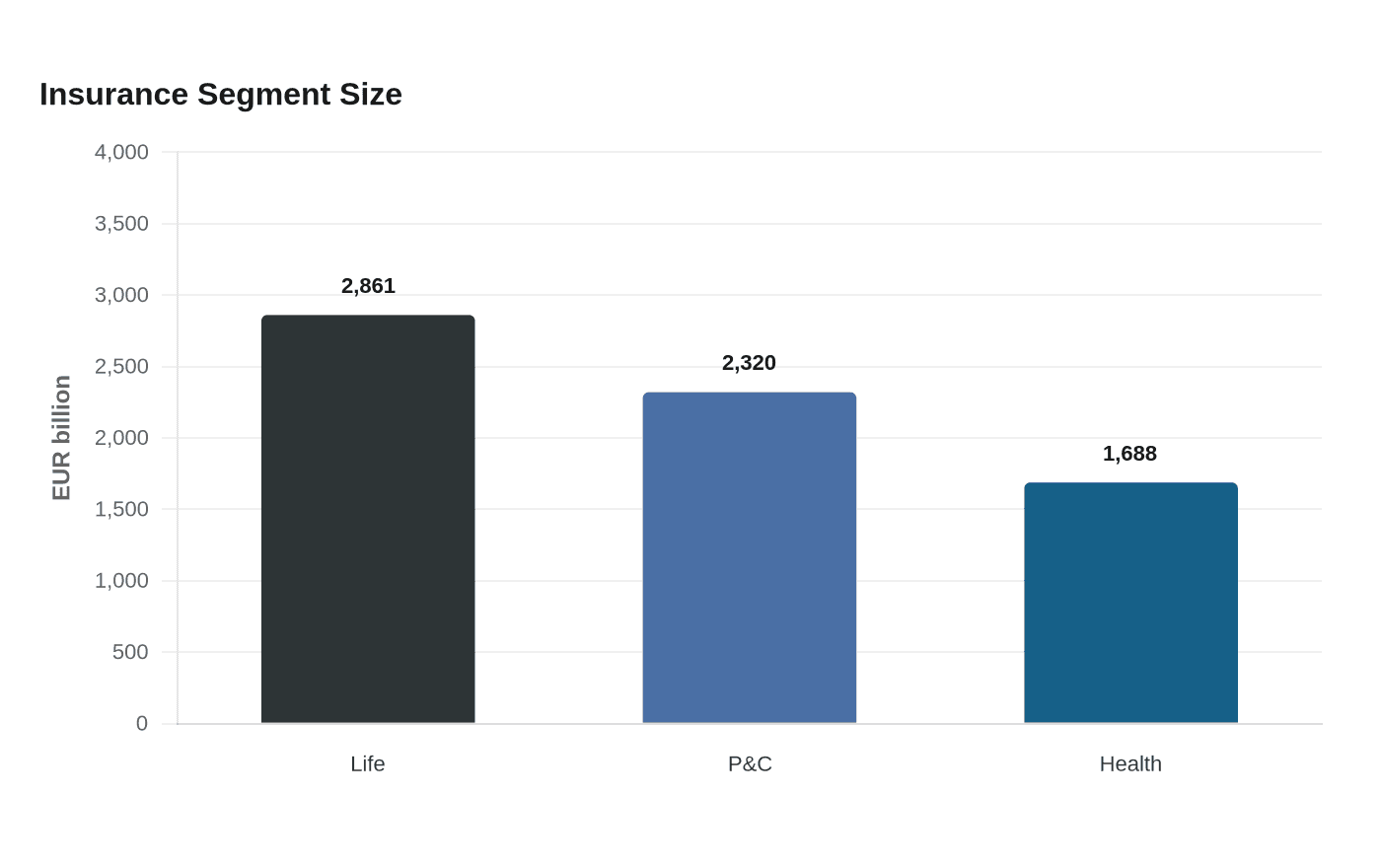
Life remained the largest segment at EUR2,861 billion, followed by P&C at EUR2,320 billion and health at EUR1,688 billion. For P&C software vendors, the signal is plain. Carriers are still collecting more premium, but they are doing it across more fragmented markets and under more volatile loss conditions. The platforms that win will be the ones that shorten change cycles, reduce manual work, and hold together when product, geography, and risk start pulling in different directions.
This article was produced by Prism’s automated news system from verified source data, official records, and press releases, then run through automated quality and moderation checks before publishing. The system is built and supervised by the people who set the standards it runs under. Read our full AI policy.
Did this article answer your question?