Guidewire DEVSummit draws 3,000 developers as P&C modernization shifts
Guidewire drew more than 3,000 developers to Bengaluru, where a 45-day student hackathon and AI build-outs showed modernization moving into the developer stack.
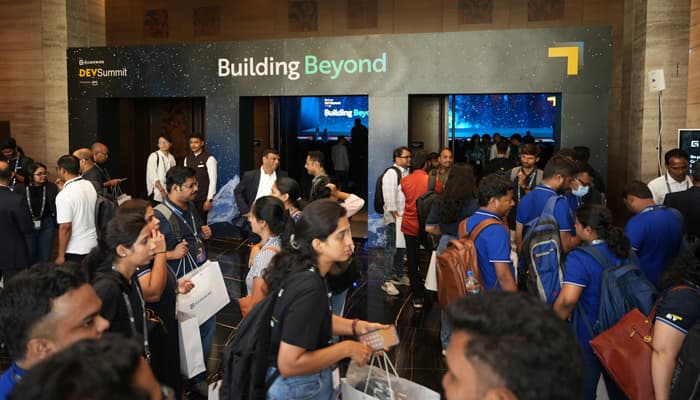
By the time Guidewire closed DEVSummit 2026 in Bengaluru on May 16, more than 3,000 InsuranceSuite developers, full-stack engineers and technical architects had spent four days inside a program built less like a conference and more like an engineering lab.
That is the point. Guidewire cast the May 13-16 gathering as the third year of DEVSummit and its largest learning platform for the developer ecosystem, a sign that P&C modernization is no longer being sold only through executive decks. It is being pushed through code, training, implementation patterns and the people who actually build on the platform. Guidewire says its core is used by more than 570 insurers in 40-plus countries and is built for agentic and predictive AI, which makes developer capability a strategic issue, not a side activity.
India was the center of gravity. Bengaluru has become the company’s showcase for ecosystem-led modernization, and the summit’s scale showed how much weight Guidewire is putting on that market. The event followed the first DEVSummit in Bengaluru in April 2024, then a 2025 edition that drew 1,500 technical professionals. This year’s turnout more than doubled that number, which is hard to ignore if you are a carrier trying to judge where a vendor is really investing.
The most interesting work sat in DEVTrails, Guidewire’s university hackathon. More than 18,000 students from 30 universities took part over 45 days with the National Insurance Academy, Pune, as an academic and strategic insurance knowledge partner and EY as a partner. The challenge was not a classroom exercise. Finalists built an AI-powered parametric insurance concept for India’s gig workforce with large language models, GPS verification with anti-spoofing, behavioral fraud analysis, blockchain claim records and weather-driven predictive risk models. Guidewire said the program was designed and operated by a small team of its engineers, which is the kind of detail that matters when a company talks about scale.

That is also why the summit reads as more than branding. Guidewire says its engineering model at DEVSummit shifted from session attendance to a structured curriculum with building blocks, hands-on immersion and capstone integration. In plain terms, the company is trying to move partners and developers from theory to something they can actually ship.
The India operation underpins that push. Guidewire named Mohammed Anzy vice president and managing director of Guidewire India in January 2024, and the company says the India team grew from roughly 100 employees in 2024 to nearly 700 by early 2026, with a plan to reach 1,000 by the end of 2028. One report put the wider India ecosystem at about 12,000 developers, while another said more than 540 professionals in India focus on cloud platforms, analytics and country extensions. That is what modernization looks like when it leaves the slide deck and lands in a developer community built to carry it.
This article was produced by Prism’s automated news system from verified source data, official records, and press releases, then run through automated quality and moderation checks before publishing. The system is built and supervised by the people who set the standards it runs under. Read our full AI policy.
Did this article answer your question?