Insly guide maps MGA tech stack for scalable growth
MGAs need a stack that launches fast but scales cleanly. The real test is whether software can handle underwriting, claims, capacity, and real-time reporting without adding integration debt.
Conning’s 2025 Strategic Study found U.S. MGA direct premiums written rose 16% in 2024 to $114.1 billion. Carriers are pushing harder for real-time reporting, cleaner claims handling, and faster proof of performance. In that environment, the wrong stack can make a launch look simple and a scale-up painfully expensive.
Start with the minimum viable operating stack
A new MGA does not need a trophy platform. It needs a small set of systems that can get a product to market, bind business, and explain the numbers to a capacity partner without forcing staff into spreadsheets and email chains. Insly describes its software as low-risk insurance software for MGAs and insurers, built around fast setup, modular architecture, open APIs, rapid ROI, and support for product building, distribution, accounting and reporting, and claims management.
That framing points to the minimum viable stack: product configuration, underwriting workflow, policy administration, claims handling, accounting, reporting, and integrations. If one of those pieces sits outside the system in a spreadsheet or a one-off manual process, the operator may still launch quickly, but it will struggle to produce the control, auditability, and speed that carriers expect once volumes rise.
For launch, the stack should answer a simple operational question: can a small team configure a product, issue policies, track claims, reconcile premium, and produce a carrier-ready bordereau without building a separate technology project around each step? If the answer is no, the business is already carrying hidden operating debt.
Use modularity to avoid locking in the wrong workflow
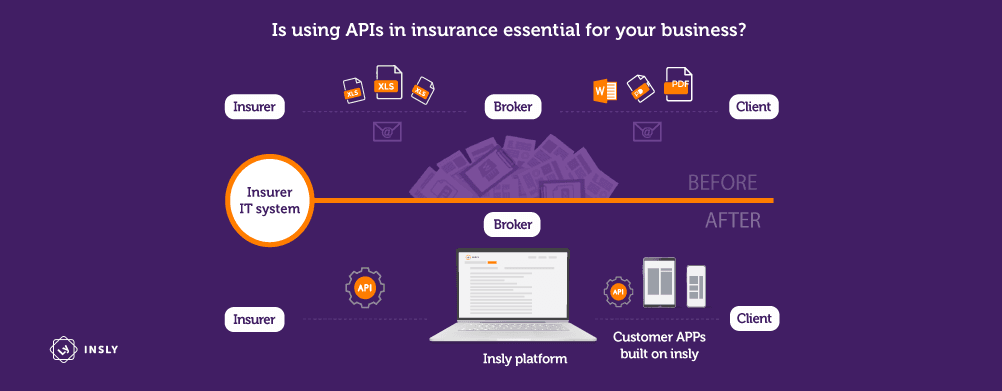
MGAs usually need flexibility first and system size second. A modular architecture with open APIs lets the operator connect underwriting, claims, finance, and reporting without forcing every workflow into one monolithic product.
The practical benefit is speed with control. A modular stack can support quick configuration at launch, then absorb changes in distribution, product scope, or carrier reporting without a full replacement cycle. For an MGA that expects to adjust appetite, add a new channel, or expand into a new line, that flexibility is often more valuable than a broad feature list.
Underwriting admin reduction, straight-through processing, embedded insurance partnerships, and AI-powered product building all sit on the same architectural question: which tasks should be automated inside the core workflow, and which should remain detachable so they do not slow the business later?
Scale distribution only after the core workflow is stable
Conning’s 2025 Strategic Study found 93% of MGAs in its survey are exploring new markets, and 91% of insurers reported increased use of MGA partnerships.
Once an MGA starts to expand distribution, point solutions tend to multiply. One tool may handle broker activity, another may manage delegated authority, and a third may support a specialty embedded-insurance relationship. Each can be useful in isolation, but together they can create duplicate data entry, inconsistent eligibility logic, and fragile reporting. The stronger platform choice is the one that can absorb new channels without turning every partner relationship into a separate integration project.
This is where the distinction between must-have infrastructure and optional tools becomes important. Distribution support belongs in the core platform when it affects quoting, binding, and reporting. It belongs outside the core only when it adds functionality without changing the underwriting or accounting workflow.
Underwriting admin and straight-through processing are scale levers, not extras
Manual work is manageable at launch and expensive at scale. Underwriting admin is not just a staffing issue. It directly affects quote turnaround, bind speed, and the quality of information that reaches a carrier or capacity partner.
Straight-through processing matters because it removes friction between submission, underwriting decision, policy issuance, and reporting. An MGA that can automate those steps can handle more submissions with the same team, but it also sends cleaner data downstream. That improves the odds that carrier reporting, bordereaux production, and claims oversight can keep pace with the business.
The MGAA’s 2025 Opinion Report, produced with Clyde & Co, found 65% of MGAs and 66% of carriers believe AI will play a supportive role in the sector.
Claims, reporting, and capacity relationships are now part of the product
The pressure on the stack is coming from carriers as much as from internal growth plans. In October 2025, Insly wrote that delays in securing carrier support can push startups to postpone launch plans and can also force established MGAs to pause scaling timelines. It also wrote that insurers increasingly expect real-time updates on sales, profits, loss ratios, claims, and other performance metrics instead of periodic spreadsheet reporting.
The MGAA’s 2025 Opinion Report found 77% of MGAs believe the claims process with carriers needs improvement, up from 59% in 2023. It also found 57% of carriers expect their MGA capacity allocation to increase over the next two years.
That means claims handling and reporting are no longer back-office add-ons. They are part of the MGA product offered to capacity partners. A stack that cannot produce timely claims visibility, loss ratios, and carrier-ready summaries will struggle even if the underwriting itself is strong.
Regulation and governance should shape the stack from day one
The MGAA report found 46% of MGAs and 34% of carriers see regulation as the main barrier to entry or expansion. That is one reason the stack should be chosen for traceability, permissions, and change control, not only for speed. An MGA that plans to grow across multiple products or partnerships needs systems that preserve the history of decisions, not just the latest version of a spreadsheet.
The scale problem is not technology scarcity, it is technology clutter
Insly’s scaling guide puts global MGA revenues at almost $30 billion in 2024, with about 20% annual growth since 2020, and says many founders struggle to move from small operations to businesses generating more than £10m in GWP.
This article was produced by Prism’s automated news system from verified source data, official records, and press releases, then run through automated quality and moderation checks before publishing. The system is built and supervised by the people who set the standards it runs under. Read our full AI policy.
Know something we missed? Have a correction or additional information?
Submit a Tip