tigerlab urges durable insurance software over AI hype
tigerlab’s pitch is a reminder that P&C buyers win with software built for change, not another core rewrite sold as the next big AI leap.

On March 24, 2026, Tigerlab announced that its AI-native Broker Management System would begin deployment across more than 30 countries in April 2026. Tobias Bergmann has spent more than 18 years building core insurance platforms for insurers, MGAs, and brokers. A new label—cloud-native, digital, or AI-native—does not fix years of product, claims, and distribution complexity in one swing.
Durability is the real modernization test
The strongest insurance platforms are not the ones with the slickest demo screen. They are the ones that can absorb product changes, regulatory shifts, claims-process updates, and broker workflow tweaks without forcing a core rebuild every few years. If the software cannot adapt to the business, the business ends up adapting to the software, and modernization becomes expensive.
In P&C, carriers, MGAs, and brokers do not run the same operating model. A carrier may need strict policy-administration control across multiple lines and jurisdictions, while an MGA may care more about speed to market and delegated authority, and a broker may live or die by distribution efficiency and partner onboarding. Durable software has to handle those different pressures without falling apart under the weight of its own configuration.
The legacy problem is still the center of gravity
McKinsey wrote in May 2025 that core systems built for a slower, paper-driven insurance model are no longer fit for purpose. The result is inefficiency, rising IT maintenance costs, and pressure to deliver instant quotes and faster claims payouts.
Boston Consulting Group framed the same problem in 2024 from another angle. Legacy insurance systems are prone to downtime, the people who know how to maintain them are aging out, and regulations have become harder, not easier, to manage. BCG’s answer is not one universal cure, but three broad modernization strategies for global insurers: centralized, federal, and hybrid.
AI can help, but it does not erase the hard part
McKinsey’s April 29, 2026 analysis makes the most useful AI point in the debate: agentic AI may help modernization by capturing legacy knowledge at scale and improving testing, reconciliation, and cutover.
Tigerlab’s position is not that AI is irrelevant. It says AI should sit inside a durable operating model built around underwriting, policy handling, claims, and broker operations.
Buyers are still shopping, but they are shopping more carefully
Celent’s 2025 North America P&C policy administration report profiled 50 policy administration systems. Its customer-reference review included input from more than 40 North American P&C insurers. The market is broad, crowded, and still very much under active evaluation. Buyers are not choosing from a small set of obvious winners. They are comparing a wide field of vendors on functionality, support, and the ability to survive implementation reality.
ReSource Pro documented 99 new core system deals in 2024, down from 112 in the prior year. The volume slowed, but buying interest remained active, especially among MGAs and smaller carriers that want to modernize without taking on a full-scale replacement war.
Where tigerlab is placing itself
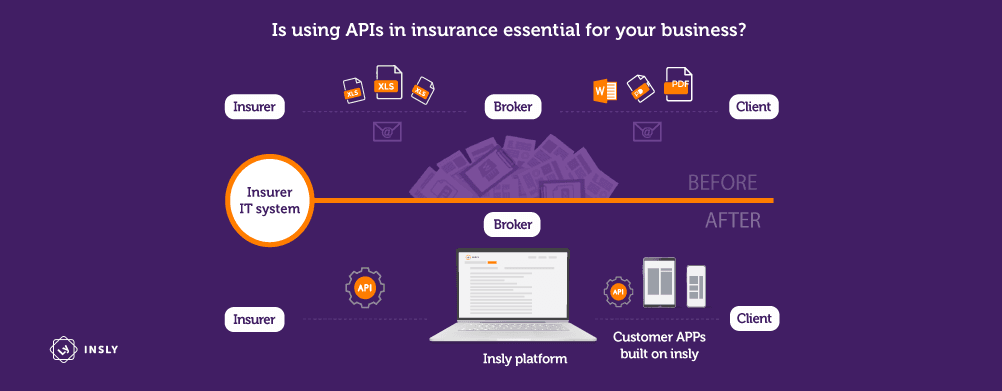
Tigerlab says its platform is modular and cloud-native, and it positions the software around insurance operations that cross multiple jurisdictions. The company is competing not as a narrow point solution, but as operational infrastructure for distributed insurance businesses.
Tigerlab points to an integration project with Richmond National, and to a Thailand initiative with Innova Insurtech and TSI in Bangkok, where the platform is being used to reduce distribution costs, onboard partners quickly, and automate processes.
For carriers comparing tigerlab with larger names such as Guidewire or EIS, the question is which stack can handle the next product launch, the next regulatory update, and the next distribution change without turning every upgrade into a project of its own.
What to pressure-test before buying any new core platform
- Can it support the actual underwriting, policy, and claims workflows you run today, not just the ones in a demo script?
- How does it handle multiple jurisdictions, line variations, and local regulatory changes without custom code piling up?
- What happens to integrations when broker channels, rating engines, document systems, or claims tools change?
- How much business logic can be configured rather than hard-coded, especially when product teams need to move faster?
- Where does AI sit in the stack: as a shortcut around domain knowledge, or as a tool for testing, reconciliation, migration, and operations?
This article was produced by Prism’s automated news system from verified source data, official records, and press releases, then run through automated quality and moderation checks before publishing. The system is built and supervised by the people who set the standards it runs under. Read our full AI policy.
Know something we missed? Have a correction or additional information?
Submit a Tip