Liberty Mutual tests ChatGPT auto quote integration for shoppers
Liberty Mutual is testing a ChatGPT quote flow that moves auto shopping inside the chat itself. Screenshots show vehicles, drivers and monthly estimates before a handoff to Liberty Mutual’s site.
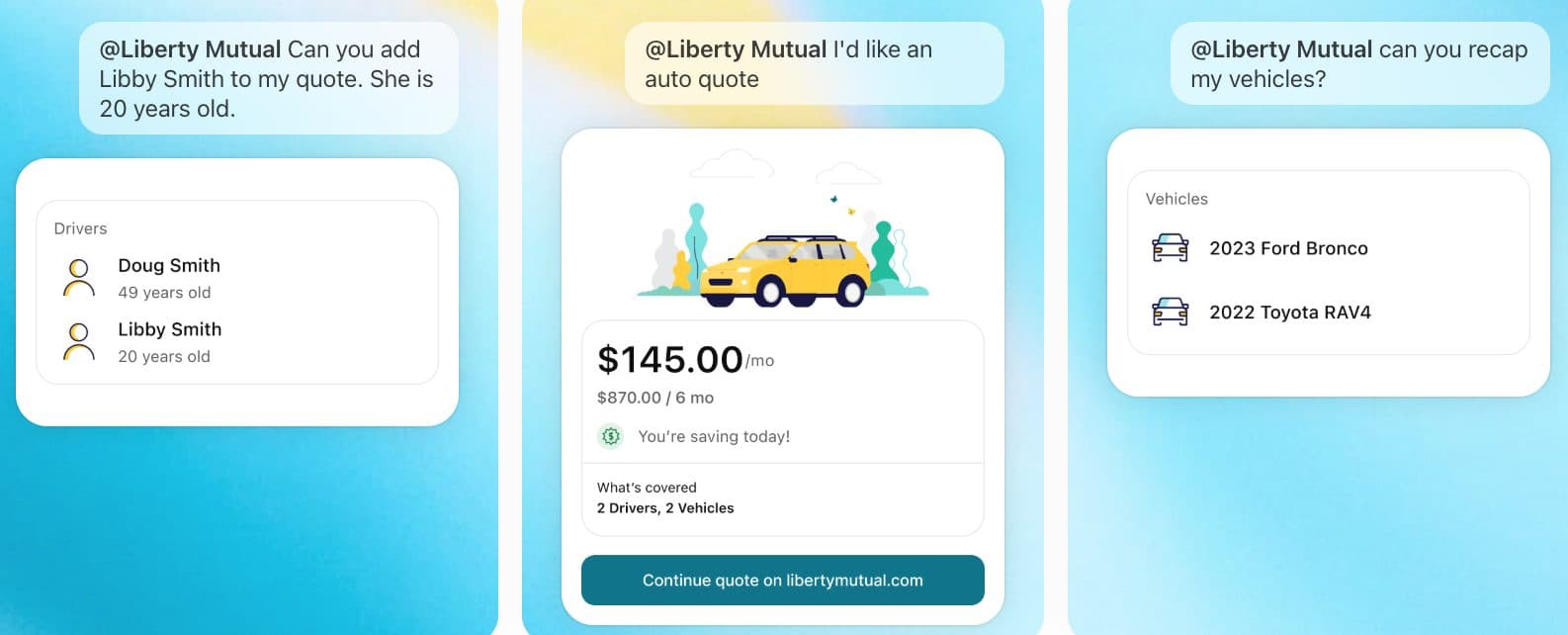
Liberty Mutual is testing something bigger than a chatbot demo: a new front door for personal auto quoting. The carrier has been experimenting with a ChatGPT integration that lets shoppers request personalized auto insurance estimate prompts directly inside the AI chat interface, then continue the journey with quoted vehicles, driver details and estimated monthly pricing already in view.
That matters because it shifts AI from a back-office efficiency story to a distribution story. Instead of asking consumers to start on a carrier site or a comparison portal, Liberty Mutual is trying to capture the moment of intent inside the same conversational space people already use for research and planning. Screenshots of the experience showed prompts such as “I’d like an auto quote,” “Can you recap my vehicles?” and requests to add drivers to a quote, with the interface displaying vehicle summaries, driver information and price estimates before sending users back to Liberty Mutual’s website.

The commercial logic is easy to see. Liberty Mutual already pushes online quoting hard, telling shoppers on its consumer auto pages that switchers could save over $700 on car insurance. In Virginia, the company says consumers can get a free online quote in less than 10 minutes. A conversational entry point could make that funnel feel less like a form fill and more like guided shopping, which is exactly where carriers have been trying to remove friction for years.
The harder part is not the interface. It is what sits behind it. A quote experience inside ChatGPT has to stay accurate, compliant and fully disclosed, especially if the model is helping steer a prospect through rating questions and driver capture. Carriers and insurtech vendors will need to decide how quote logic is governed, how disclosures are presented, and where the handoff happens when the customer reaches a bindable offer. Once shopping starts in an AI assistant, the ownership of the customer relationship gets murkier too. The assistant may own the first conversation; the carrier still has to own the sale.
Liberty Mutual is not new to this terrain. LibertyGPT was already being used by more than 10,000 employees, and other trade coverage described a broader internal rollout across a 45,000-member workforce with training and guardrails. The company also announced a $25 million, five-year AI research collaboration with MIT focused on computer vision, language understanding, privacy and security, and risk-aware decision making.
The test also fits a wider industry pattern. OpenAI approved insurer-built apps for personalized home insurance quotes from Tuio and WaniWani in February, another sign that insurers are beginning to treat conversational AI as a commerce channel, not just an automation layer. Liberty Mutual’s experiment suggests the next fight in personal lines may be about where shopping begins, and who gets to own that first clickless conversation.
This article was produced by Prism’s automated news system from verified source data, official records, and press releases, then run through automated quality and moderation checks before publishing. The system is built and supervised by the people who set the standards it runs under. Read our full AI policy.
Did this article answer your question?