P&C insurers shift core modernization focus from replacement to value
Core modernization in P&C is now judged by business outcomes, not system swaps. Carriers are being pushed toward API-led, data-clean platforms that speed product changes and cut complexity.
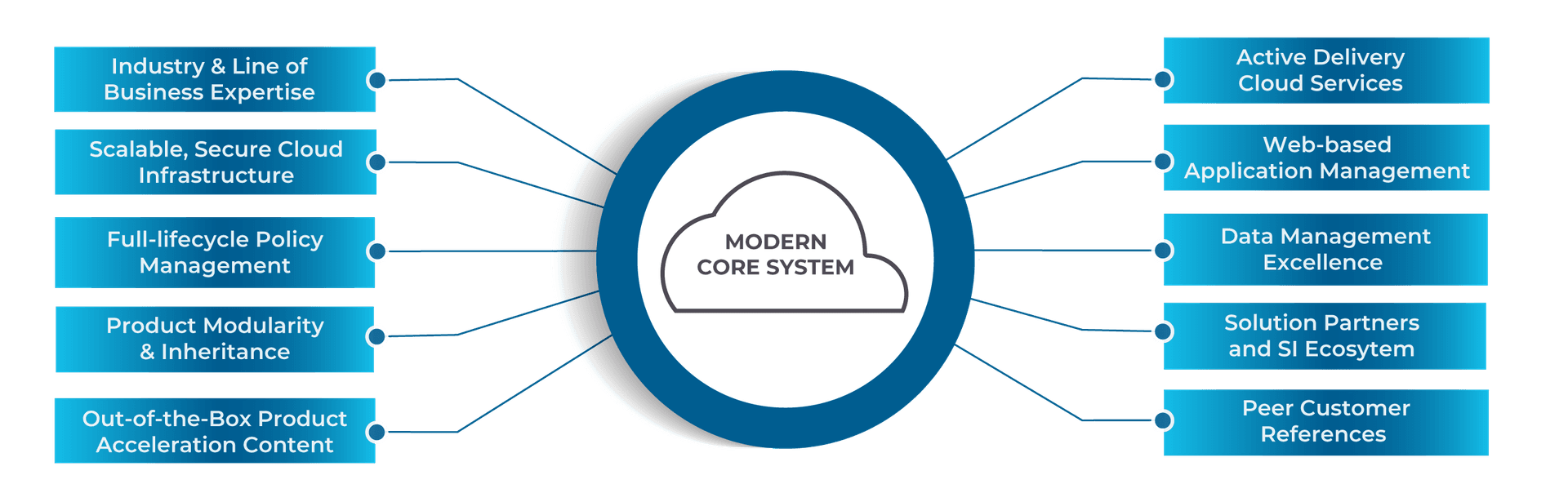
Many carriers have already replaced aging policy systems, moved workloads to the cloud, or consolidated fragmented stacks. The harder test is whether the new core changes how underwriting, billing, claims, and customer service actually work. The next round of buying decisions is being shaped by integration debt, data migration, API strategy, configuration speed, and whether a platform produces measurable gains instead of a newer version of old friction.
From replacement to value
Insurers now want digital and analytics platforms that help them realize the full benefits of core transformation. Insurance Thought Leadership’s *P&C Core Systems: Beyond the First Wave* and McKinsey frame the shift around improving operational efficiency, accelerating time to market, enhancing digital customer experiences, and reducing complexity.
| Decision lens | First-wave program | Second-phase program |
|---|---|---|
| Primary goal | Replace the legacy core | Realize value from the new core |
| Architecture focus | Big system swap, often with heavy customization | Modular design, easier updates, shared data models |
| Integration model | Point-to-point handoffs and custom links | API-led and event-driven communication |
| Data posture | Move data, then live with duplicates | Rationalize data and reduce duplication |
| Business test | Cutover completed | Faster rate changes, shorter claims cycles, better customer servicing |
First-wave programs often delivered only partial gains. Carriers may have improved infrastructure or reduced technical debt, but they still carried forward customizations, duplicate data, slow product launches, and complex change management. The second phase is about redesigning workflows so the core platform supports underwriting, billing, claims, and customer experience instead of sitting underneath the old operating model.
What the architecture now has to support
The architecture conversation has become more specific. Buyers are looking for systems that are modular, easier to update, and better aligned with product and process change across the enterprise. That usually means API-led integration, event-driven processing, cloud-native design, and a shared data model that can be used across policy, billing, claims, and analytics.
IBM and AWS both treat APIs as the connective layer that lets applications communicate, exchange data, and share services. In a P&C core program, that connective layer determines whether a policy change, billing adjustment, or claims update moves cleanly between systems or gets trapped in custom code.
Why APIs matter
APIs are now a buying criterion because they control how much integration debt a carrier inherits after go-live. A platform with a clean API strategy can expose core services to digital channels, analytics tools, and specialist applications without forcing every exchange through one-off workarounds. That also makes it easier to add new products or rework existing ones without reengineering the whole stack.
For carriers, the practical test is whether the platform supports underwriting, billing, claims, and customer experience without becoming a monolith in new clothing.
Where lift-and-shift programs lose value
The expensive failures in the second phase usually come from treating modernization as a technology replacement only. When the process design stays the same, the organization ends up with old handoffs, old approvals, and old data problems on top of a new vendor contract. That is why integration debt, data migration, API strategy, and product configuration speed are now central to the conversation.
- Integration debt shows up when carriers preserve dozens of custom point-to-point links between policy, billing, claims, document management, and customer-facing tools. The system may be modern, but every exception still depends on brittle glue code.
- Data migration becomes a liability when the carrier moves records without rationalizing them first. Duplicate customer and policy data then creates reporting gaps, claims friction, and analytics that cannot be trusted.
- Product configuration speed is the difference between a platform that supports faster rate changes and one that requires a development queue for every update. Buyers are paying close attention to how much can be done through configuration instead of code.
- Change management is often the hidden cost. If underwriting, operations, and claims teams keep old work habits, the new core simply automates the old workflow instead of improving it.
Carriers are buying modernization programs to reduce maintenance burden, improve data quality, make process control more transparent, and cut the time it takes to launch products or update rates.
How buyers should evaluate platforms and partners
The shortlist has changed. A carrier evaluating Guidewire, BriteCore, or Decerto is not just asking whether the vendor can administer policies. It is asking how the platform fits into a broader ecosystem that includes specialist tools and delivery partners. Product depth still matters, but governance, implementation method, and change management now carry equal weight.
That is especially true for mid-market and regional carriers, where the tolerance for long, disruptive programs is low. These firms need modernization benefits quickly, and they cannot afford a transformation that ties up business teams for years while leaving core workflows half-changed. The buying lens has become more operational: does the platform help product teams move faster, does it support analytics, and does it fit with the carrier’s broader technology estate?
| Evaluation area | What successful programs require |
|---|---|
| Integration | APIs that support clean data exchange across systems |
| Data | Shared models and disciplined migration, not duplicate records |
| Product change | Fast configuration for rates, forms, and rules |
| Workflow | Orchestration across underwriting, billing, and claims |
| Governance | Clear implementation method and change control |
| Outcomes | Faster launches, shorter claims cycles, lower maintenance burden |
What the market messaging is telling buyers
The language around transformation has changed across the market. Damco Group centers a systems-led approach to modernization. Capgemini’s executive summary, *From Legacy to Leadership: Strategies, Success Factors, and Roadmaps for P&C Core Transformation*, frames the work as an operating shift, not a software refresh. Finys treats the question as when and how to replace core insurance systems without disrupting the business. Decerto’s core modernization material focuses on execution rather than theory.
These trade-offs have been in view for years; Matthew Wolff’s Insurance Thought Leadership author page links back to *Considerations for your Core Transformation*. Now the expectation is that modernization must pay off in faster time to market, cleaner data, better digital service, and a core platform that can support continuous improvement instead of another round of deferred cleanup.
This article was produced by Prism’s automated news system from verified source data, official records, and press releases, then run through automated quality and moderation checks before publishing. The system is built and supervised by the people who set the standards it runs under. Read our full AI policy.
Did this article answer your question?