How to think clearly again during menopause brain fog
Brain fog in perimenopause is common, disruptive and often dismissed. The evidence points to symptom tracking, sleep treatment and a proper medical workup, not quick-fix wellness claims.

A missed word in a meeting, a forgotten school form or a stalled thought mid-sentence can shake the sense that you are still operating at full capacity. In perimenopause, brain fog can blur work performance, caregiving and confidence long before any formal menopause label is used. The best response is practical: notice the pattern, rule out other causes and treat the symptoms that are driving it.
What menopause brain fog actually feels like
The Menopause Society defines brain fog as forgetfulness, trouble concentrating and mental fatigue. Its 2022 World Menopause Day leaflet named difficulty remembering words and numbers, misplacing items, trouble concentrating, difficulty switching between tasks and forgetting appointments or even why you entered a room.
That list sounds mundane until it lands in real life. Maven Clinic treats brain fog as something to think through, not brush off.
Why this is common, and still worth taking seriously
In April 2026, UCL said brain fog affects two-thirds of women going through menopause. A Stanford CME session in the same period said more than 60% of women report concerns with memory, attention, processing speed and executive function during perimenopause and menopause.
In 2022, P.M. Maki described menopause brain fog as a constellation of cognitive symptoms around menopause, especially memory and attention changes. Two 2024 PubMed-indexed reviews covered recent evidence in perimenopause and how to counsel and treat midlife women. Harvard Health has also published on the link.
What the research says is happening in the brain
A 2025 Menopause Society literature review linked structural brain changes during menopause with cognitive, emotional and physiological changes. The University of Cambridge reported reductions in grey matter volume in key brain regions, along with increased anxiety, depression and sleep disturbance.
Researchers have followed this for years, even if not always measured well. A 2022 International Menopause Society summary described a study of 85 perimenopausal women who were tracked across more than 400 bi-annual visits from 2005 through 2016. That kind of repeated follow-up matters because brain fog is often fluctuating, not constant, and the numbers can be hard to capture in a single clinic visit.
Why standard testing can miss what women feel
In March 2025, UCL researchers said the measures used to assess cognition during menopause are often inadequate, and they called for a menopause-specific subjective cognition outcome measure. A woman can feel distinctly less sharp even if a brief office test looks normal.
This mismatch helps explain why so many women are told, implicitly or explicitly, that they are fine. If the instrument is too blunt, it will miss the thing people are actually reporting, which is difficulty thinking clearly in the middle of work deadlines, parenting, caregiving and poor sleep. A better measure would capture how often the lapses happen, what triggers them and how much they interfere with daily life.
What to try now
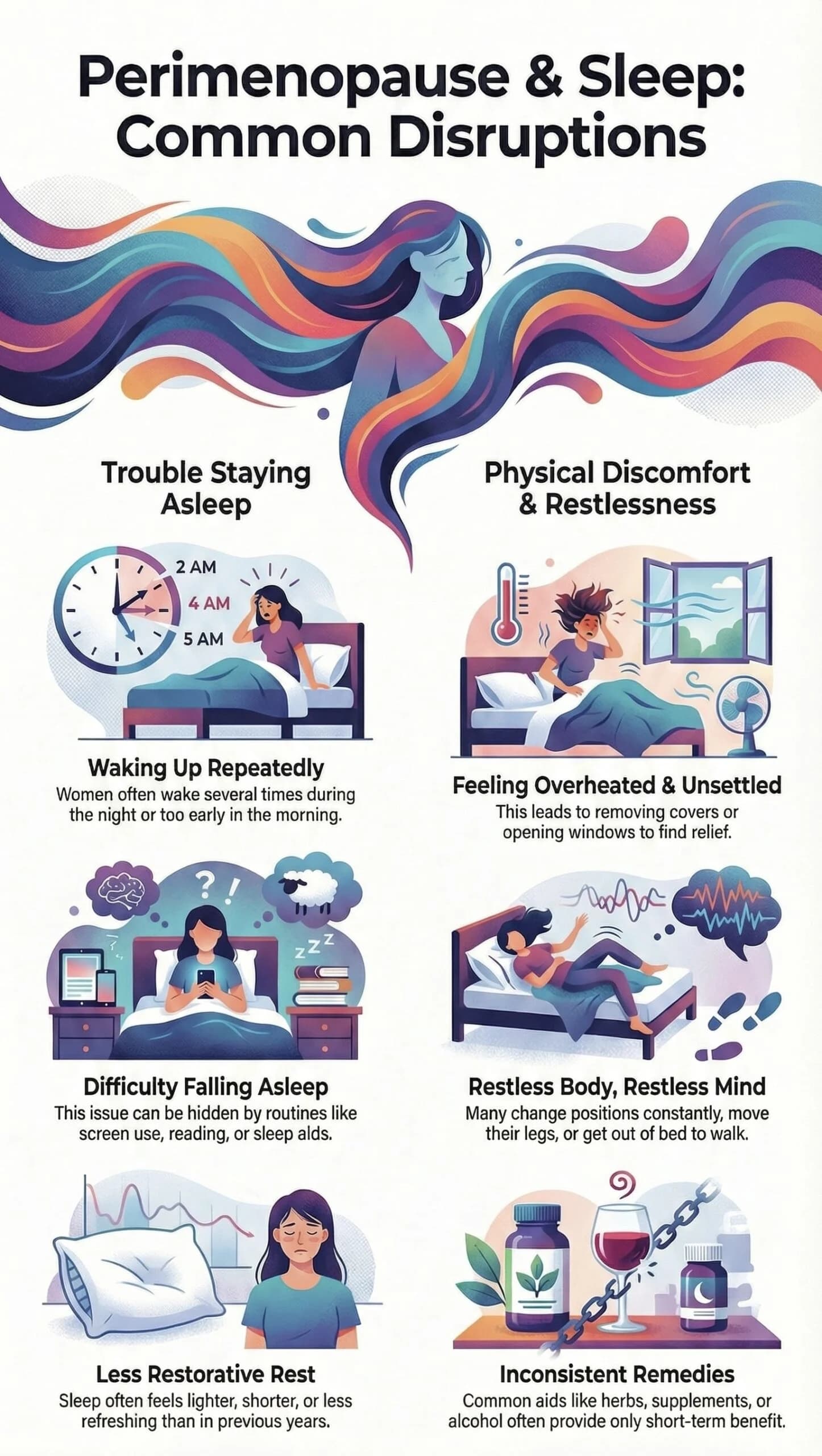
The most useful first step is to look for patterns. Do the lapses cluster after a bad night’s sleep, during stress, or when hot flashes and night sweats are worse? If the answer is yes, the symptom is still real, but it may be being amplified by sleep disruption and vasomotor symptoms rather than by cognition alone.
- Sleep hygiene, because broken sleep can make attention and memory look worse than they are
- Regular movement, which supports mood, sleep and daytime alertness
- Stress reduction, especially when work strain and caregiving are already high
- Nutrition support, if missed meals, low intake or irregular eating are making concentration harder
- Symptom tracking, so you can show a clinician whether the problem is episodic or persistent
The practical basics still matter:
What deserves medical evaluation
Brain fog should not automatically be blamed on perimenopause, because other conditions can look similar. The usual rule-outs include thyroid issues, anemia, medication side effects, depression and sleep disorders. If you are waking unrefreshed, snoring, having frequent night wakings or struggling with low mood, that is a reason to get assessed rather than simply assuming hormones are to blame.
Brain fog can coexist with other menopause symptoms, especially hot flashes, night sweats and sleep disturbance, and it may improve when those are addressed. Stanford’s CME session specifically warned clinicians to distinguish common perimenopausal cognitive changes from early-onset dementia.
What treatments have real evidence behind them
Among the more useful interventions, cognitive-behavioral therapy stands out. On May 6, 2026, The Menopause Society said CBT produced meaningful short-term improvements in insomnia severity, hot flash interference, sleep self-efficacy and depressive symptoms. Sleep disruption is one of the clearest drivers of daytime fog.
For some women, the next step in a clinician conversation may be hormone therapy. For others, it may be non-hormonal symptom management or a combination approach. Treatment should match the symptom cluster, the medical history and the risks and benefits in front of you.
Why the conversation is shifting
A 2024 Menopause Priority Setting Partnership put cognitive problems among the top three priority research questions.
This article was produced by Prism’s automated news system from verified source data, official records, and press releases, then run through automated quality and moderation checks before publishing. The system is built and supervised by the people who set the standards it runs under. Read our full AI policy.
Did this article answer your question?