How workplace law is adapting to perimenopause accommodation demands
Menopause is moving from a private HR exception to a formal accommodation issue, with Rhode Island, Philadelphia, and California pushing the law in different directions.

Rhode Island became the first U.S. state to require workplace accommodations for menopause when its law took effect on June 24, 2025. Hot flashes, sleep loss, anxiety, fatigue, brain fog, dizziness, and other perimenopause symptoms are now showing up in the same legal channels that handle disability, sex discrimination, leave, and basic workplace health and safety. The result is a more fragmented but more visible set of obligations for employers, and a clearer path for workers who need changes to keep doing their jobs.
Why this is becoming an accommodation issue
In its document titled “Menstruation and Menopause at Work,” the U.S. Department of Labor says employers and employees are increasingly recognizing the need to ensure equitable access to employment regardless of health needs, and that policymakers and employers have already expanded protections and benefits for workers through pregnancy and childbirth accommodations, breastfeeding break time and space, and time off.
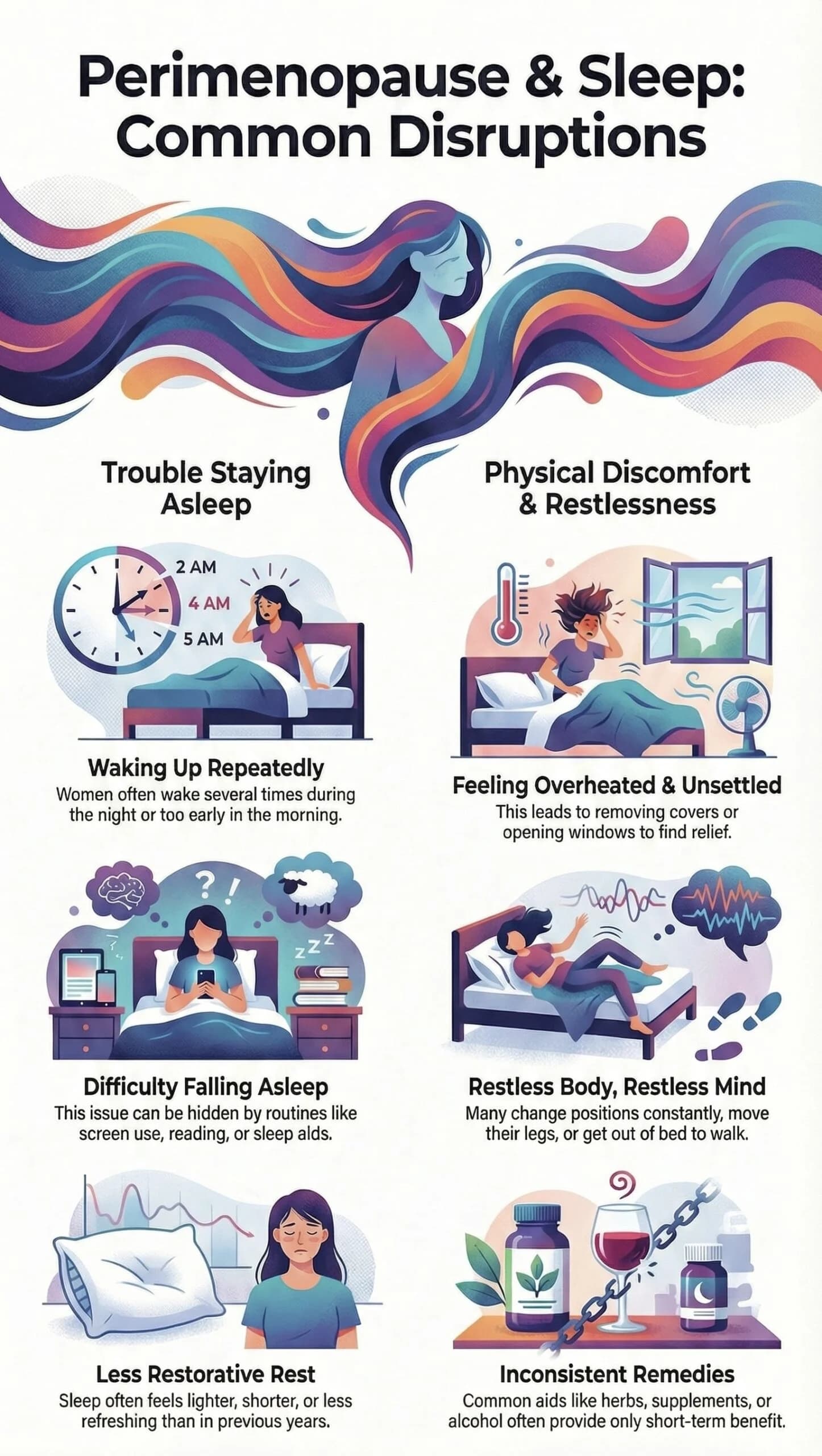
The symptoms most likely to trigger accommodation requests are the ones that disrupt attendance, concentration, or stamina. In practice, that usually means hot flashes, night sweats, insomnia, anxiety, fatigue, cognitive changes, dizziness, and emotional volatility. Those are the symptoms that can make a rigid shift pattern, a hot office, a client-facing role, or a strict performance metric suddenly unworkable.
What employees are asking for in real life
The most common requests are practical rather than dramatic: flexible scheduling, more control over breaks, remote or hybrid days, temperature adjustments, and temporary changes to duties or deadlines. Leave is also part of the picture, especially when sleep disruption or flare-ups are severe enough to affect attendance. The legal question is often not whether the need is real, but whether the employer has a consistent process for documenting it and deciding what is reasonable.
That is where performance reviews can become a flashpoint. If symptoms affect productivity and one supervisor treats the issue as a protected accommodation request while another treats the same pattern as poor performance, the employee can end up facing inconsistent treatment inside the company and potential claims outside it. Employers that rely on informal goodwill instead of a formal process are more likely to make uneven decisions, and those inconsistencies are exactly what HR teams are now being pushed to prevent.
Where the law is still gray
The central legal question is whether menopause needs its own protected category or can be handled under existing structures. A July 15, 2026 National Law Review analysis focused on that debate. Menopause may fit under disability law, sex discrimination law, pregnancy-related protections, or general workplace health and safety standards, but the fit is not identical everywhere. That leaves employers operating in a patchwork, especially where statutes do not name menopause directly.
The legal route changes the employer’s duties. Disability-style analysis often brings an interactive process and a focus on individualized accommodation. Sex-discrimination theory can raise questions about whether women are being singled out or denied equal access to work. Health and safety rules may support changes in temperature, rest, or break practices even when the law does not explicitly mention menopause.
The places where the law is getting more specific
The law amended the Rhode Island Fair Employment Practices Act to explicitly include menopause as a protected condition and requires employers to engage in the interactive process for menopause-related accommodation requests.
Philadelphia took a similar step in January 2026, when it passed legislation prohibiting discrimination and requiring accommodation for needs related to menstruation, perimenopause, or menopause. It was the first major U.S. city to explicitly offer that broad set of protections. For employers, it means local compliance now has to be built into accommodation training, leave policies, and internal case handling.
California is moving on a different track but toward the same destination. In a June 4, 2026 analysis, the California Senate Judiciary Committee examined AB 1940. The bill would add perimenopause, menopause, postmenopause, and related medical conditions to the definition of sex in the California Fair Employment and Housing Act. It would also require the California Commission on the Status of Women and Girls and the California Civil Rights Department to take specified steps if the bill is enacted. That approach does not create a standalone menopause law; instead, it folds menopause into sex-discrimination protections, which could broaden how claims are evaluated.
What guidance already tells employers to do
The Equality and Human Rights Commission in the United Kingdom has published employer guidance on menopause in the workplace. The guidance tells employers to treat menopause as a real working condition that can affect attendance, confidence, safety, and performance, and to build responses before a request becomes a dispute.
For HR teams, the operational lesson is straightforward. Policies need to cover how a worker asks for help, who reviews the request, what medical information can be requested, how quickly decisions are made, and how consistency is maintained across managers. Training also needs to cover less obvious symptoms such as brain fog, insomnia, dizziness, and emotional volatility, because those are the symptoms most likely to be misunderstood as attitude problems or performance decline.
What a legal shift changes on the ground
If menopause is treated as a protected workplace issue more explicitly, the biggest change will be predictability. Employees would have clearer rights to ask for flexibility, temperature control, modified duties, or leave without having to frame the request as something else. HR teams would also have clearer obligations to document decisions, engage in the interactive process, and avoid ad hoc manager-by-manager exceptions that can look arbitrary.
A worker who cannot sleep because of night sweats may need schedule changes. A worker struggling with hot flashes may need a cooler workstation or different uniform requirements. A worker facing cognitive symptoms may need temporary deadline adjustments or a quieter workspace.
This article was produced by Prism’s automated news system from verified source data, official records, and press releases, then run through automated quality and moderation checks before publishing. The system is built and supervised by the people who set the standards it runs under. Read our full AI policy.
Did this article answer your question?