Perimenopause goes mainstream, but hype risks outrunning evidence
Perimenopause is real and often lasts years, but a booming market is smuggling in overclaims, from hormone fears to supplements that outpace the evidence.

The menopausal transition most often begins between ages 45 and 55 and usually lasts about seven years, though it can stretch to 14. Perimenopause is finally public, but visibility has brought a second problem: a flood of product pitches, influencer certainty, and simplified explanations that often run ahead of the science. The symptoms are real, and so is the need for better care, but not every midlife complaint is perimenopause, and not every branded fix deserves trust.
Perimenopause is a long transition, not a one-off diagnosis
Menopause itself is defined as 12 months after a woman’s last period, which means the transition leading up to it can occupy a meaningful stretch of midlife rather than a brief hormonal blip. A 2024 review from The Menopause Society found that menopause may last for one-third of a woman’s lifespan or longer.
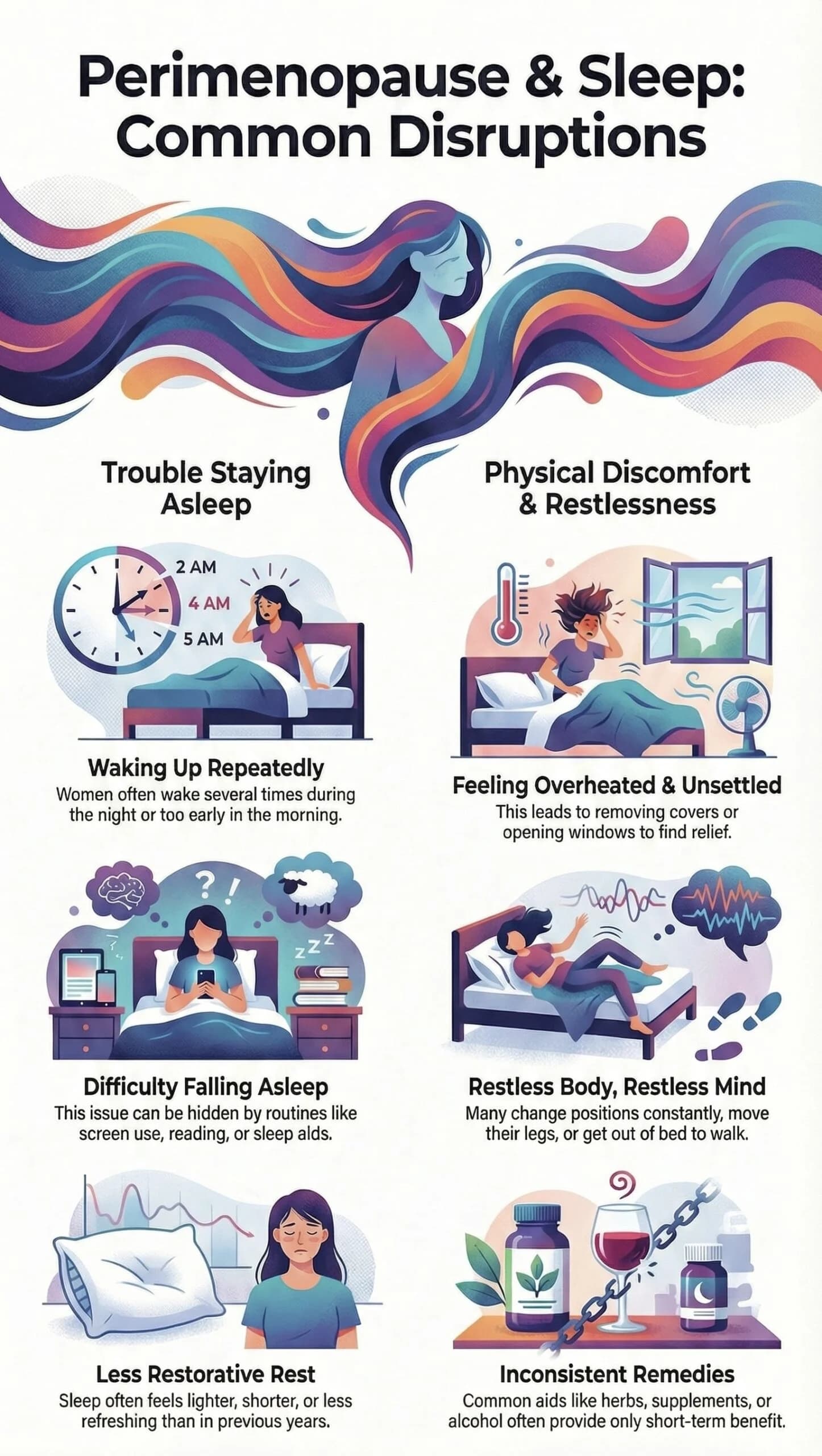
Hot flashes, sleep disruption, mood changes, cycle irregularity, and cognitive complaints can all appear, but not in the same sequence or with the same intensity for everyone. Perimenopause is the years leading up to menopause, when menstrual cycles change and symptoms may begin.
There is no single perimenopause experience
The symptom picture is highly variable. A systematic review and meta-analysis on menopausal symptoms among middle-aged women found wide variation in symptom burden, and a large symptom-log study that analyzed more than 145,000 logs identified distinct pre-, peri-, and menopausal phenotypes.
If the experience is heterogeneous, then any claim that one pill, one wearable, or one hormone test can explain every symptom is too neat to be credible. It also means the best care starts with listening to the pattern, not forcing every complaint into a preset script.
Why a broad workup still matters
The temptation to blame everything on perimenopause is strong, especially when social feeds turn the transition into an identity. But fatigue, mood changes, sleep disruption, and weight changes can also point to thyroid disease, anemia, depression, stress, medication effects, sleep apnea, and other conditions that need a different workup. Thyroid disorders and sleep problems can mimic perimenopause.
That is the practical reason to see a GP rather than self-diagnosing from a symptom carousel. If your symptoms do not fit a familiar pattern, if they are getting worse, or if you are being told to buy a product before anyone has looked for another cause, ask for a broader assessment. The point is not to dismiss perimenopause, but to avoid missing something treatable that just happens to show up at the same age.
The misinformation problem is now part of menopause care
The menopausal transition has also become a battleground over hormone therapy. The Menopause Society reported that its members were seeing a significant increase in misinformation and disinformation about menopause management, particularly hormone therapy.
In July 2025, the FDA held an expert panel on menopause and hormone replacement therapy, and HHS said it was advancing women’s health and removing misleading FDA warnings on hormone replacement therapy. The FDA would begin asking drug companies to remove black box warnings from menopause hormone treatment. The International Menopause Society has also published a white paper on the controversies surrounding menopausal hormone therapy.
The menopause market is helping, and selling
Direct-to-consumer platforms, along with a wider ecosystem of menopause brands, have helped women name symptoms earlier and push for care. At the same time, the category has become attractive to companies selling supplements, gadgets, and broad relief promises that often outpace the evidence.
A 2025 protocol in PMC focused on social-media marketing of non-evidence-based women’s health interventions, including menopause-related products. Forbes, Oprah Daily, Modern Retail, and Fierce Healthcare have also covered the market potential and credibility questions around menopause brands. A 2025 Springer article examined women’s views on empowerment in menopause-related femvertising on social media.
The sharpest reading is not that every product is worthless, but that visibility creates an easy sales funnel. Once women are primed to see every sleep problem, mood wobble, or change in cycle as “perimenopause,” a market can sell them a solution before anyone has established whether the symptom belongs there at all.
How to use the mainstream attention without getting sold to
The National Institute on Aging puts the number of women in the United States who experience menopause each year at more than one million. Symptoms can affect sleep, concentration, and work functioning while many women are still in the workforce.
The basic rule is simple: treat perimenopause as a real transition, not a total explanation. Ask for a clinical review when symptoms are new, disruptive, or vague enough that something else could be going on. Be cautious with supplements and gadgetry that promise broad relief without a clear evidence base, and be especially skeptical when a seller tries to turn ordinary midlife change into a high-pressure identity package.
This article was produced by Prism’s automated news system from verified source data, official records, and press releases, then run through automated quality and moderation checks before publishing. The system is built and supervised by the people who set the standards it runs under. Read our full AI policy.
Did this article answer your question?