UF Health explains perimenopause symptoms, when to seek care
UF Health's clinician-led Q&A treats perimenopause as a transition to decode, not a mystery to market. It helps readers spot when symptoms fit, and when they need a workup.

Sara Deatsman, MD, a board-certified obstetrician-gynecologist at UF Health, walks through the questions patients bring to appointments, from what is happening to their cycles to which symptoms belong to perimenopause and which ones deserve a closer look. UF Health’s clinician-led Q&A slows the menopause transition down and explains it in plain language.
Perimenopause is a process, not a switch
The most useful framing is also the least glamorous: menopause is not a single moment. The National Institute on Aging defines menopause as 12 consecutive months without a menstrual period, while The Menopause Society defines perimenopause as the time before natural menopause. In practice, that means the confusing part often starts before periods stop completely, with hormone production from the ovaries becoming erratic and menstrual flow and frequency shifting.
That transition commonly begins in the 40s and can last for years. For many women, the first clues are irregular cycles, heavier or lighter bleeding than usual, and symptoms that seem to come and go without a pattern.
The symptoms that usually belong in the perimenopause conversation
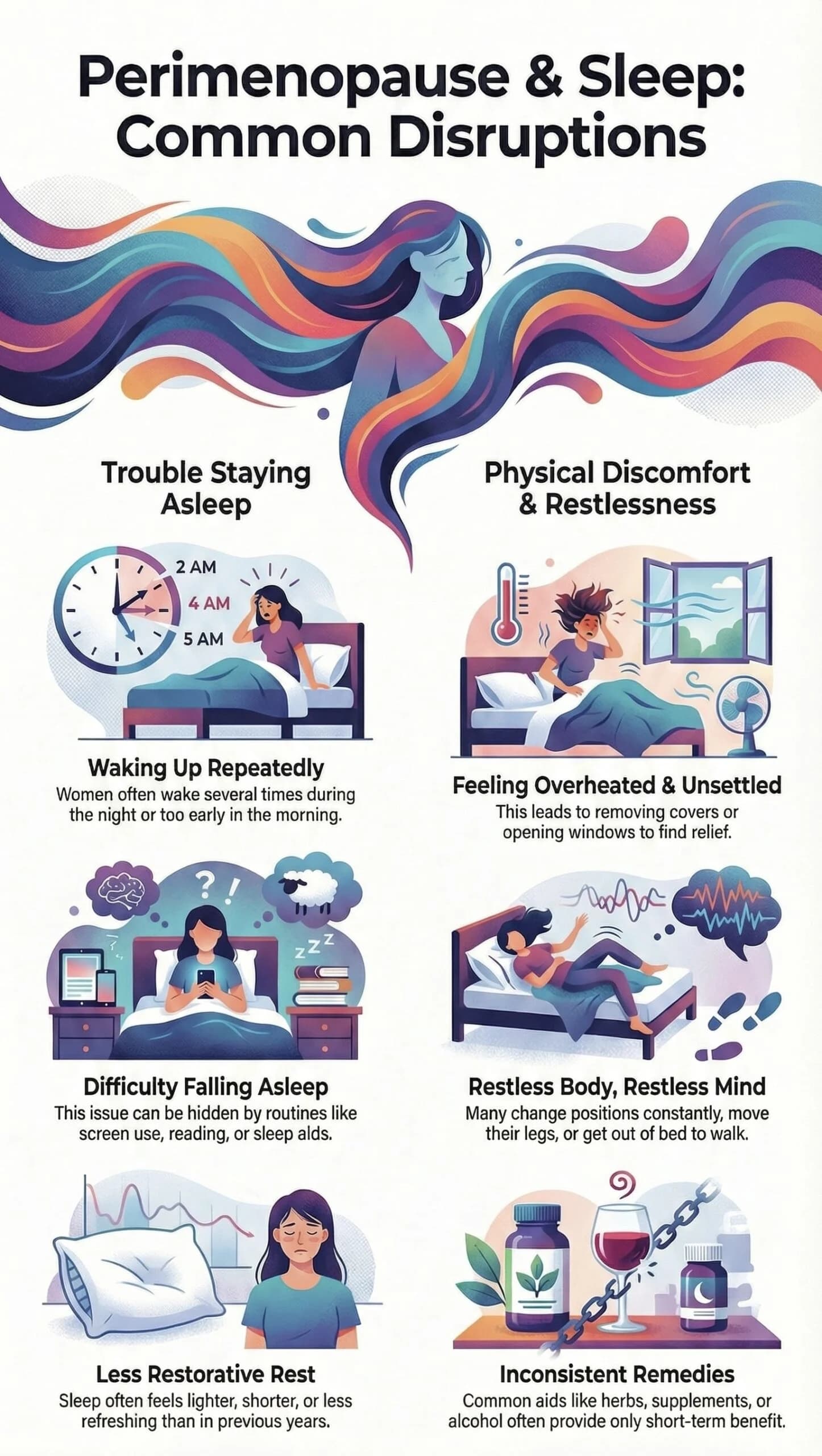
The symptom list is broader than hot flashes. Common perimenopause symptoms include hot flashes, night sweats, sleep disruption, mood changes, vaginal discomfort, irregular periods, and changes in menstrual flow. Those changes do not arrive in the same order for everyone, and they do not always line up neatly with age or with the final menstrual period.
One person may notice sleep disruption and night sweats first, while another notices shorter cycles, then heavier bleeding, then mood changes. When ovarian hormone production becomes erratic, the pattern of symptoms can also become erratic.
What to track before you see a clinician
The most practical move in perimenopause is to bring specifics, not just a general sense that something feels off. Track the length of your cycles, whether the flow is lighter or heavier, how often periods come, and whether bleeding patterns are changing from month to month. Add hot flashes, night sweats, sleep problems, mood shifts, and vaginal discomfort to that list, because these are the symptoms that help a clinician decide whether you are in the menopause transition or whether something else needs to be ruled out.
A simple symptom log can be enough to sharpen the conversation. Write down when the changes started, how often they happen, and whether anything new is showing up outside your usual pattern. That kind of detail helps a doctor distinguish the transition itself from thyroid disease, anemia, fibroids, or other causes of abnormal bleeding and fatigue that can overlap with perimenopause.
Why blood tests are often not the answer
A common misconception is that perimenopause has to be confirmed by a blood test. Hormone blood tests are often not needed in typical cases, because hormone levels fluctuate during the transition and can be hard to interpret from one draw. That is why clinicians usually lean on history, age, bleeding changes, and symptom patterns rather than a single laboratory result.
If your periods are changing, your sleep is worse, and you are having hot flashes or vaginal discomfort, the diagnosis often comes from the overall pattern, not from chasing one hormone number. ACOG patient-education resources focus on the menopause transition in exactly this way, with guidance meant to answer questions about symptoms, diagnosis, and treatment options rather than promise a simple test.
When normal transition becomes a reason to call your doctor
Perimenopause can explain a lot, but it should not explain away everything. Seek care if bleeding is unusually heavy, symptoms are severe, or the pattern does not fit the usual transition. The goal is not to medicalize every change in your 40s, but to avoid assuming every new symptom is “just hormones.”
Heavy bleeding can lead to anemia and can also signal conditions that are not perimenopause at all. Severe mood changes, significant sleep loss, or vaginal discomfort that affects daily life also deserve attention, because those symptoms can often be treated once a clinician confirms what is driving them.
What treatment conversations usually include
In menopause-transition care, that often means discussing lifestyle changes, hormone therapy when appropriate, and nonhormonal options for women who cannot or do not want to use hormones. ACOG has also built patient-education resources and webinars around the same questions.
A treatment path that makes sense for one patient may not make sense for another, especially when symptoms, medical history, and bleeding patterns differ.
This article was produced by Prism’s automated news system from verified source data, official records, and press releases, then run through automated quality and moderation checks before publishing. The system is built and supervised by the people who set the standards it runs under. Read our full AI policy.
Did this article answer your question?