When does perimenopause start, and what symptoms to watch for
Perimenopause can start before the late 40s, and the earliest clues are often cycle changes, sleep disruption, and mood shifts. Waiting for skipped periods can mean waiting too long.

Perimenopause usually starts in your 40s, but it can begin earlier or later, and the first signs are often subtle enough to be mistaken for stress, poor sleep, burnout, or something else entirely. That can look very different from the familiar script of obvious missed periods in the late 40s.
The age question is the wrong place to get stuck
There is no single universal age when perimenopause begins. It usually starts in your 40s; the Australian Government and Cleveland Clinic both place the usual start there, and EBSCO gives the usual range as 40 to 50, with the transition lasting six to 10 years. That is long enough for symptoms to come and go, which is one reason many women do not immediately connect them to hormones.
It helps to separate perimenopause from menopause itself. Menopause means 12 consecutive months without a period under the National Institute on Aging definition. The U.S. Office on Women’s Health puts menopause in the United States between ages 45 and 55, with an average age of about 52. Perimenopause is the lead-up to that point, not the finish line, so you can still be very much in the transition while your periods are irregular but not yet gone.
What the earliest symptom clusters look like
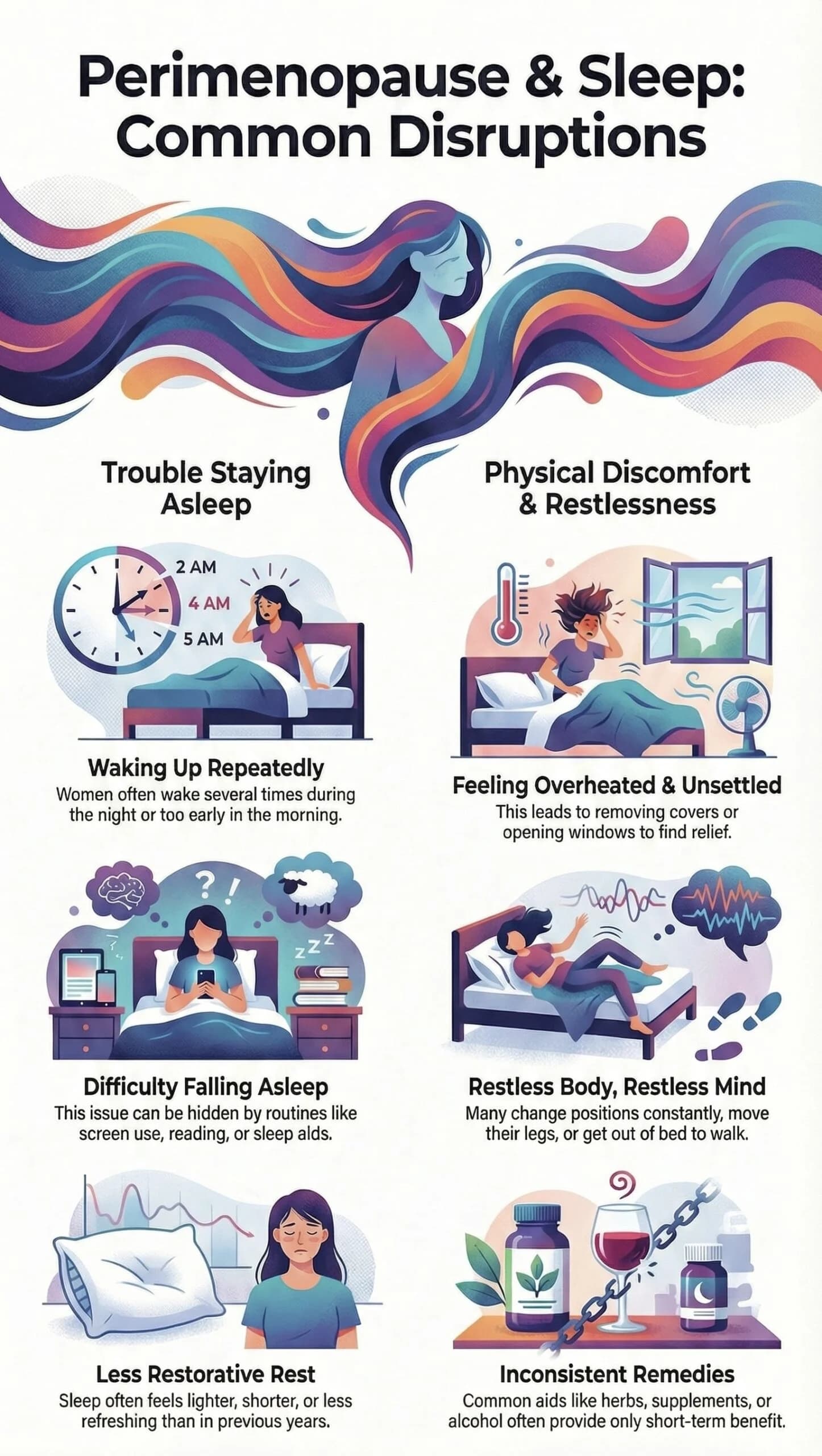
The earliest clues are often menstrual changes. Irregular periods, shorter or longer cycles, and changes in flow can all fit the pattern, and for some women that is the first signal before hot flashes ever appear. Others notice night sweats, sleep problems, mood changes, or a dip in emotional resilience before they connect the dots.
Mayo Clinic includes hot flashes, sleep problems, mood changes, and vaginal dryness among the common symptoms, and the NHS says perimenopause and menopause symptoms can be minimal for some women and major enough to affect daily life, relationships, family life, and work for others.
The earliest phase can be especially easy to miss because the symptoms are not always constant. One month may bring a rough stretch of sleep and irritability; the next may feel almost normal.
When it starts to look less like stress and more like a hormone shift
If you are in your 40s and your body starts changing in clusters, it is worth paying attention. A period that is suddenly different, sleep that has become less reliable, mood that feels less steady, or new vaginal dryness does not automatically mean perimenopause, but it is enough to stop writing everything off as “just stress.” That is especially true if the changes keep repeating over several cycles.

Timing matters because early menopause and premature menopause are different from the usual transition. The NHS defines early menopause as menopause before age 45 and premature menopause before age 40. Symptoms that begin before 45 deserve a closer look, because they may still be perimenopause, but they can also point to something that needs evaluation sooner rather than later.
Why you should not wait for a test to settle it
Perimenopause is often diagnosed from symptoms and menstrual changes, not from a single blood test. Mayo Clinic says hormone blood tests are usually not needed because hormone levels fluctuate unpredictably, which means a one-off result can be misleading.
A simple log of cycle length, flow, hot flashes, night sweats, sleep, mood, and vaginal dryness can make a GP visit much more productive. It also helps distinguish a short-lived blip from a pattern, which is the difference between guessing and getting a sensible assessment.
When to book a GP appointment
You should stop self-dismissing and seek care when symptoms are affecting your life, not just when they become unbearable. If bleeding patterns become concerning, if symptoms are severe enough to affect work or relationships, or if you are unsure whether something else could be causing the changes, a GP visit is the right next step. This is also the point where it helps to bring specifics, not just a vague sense that your body feels off.
A few practical points belong in that conversation:
- Bring a cycle log, even if it is only a few months long.
- Note sleep disruption, mood shifts, hot flashes, night sweats, and vaginal dryness.
- Flag any bleeding pattern that feels unusual for you.
- Ask whether another condition could explain the symptoms if the picture does not fit cleanly.
Perimenopause also does not rule out pregnancy. Mayo Clinic and Cleveland Clinic both note that pregnancy is still possible during the transition, and a peer-reviewed review on contraception during perimenopause says contraception remains necessary until menopause is confirmed. Mayo Clinic says women age 50 or older who have gone 12 months without a period may be able to stop contraception, but younger women generally need more caution because ovulation can still happen unpredictably.
This article was produced by Prism’s automated news system from verified source data, official records, and press releases, then run through automated quality and moderation checks before publishing. The system is built and supervised by the people who set the standards it runs under. Read our full AI policy.
Did this article answer your question?