Isomorphic Labs nears $2 billion raise to accelerate AI drug discovery
Isomorphic Labs is chasing more than $2 billion as investors test whether AlphaFold-era science can reach drug candidates, not just better protein maps.
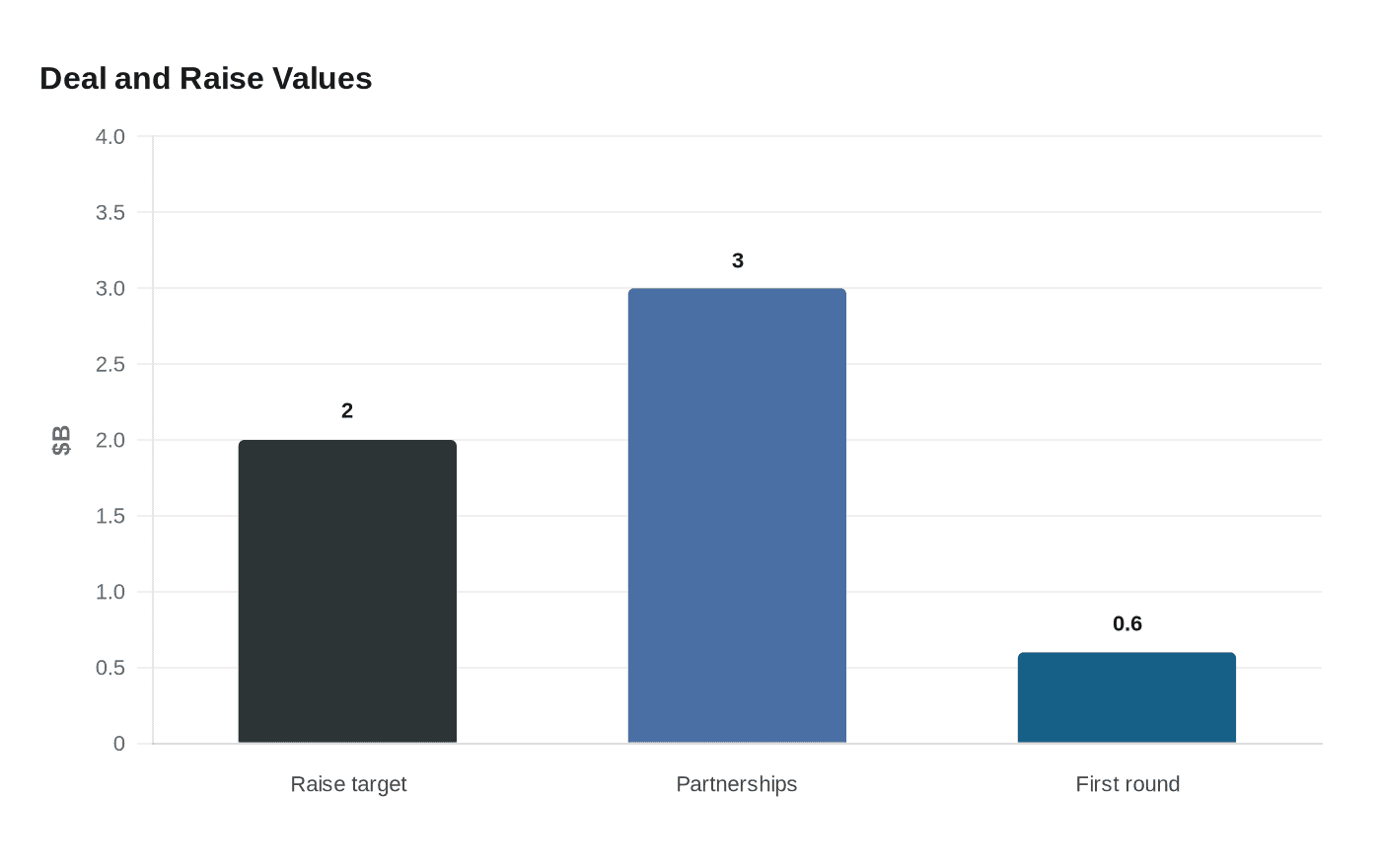
The real proof question after AlphaFold is not whether AI can predict protein structure, but whether it can shorten the far messier path from target to drug candidate. Isomorphic Labs is now in advanced discussions to raise more than $2 billion, in a round expected to be led by Thrive Capital with Alphabet also said to be participating, a deal that would rank among the biggest capital raises in AI drug discovery.
The company, spun out of Google DeepMind in 2021, has made that bridge from computation to medicines the core of its pitch. Isomorphic Labs says its mission is to solve all disease and to build on and beyond AlphaFold, the system that helped Demis Hassabis and John Jumper win the 2024 Nobel Prize in Chemistry for protein structure prediction. That scientific pedigree has given the company unusual credibility with both pharmaceutical partners and investors, but the next step is harder: showing that model-driven discovery can produce programs that survive the jump into real drug development.
The strongest evidence so far is in its partnerships. On January 7, 2024, Isomorphic Labs announced collaborations with Eli Lilly and Novartis that it said could be worth nearly $3 billion, excluding royalties from future drug sales. On February 18, 2025, it expanded the Novartis relationship by adding up to three additional research programs on the same financial terms as the original agreement. Those are the kinds of concrete, multi-program commitments that investors look for when they want to separate platform hype from translational progress.
Capital has followed that progress. On March 31, 2025, Isomorphic Labs said it raised $600 million in its first external funding round, led by Thrive Capital with participation from GV and follow-on capital from Alphabet. The new round, if completed, would dwarf that prior financing and could further tighten competition across AI-enabled biotech, where large checks now arrive faster than clinical proof.
Isomorphic Labs has also been building the infrastructure to operate like a global drug company rather than a research lab. In June 2025, it appointed Dr. Ben Wolf as chief medical officer and established a U.S. presence, extending beyond its London base. That move signaled an effort to scale the company’s translational and clinical ambitions alongside its machine-learning platform.
For investors, the size of the raise is only part of the story. The bigger test is whether Isomorphic Labs can turn Nobel-winning science, pharma partnerships, and expanding internal capability into drug programs that advance on timelines and terms that look more like a real pipeline than another inflation point in AI-biotech funding.
This article was produced by Prism’s automated news system from verified source data, official records, and press releases, then run through automated quality and moderation checks before publishing. The system is built and supervised by the people who set the standards it runs under. Read our full AI policy.
Know something we missed? Have a correction or additional information?
Submit a Tip