Ocado Retail launches verified Future of Food Edit for healthier groceries
Ocado turned Earth Day into a verified health aisle, pairing plant-based, fortified and functional brands with claims checks from Provenance and its own nutrition team.

Ocado Retail has turned a new digital aisle into a test of how far retailers can shape the health-and-protein conversation online. The Future of Food Edit launched on Earth Day, 22 April 2026, as a curated shopping destination on Ocado’s site for products the retailer says are healthier, more sustainable and backed by independent verification.
The edit was built with Future of Food, a not-for-profit platform focused on food innovation, and it rests on three assessment pillars: Responsible Sourcing, Food for Life and Waste as a Resource. Ocado said sustainability claims in the edit are independently verified through Provenance, which it describes as a claims data platform used by more than 300 consumer brands, while its in-house nutritionist checks the Food for Life criteria. The result is a merchandised space that tries to do more than aggregate brands. It attempts to impose a hierarchy of trust.
That matters because the lineup is broad enough to capture several competing versions of what counts as better-for-you food. Launch brands include Wildfarmed, Blanco Niño, ChicP, Isle of Wight Tomatoes, MOMO Kombucha, Beyond Belief, Love Corn, Tiba Tempeh, Bold Bean, SEEP and Wilton London. Plant-based and pulse-led names sit alongside kombucha, upcycled ingredients and household products, showing that the retailer is not using protein as a single message but as one thread inside a wider sustainability story.
The commercial signal behind the edit is hard to miss. Ocado said health food sales rose 234% year-on-year. In the same data set, searches for high protein were up 99%, high fibre 90%, low sugar 134%, immunity 116% and meal prep 60%. Those numbers suggest shoppers are not simply browsing a wellness aisle; they are actively filtering by benefit, then deciding which claims deserve trust.
Ocado’s earlier protein research points in the same direction. In its March 2, 2025 report, searches for high protein were up 105% year-on-year, protein rich searches rose 85% and natural protein searches rose 20%. Ocado also said 43% of consumers had increased their protein intake in the past year, while 62% of 16-34s were eating more protein than they used to. That backdrop helps explain why the retailer is now surfacing protein through a curated, verified frame rather than leaving discovery to brands alone.
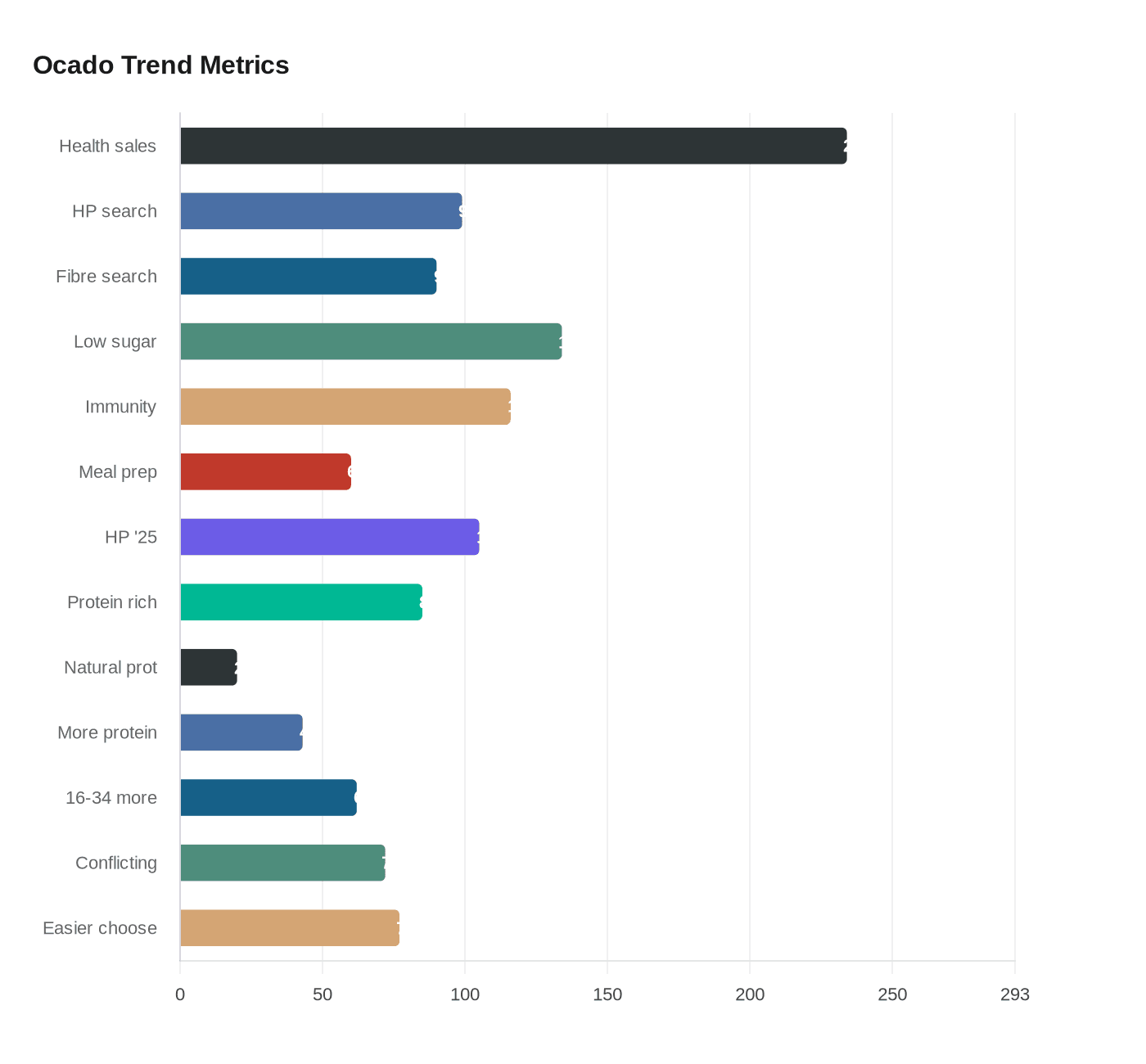
Consumer confusion is part of the pitch. Ocado found that 72% of UK consumers said there is too much conflicting advice about what food is healthy or sustainable, while 77% wanted retailers to make it easier to choose healthier and more sustainable options. Bryony Whiting, Ocado Retail’s head of partnerships and commercial strategy, said the aisle was designed to cut through that complexity by showcasing innovative brands that had been independently verified against objective criteria.
Ocado’s partnership page says more brands will be added over the year, which makes the Future of Food Edit look less like a seasonal feature and more like an evolving merchandising model. In a category where protein, fibre, low sugar and sustainability can all compete for the same basket, the retailer is betting that curation and verification can steer what shoppers buy.
Know something we missed? Have a correction or additional information?
Submit a Tip