A Simple Gesture Food Recovery Programs Set Key Logistics Guidelines for Drivers and Staff
Perishable pickups from restaurants and events demand tighter logistics than green-bag routes; ASG's food recovery guidelines set the standard every driver and coordinator needs to know.
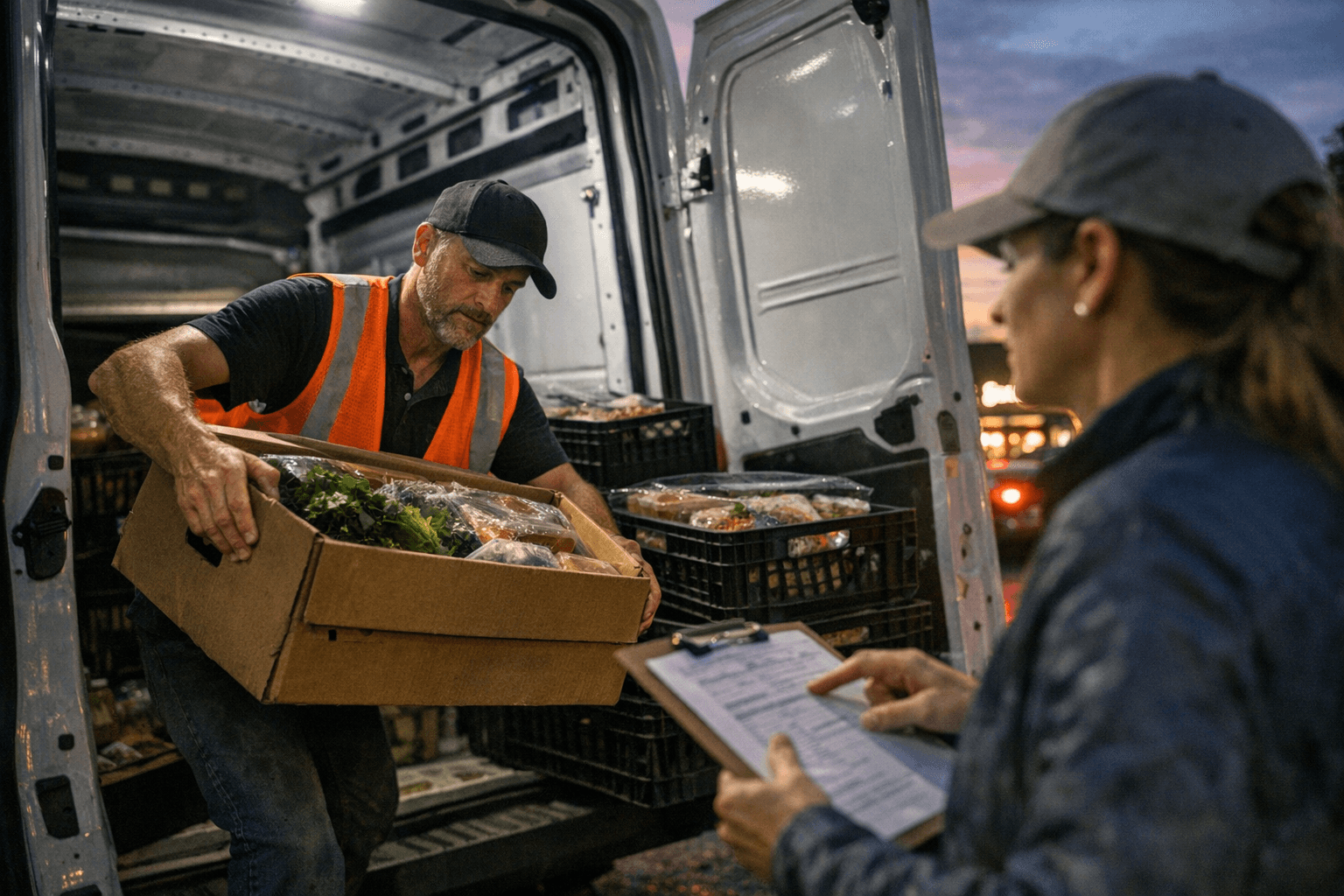
A volunteer loading donated green bags from a neighbor's porch operates on a predictable schedule. A driver pulling surplus prepared food from a restaurant kitchen at the end of a dinner service does not. That gap in operational complexity sits at the center of A Simple Gesture's food recovery guidelines, which establish clear expectations for volunteer drivers, weekday commercial-surplus coordinators, chapter operations staff, and pantry partners involved in the organization's Food Recovery and SHARE programs.
Three Programs, Three Different Demands
ASG runs three core program models, and each places a different kind of pressure on the people who make it work. The Green Bag program handles neighborhood porch pickups on a recurring schedule, which gives volunteers and coordinators reliable planning horizons. Food Recovery operates on a different rhythm entirely, rescuing surplus food from restaurants, grocery stores, and events where donation windows are short and quantities unpredictable. The SHARE program installs student-accessible refrigerators in schools, collecting unopened and unwrapped food that students can take, and it requires its own integration into driver routes to ensure food moves quickly into distribution channels rather than sitting in a school refrigerator past its usable window.
Understanding which program a shift belongs to matters because the logistics, equipment needs, and time pressures differ substantially between them. Staff and volunteers who work across all three need a clear mental map of where the operational demands are highest.
Time Sensitivity and Cold Chain Awareness
Perishable surplus recovery runs on a tight clock. Milk, deli products, and prepared hot foods begin their quality decline the moment they leave a commercial kitchen or refrigeration unit, and every minute of delay increases the risk that a receiving pantry will reject the load. Drivers scheduled for commercial pickups must coordinate closely with donating businesses and partner nonprofits to ensure quick transfer and immediate refrigeration or distribution.
Chapter staff play a critical role in making that coordination possible. Designating a single central contact at each partner business, and establishing precise ready-by times in advance, reduces the chance that a driver arrives before food is staged or has to make a return trip. Drivers themselves should be trained to recognize which items in any given load are most time-sensitive and to sequence those pickups earlier in their shift, not treat all items as equivalent regardless of perishability.
Vehicle and Equipment Standards
The right gear turns a marginal perishable recovery into a successful one. Drivers should confirm vehicle cargo capacity before accepting a pickup assignment and should be informed about the use of insulated boxes, coolers, and basic hand trucks where facilities allow them. For perishable pickups specifically, wearing gloves and following food safety guidance around temperature-abused items reduces pantry rejection rates and protects the relationships ASG has built with its donor businesses.
Chapters that want to increase their volume of perishable recoveries should consider investing in a small set of reusable coolers and hand trucks, or actively seeking equipment donations. The return on that investment is measurable: more perishable loads accepted, fewer rejected at the pantry, and donors who stay engaged because their food actually reaches people.
SHARE refrigerator checks should be built into driver routes with the same intentionality. Schools are not always on the way to a commercial pickup, but integrating those stops into a planned route prevents food from aging in a refrigerator that was meant to be a brief way station, not long-term storage.
Partner Matching and Intake Vetting
Not every receiving pantry can handle every food type. ASG matches donating businesses with vetted nonprofits that can accept the specific surplus being offered, which means chapter staff must maintain accurate, up-to-date intake lists that distinguish who accepts prepared foods, who handles canned goods, and who has the infrastructure for bulk produce. An inaccurate intake list wastes a driver's time, strains a pantry partner, and risks spoiling food that could have reached someone in need.
Keeping those lists current is ongoing work, not a one-time setup task. Pantry capacity changes seasonally, and new partners enter or exit the network. Chapter operations staff should build intake list reviews into their regular workflow, not treat them as a background administrative task.
Volunteer Training and Safety
Commercial food recovery puts volunteers in environments that green-bag pickups do not: restaurant kitchens, loading docks, catered event spaces. That requires a specific layer of preparation. Drivers should receive briefings on safe lifting and loading practices, secure storage of food during transport, and basic personal protective measures including gloves and hand sanitizer.
Equally important is training on professional conduct. Drivers picking up from a restaurant mid-service or a catering event as it winds down are entering a working environment where kitchen staff and event coordinators are managing their own pressures. Clear instructions on how to interact with those contacts, what to ask, and how to handle a handoff efficiently makes the pickup smoother and reinforces ASG's reputation as a reliable, low-friction donation partner.
Documentation and Chain of Custody
Every recovery run should leave a paper trail. A simple log capturing the donor business name, time of pickup, item categories and approximate weight or volume, receiving nonprofit, and driver name serves multiple purposes simultaneously. It supports partner reporting, provides the data points that grant applications require, and creates the traceability that food safety and insurance standards demand.
Chapters that have been inconsistent about logging will find that the gap hurts most when applying for grants that prioritize food-waste mitigation or when pursuing municipal event partnerships. Recording basic metrics, including number of recoveries, estimated pounds, and volunteer hours, is not administrative overhead; it is the evidence base that unlocks new funding and new donor relationships.
Scheduling and Redundancy Planning
Business donation windows do not always close on schedule. A restaurant service runs long. An event ends two hours later than the coordinator expected. A grocery store's surplus inventory is larger than anticipated and takes more time to stage. Chapters that build backup drivers and flexible shift-swap systems into their scheduling absorb those disruptions; chapters that do not absorb them lose recoveries and, over time, lose donors.
Maintaining an on-call pool of drivers is the operational hedge that reduces missed recoveries and protects the chapter's relationships with business partners. A donor who offers surplus food and finds no one available to collect it twice in a row will stop offering. The redundancy investment is modest compared to the cost of losing a reliable commercial donor.
From Offer to Delivery: Closing the Conversion Gap
The measure of an effective food recovery operation is not how many businesses offer surplus, but how many of those offers result in food actually reaching a recipient. Improving that conversion rate requires a standardized pre-pickup checklist, a vetted and current partner list, and flexible routing that can absorb last-minute changes in donor availability.
Food recovery represents a fast-moving subset of ASG's work that places higher operational demands on staff and volunteers than the recurring green-bag program. Chapters that standardize their pickup processes, invest in basic equipment, train drivers in safe handling and professional conduct, and document their work consistently are positioned to increase perishable rescue volumes while keeping volunteers safe and partner relationships intact. The infrastructure is not complex, but it has to be deliberate.
This article was produced by Prism’s automated news system from verified source data, official records, and press releases, then run through automated quality and moderation checks before publishing. The system is built and supervised by the people who set the standards it runs under. Read our full AI policy.
Did this article answer your question?