Safe Lifting and Loading Practices Protect A Simple Gesture Volunteers
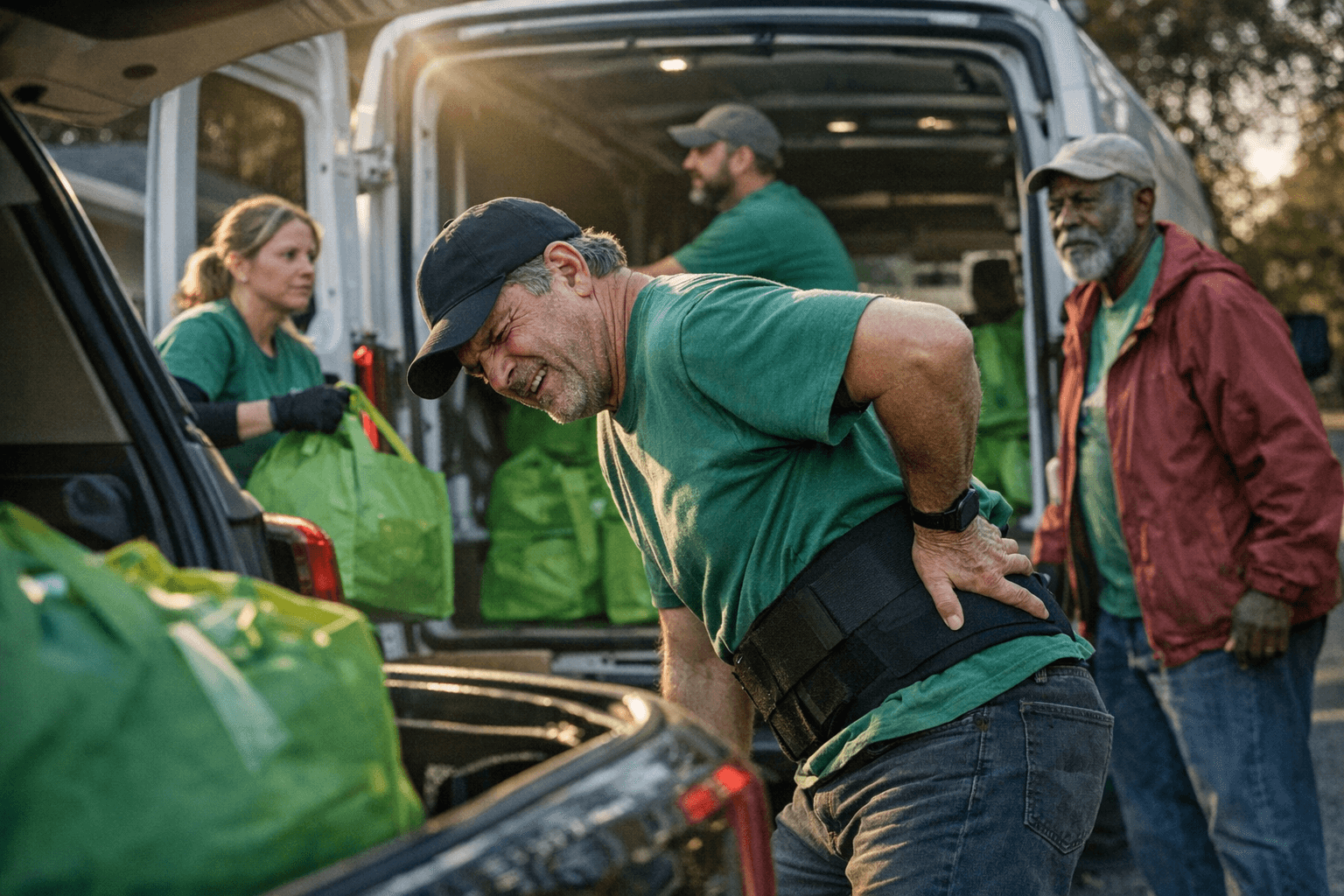
A back injury on a green bag route doesn't just sideline one volunteer - it can unravel an entire pickup day and slow down donations to families who need them.

Every green bag pickup looks simple from the outside: walk to the curb, grab the donation, load the car, move to the next stop. But on a high-volume Saturday route with dozens of stops and bags ranging from a few pounds to well over thirty, the cumulative physical load is real. The volunteers who drive those routes and sort at pantry drop-offs are the operational core of A Simple Gesture, and a preventable back strain or wrist injury doesn't just hurt the volunteer; it removes an experienced driver from the schedule, disrupts the route, and puts pressure on already-stretched coordinators to fill gaps. Applying consistent safe-lifting and vehicle-loading practices is one of the lowest-cost, highest-impact investments a chapter can make.
Before You Pick Up: Planning the Lift
The most reliable injury prevention happens before anyone bends down. When you approach a bag at the curb, size it up first: estimate its weight visually, then test it with a light push or partial lift before committing to a full movement. Bags left by generous neighbors can be deceptively heavy, packed with canned goods, bottles, or bulky dry goods.
Once you've gauged the weight, position your feet close to the bag, bend at the knees, and keep the load as close to your body as possible throughout the lift. The critical rule here is simple: use your legs, not your back. Avoid twisting at the waist; if you need to turn, pivot your feet and rotate your whole body. Never try to lift a bag that's sitting at ankle height by bending at the waist with straight legs.
Overreaching is another common source of strain on routes. Avoid lifting above shoulder height unless absolutely necessary, and if you need to place a box on an elevated shelf or car rack, use a stable step stool rather than stretching. An unstable reach with weight in your hands is one of the fastest ways to end a pickup day early.
Two Hands Are Better Than One: Team Lifts and Mechanical Aids
When bags cluster together at a single address, or when a donor has left a particularly heavy collection, a solo lift may not be the right call. For loads exceeding roughly 25 to 30 pounds, the standard is a two-person lift. If you're working with a partner, coordinate verbally before the lift: a simple count-down keeps both lifters synchronized and prevents one person from bearing the load unevenly while the other is still getting into position.
For routes where multiple heavy bags tend to stack up, a dolly or hand truck is more than a convenience; it's a genuine injury-prevention tool. The chapter best practice is to assign at least one dolly per route so drivers have access to it when they hit a heavy block. This is a small equipment expense, but the math is straightforward: one dolly costs far less than the operational disruption caused by a single volunteer injury. Chapters running high-volume routes should target a ratio of one dolly for every two to three drivers.
Wheeled carts and hand trucks aren't just for warehouse work. On a green bag route, they let a single driver safely move clustered donations from the curb to the vehicle without multiple trips or forced heavy lifts. If your chapter hasn't standardized this yet, it's worth raising in the next coordinator meeting.
Loading the Vehicle: Weight Distribution and Cargo Securement
Getting the bags off the curb is only half the job. How you load the vehicle determines whether the donation arrives intact and whether the car handles safely between stops.
The foundation rule for loading is weight distribution: spread heavier items evenly across the cargo bed or trunk floor, keep them low and centered, and avoid stacking weight high where it raises the vehicle's center of gravity. A vehicle with a top-heavy load handles differently during braking and turns, which matters on suburban routes with frequent stops.
Stacks shift during transit, especially during hard braking or sharp turns. Where possible, use straps or bungee cords to secure the load. This is especially important for taller stacks or when mixing box shapes and sizes that don't nest naturally.
Fragile items deserve specific attention. Glass jars of pasta sauce or jam are common donations, and they don't survive well under heavy canned goods. Keep glass items on top or in a padded layer, and if your chapter has insulated or cushioned boxes available, use them to protect both glass containers and canned goods from impact damage during the drive.
Why Coordinators Should Treat This as a Core Program Practice
Volunteer injuries are operationally costly in ways that go beyond the immediate incident. An experienced driver who knows the route, the donors, and the pantry drop-off procedures is not easily replaced mid-season. Injuries create volunteer churn, and churn is one of the harder problems for nonprofit programs to absorb. There's also a reputational dimension: a preventable injury that generates negative word of mouth in a neighborhood can affect donor participation and new volunteer recruitment.
The good news is that the preventive infrastructure is modest. Beyond dollies, the core kit for a chapter is practical and inexpensive: gloves, safety vests, and a one-page safe-lifting reference card that drivers can keep in the glove box or review at the start of a shift. Making these standard issue during onboarding signals to volunteers that the chapter takes their safety seriously, which itself contributes to retention.
The Chapter Implementation Checklist
Embedding these practices into routine operations doesn't require a new program or a training overhaul. A few targeted changes to how chapters prepare drivers can make a measurable difference:
- Run a two-to-three-minute pre-shift safety briefing that covers expected load weights for the day, number of stops on the route, and the location of the nearest medical facility for volunteers working in rural or low-coverage areas.
- Equip high-volume routes with one dolly per two to three drivers. Track usage so you can identify which routes generate the heaviest loads and adjust accordingly.
- Keep an incident log that captures near-misses and minor injuries alongside confirmed incidents. This data helps coordinators improve route design, revise packing guidance for donors, and make smarter driver assignments over time.
- Build a brief insurance and waiver explanation into the volunteer sign-up flow. Volunteers should know before their first pickup who to contact if something goes wrong and what protections are in place.
None of this requires significant budget or staffing. A short briefing, basic mechanical aids, and a consistent safety culture embedded into how chapters onboard and brief their drivers is enough to meaningfully reduce the injury risk on green bag routes. The alternative, treating safety as an afterthought until an incident forces attention, costs considerably more in lost volunteer hours, route disruptions, and program momentum.
This article was produced by Prism’s automated news system from verified source data, official records, and press releases, then run through automated quality and moderation checks before publishing. The system is built and supervised by the people who set the standards it runs under. Read our full AI policy.
Did this article answer your question?