A Simple Gesture shows how community-driven fundraising can scale donor impact
Hyperlocal fundraisers work when neighbors can see the mission in real time. A Simple Gesture can turn green-bag logistics, pantry ties, and volunteer pride into sharable donor growth.
Why the right fundraiser does more than raise money
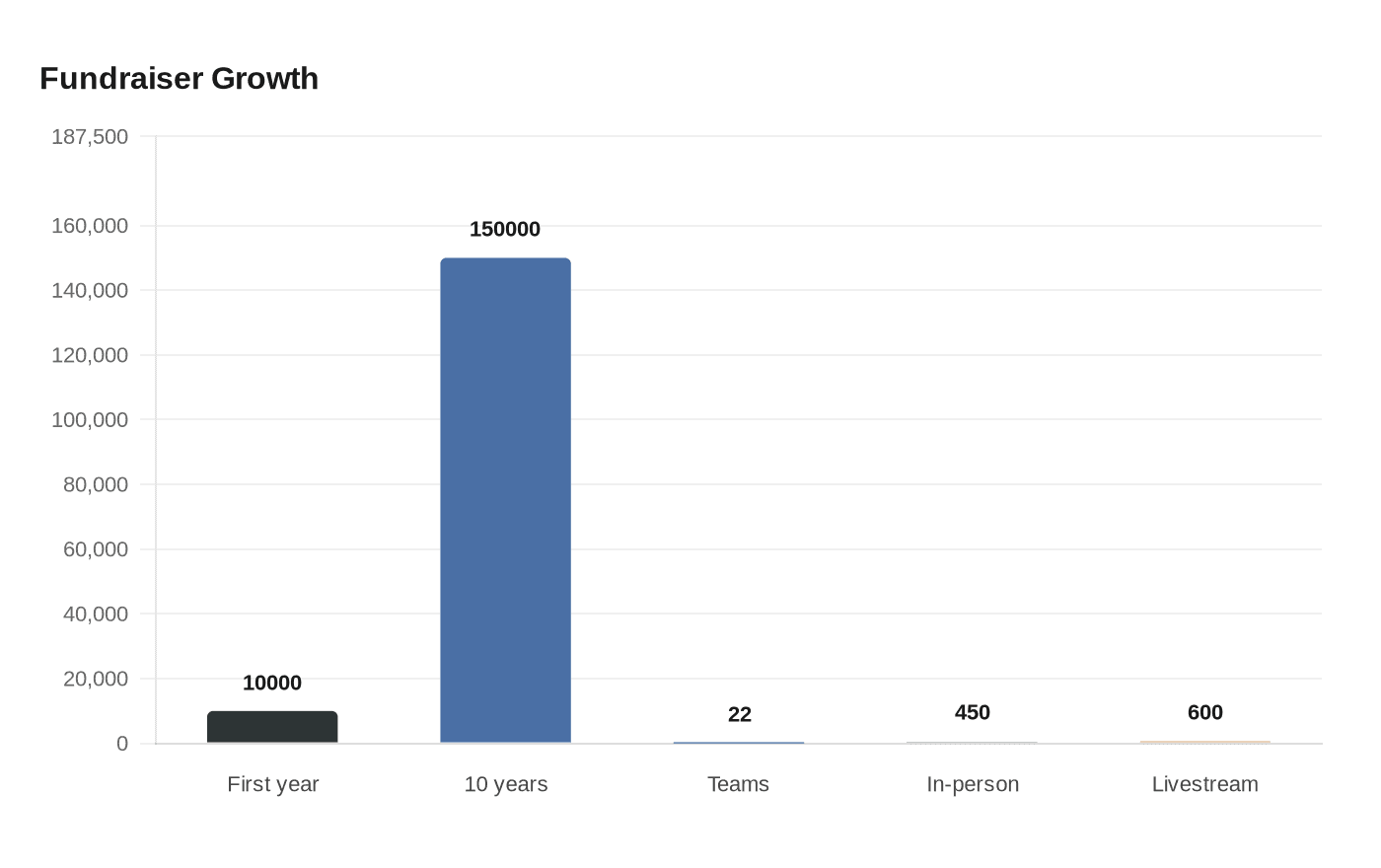
Jayme Dingler’s lip sync battle example is useful because it shows how a fundraiser can start small and still become a civic habit. The first year brought in $10,000, then the event kept expanding until it drew 22 competing teams, more than 450 in-person attendees, nearly 600 livestream viewers, and $150,000 over 10 years. That growth traveled with the organization itself, which moved from a $300,000 annual budget for one shelter to a $1.6 million operation supporting two shelter homes and 24 transitional apartments.
The point is not that every nonprofit needs a talent contest. The real lesson is that people show up when the event feels local, visible, and easy to explain, and when they can see the result of their effort after the applause fades. Dingler says the shelter followed up with regular updates so supporters could watch their impact accumulate, which turned a one-night gathering into an ongoing relationship.
The features that make community fundraising spread
A Simple Gesture is already built around the kind of structure that makes that sort of fundraising work. Its green-bag model is neighborhood-facing, its pantry network is local, and its volunteers can point to a concrete result rather than an abstract mission statement. That gives it a rare advantage: it can turn fundraising into a visible part of daily life instead of a separate event that people attend once and forget.
The most effective hyperlocal campaigns usually share a few traits:
- They are easy to picture. A green bag on a doorstep, a route through familiar streets, or a pantry receiving food is more immediate than a generic appeal for support.
- They make participation visible. People like to join something their neighbors can recognize, whether that is a block challenge, a school drive, or a faith-community competition.
- They tie giving to a measurable result. Pounds of food collected, pantry partners served, and meals delivered are easier to grasp than broad awareness goals.
- They create a reason to keep watching. Regular updates, leaderboards, or monthly impact reports help supporters see that their first action mattered.
- They feel surprising without being expensive. A community event does not need gala production values if it offers a simple, sharable twist on a familiar format.
For A Simple Gesture, those traits map cleanly onto the work already happening in Guilford County. The organization says it partners with dozens of local food pantries to make food donations easy and convenient, and that its food-recovery model rescues edible food from businesses and delivers it to local nonprofits. It also notes a larger truth behind the work: the United States wastes 30% to 40% of the food it produces, which makes food recovery a system-level fix, not just a charitable add-on.
What this means for green-bag fundraising
A Simple Gesture does not need to mimic a gala to raise more money. It needs fundraising that feels like an extension of the service model, where donors, volunteers, and pantry partners can all see the same story from different angles. That is why a block-level green-bag challenge, a neighborhood-versus-neighborhood pickup drive, a school competition, or a faith-community campaign makes more sense than a generic fundraiser that sits apart from the mission.
The organization already invites people to donate funds, volunteer as drivers, or organize a food drive, and it says, “Help us sign up new donors and have fun at the same time!” That is the right instinct. It treats recruitment as a social act, not just a transaction, and it gives staff a way to turn one-off curiosity into recurring participation.
Operationally, this kind of fundraising can help with the hardest parts of nonprofit-food-recovery work: route coordination, volunteer retention, and pantry partnerships. When a neighborhood contest or community challenge drives new attention, staff are not just chasing donations. They are building a steadier base of recurring food donors and monthly volunteers who understand why pickup schedules matter and why pantry relationships have to stay reliable.
The scale already proves the model
A Simple Gesture’s own numbers show that the local approach is not small. As of December 2025, the organization says it had more than 3,900 recurring food donors, 200 monthly volunteers, 75-plus pantry partners, and more than 8,000,000 child-size meals donated. Its mission and impact page also places the donated food value at $13 million, which is a reminder that this work is doing more than filling a warehouse.
The story page adds another layer of scale: more than 1,700 food donors, numerous volunteer drivers, and more than 132,000 pounds of food collected each year. It also says communities across the country have started A Simple Gesture chapters of their own, which suggests the model travels because it is simple to understand and easy to reproduce. That matters for staff, because a system that can expand without becoming mysterious is a system that can keep volunteers oriented and donors confident.
Those numbers also make a better share hook than a broad message about hunger alone. People are far more likely to pass along a story that contains a concrete result, a visible mechanism, and a name they can recognize in their own community. In this case, the mechanism is a doorstep green-bag network, the result is measurable food recovery, and the payoff is a local donor story that looks practical rather than performative.
The playbook for scaling donor impact
The stronger path for A Simple Gesture is not to invent a more theatrical fundraiser. It is to build campaigns around what the organization already does best: neighborhood participation, clear logistics, and proof that small actions add up. A good campaign can do three jobs at once: raise money, bring in new people, and give current supporters a reason to stay connected.
That is the real lesson from the lip sync battle example. A fundraiser grows when it gives people a role they can see, a result they can measure, and a reason to come back next time. For A Simple Gesture, the most scalable fundraising idea is also the most local one: make the mission visible enough that people can picture their part in it, then give them a simple way to join.
Know something we missed? Have a correction or additional information?
Submit a Tip