A Simple Gesture Unveils Refugee Feeding Network Mirroring Green Bag Model
A Simple Gesture launched a Refugee Feeding Network page explaining a community-led food collection program that mirrors its Green Bag donor model and lists pickup dates and needed items.

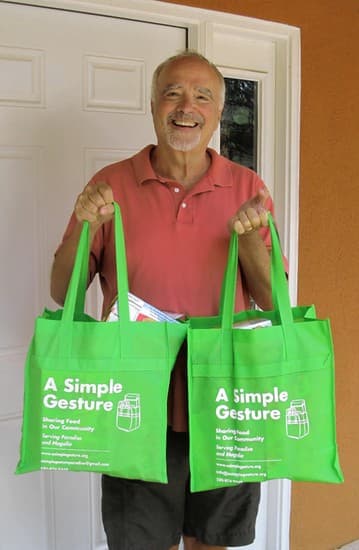
A Simple Gesture has unveiled a Refugee Feeding Network that adapts the nonprofit’s Green Bag donor model to collect culturally appropriate nonperishable foods for refugee families. The organization published a program page describing how donors receive reusable bags, fill them with specified items, and place them curbside on scheduled pickup days for volunteer drivers.
The program page lays out the mechanics familiar to Green Bag participants: donors are issued reusable bags, fill those bags with requested goods, and set them out for collection on assigned pickup days. The page lists the most-needed staples by name - jasmine rice, lentils, dried beans, tomato sauce, peanut butter - signaling an emphasis on culturally appropriate pantry items that fit diverse diets.
ASG’s 2026 pickup schedule is posted on the page and included a January 24 entry for initial collections. The schedule gives donor communities and volunteer drivers fixed dates to coordinate drop-offs and pickups, aiming to reduce logistic friction for both workplace organizing and neighborhood participation. The page also identifies a volunteer contact for drivers and provides a donation link for financial support to the program at asimplegesture.org/refugee-food-assistance.
For employees and workplace leaders, the Refugee Feeding Network offers a turnkey model for on-site drives and recurring giving. Human resources teams can adapt the Green Bag mechanics into employee volunteer programs, setting up bulk distribution of reusable bags, scheduled pickup points at office entrances, and sign-up slots for volunteers. Volunteer drivers, many of whom will be employees or community members juggling jobs and shifts, will be key to execution; scheduling and clear pickup windows will matter for preserving worker schedules and avoiding unpaid overtime.
The focus on culturally appropriate nonperishable items also matters for workplace food drives that aim to support immigrant and refugee populations meaningfully. Programs that simply collect generic goods can miss dietary and cultural needs; listing items such as jasmine rice and lentils gives procurement clarity for employee donors and purchasing committees.
A Simple Gesture’s page combines operational details and direct opportunities to help: a pickup calendar, a list of prioritized foods, a volunteer contact point for drivers, and a donation link. Organizations that want to replicate the model can use those elements to build predictable collection cycles and clear volunteer roles.
For employees looking to get involved, the immediate step is to visit asimplegesture.org/refugee-food-assistance to view the pickup calendar, sign up as a volunteer driver, or support the program financially. For workplaces, the program represents a low-barrier way to mobilize staff time and giving toward refugee food security while keeping logistics compatible with typical work schedules.
This article was produced by Prism’s automated news system from verified source data, official records, and press releases, then run through automated quality and moderation checks before publishing. The system is built and supervised by the people who set the standards it runs under. Read our full AI policy.
Did this article answer your question?