Food Bank of Eastern Oklahoma expands meals with renovated kitchen
A renovated 12,000-square-foot kitchen is pushing Food Bank of Eastern Oklahoma toward 15,000 meals a day, turning hunger relief into a production operation.
A kitchen that changes the model
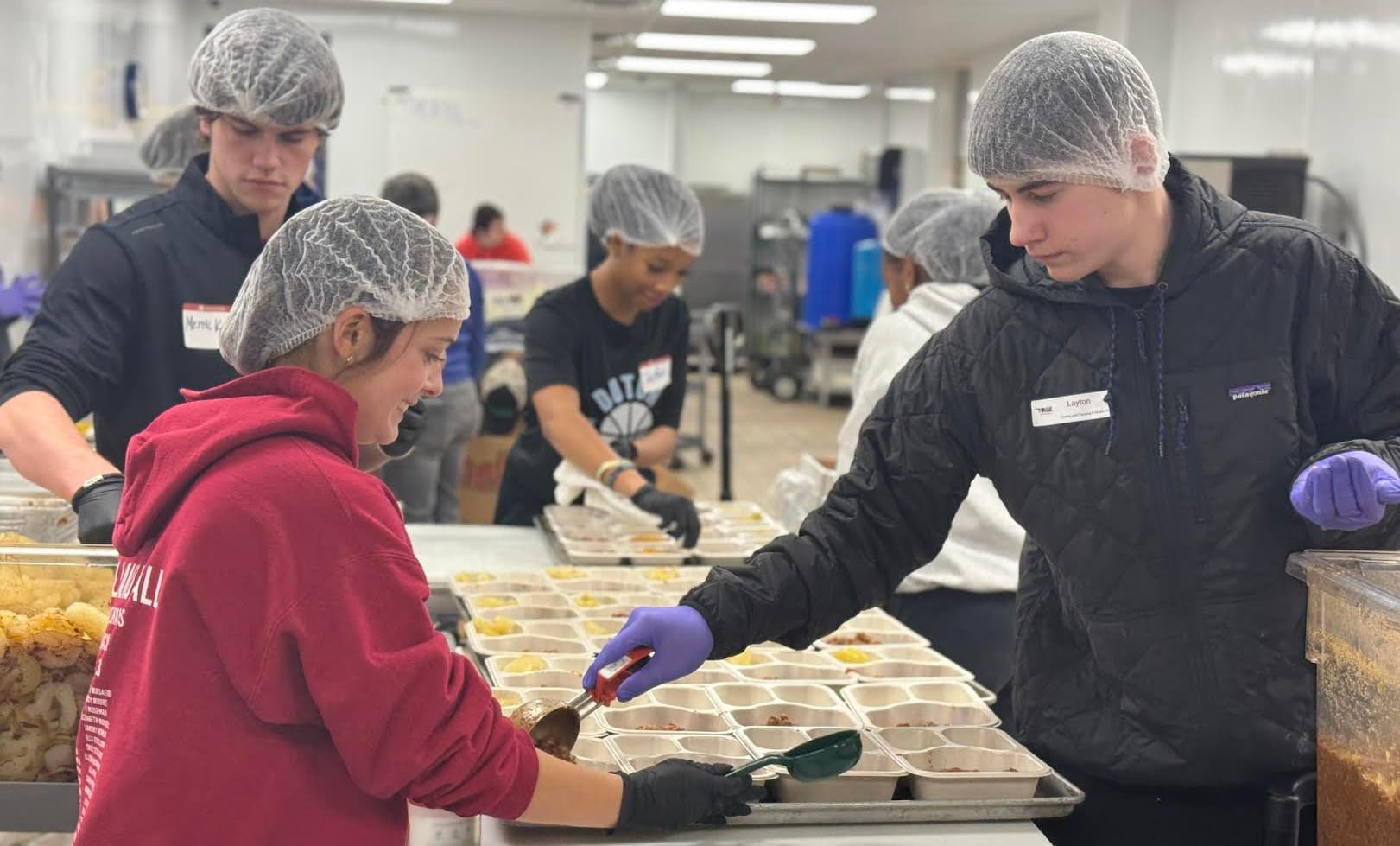
Food Bank of Eastern Oklahoma has done more than add space. Its renovated 12,000-square-foot kitchen is turning the organization into a meal producer, not just a place that stores and moves donations. That shift matters because a warehouse can sort and distribute food, but a production kitchen can portion, freeze, package, and standardize meals at a scale that changes what a food bank can promise to schools and families.
The difference shows up in the numbers. The kitchen is expected to run near a capacity of 15,000 meals a day, up from about 2,500 before the renovation. The food bank says its summer meals program grew from 86,000 meals before the upgrade to more than 500,000 after it, a jump that makes the kitchen feel less like a support space and more like the engine of the operation.
The need is real enough to justify the investment. Feeding America says its network includes 200 food banks, and that 48 million people in the U.S., including 14 million children, face hunger. Food Bank of Eastern Oklahoma says one in five children face hunger, while another local report put the share of Oklahomans who are food insecure at one in six. In that context, a kitchen is not a nice-to-have. It is infrastructure.
What the kitchen unlocks that a warehouse cannot
The biggest change is control. With a production kitchen, Food Bank of Eastern Oklahoma can make school meals, frozen meals, and ready-to-heat dishes on a schedule that matches the school year and the realities of family life. That is a very different job from waiting for donations to arrive, sorting them, and passing them along as-is.
The food bank’s Feed Oklahoma initiative shows how far that logic can stretch. Every meal in the program will be produced in the new Culinary Center, and the organization says the effort will serve students in all 77 Oklahoma counties. Professional chefs design the meals so they are balanced and ready to heat, which gives the food bank more consistency than a purely warehouse-based model could offer.
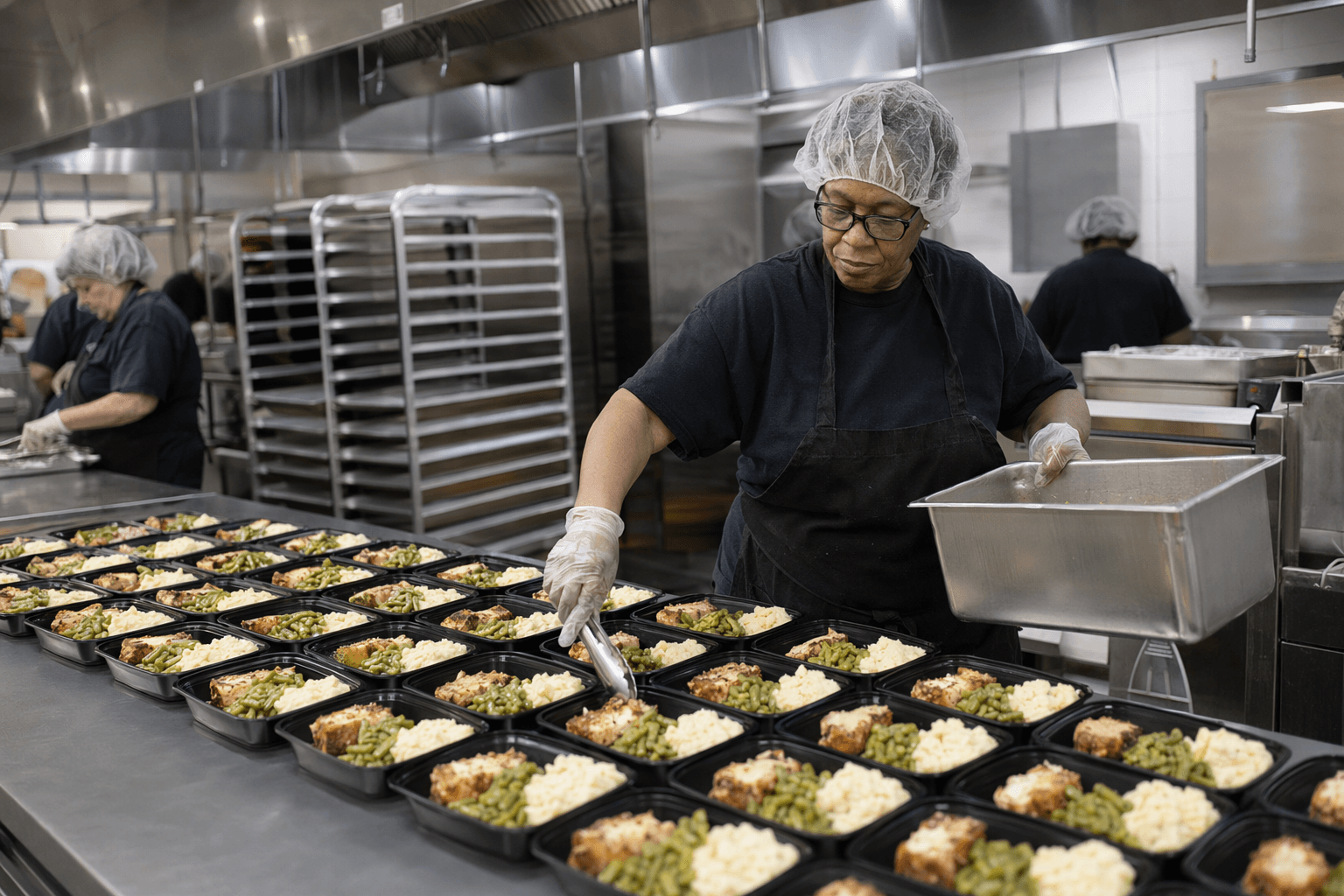
That also changes distribution strategy. Instead of relying only on dry goods or one-time pantry drops, the organization can build meals around schools, campus pantries, and other partner sites. BCBSOK said the frozen-meal program launched in 2023 with about 150 students and their families through 10 school and campus pantries, then set up an expansion path to 45 schools and nearly 100,000 meals over three years. That kind of reach depends on a production line, not just shelf space.
Funding now looks like operations planning
The kitchen is also a reminder that food-bank budgets increasingly look like capital plans. A three-year, $9.4 million grant from the Tobacco Settlement Endowment Trust is funding the frozen-meals initiative, while Blue Cross and Blue Shield of Oklahoma added a $55,000 Blue Impact grant to help support the Frozen Meals Program. Those dollars are not just charity. They are the fuel that lets the organization buy capacity.
That same logic extends to labor. The model uses volunteers alongside part-time staff in the production process, which means the food bank has to think like a kitchen manager as much as a nonprofit. It needs scheduling, food safety routines, consistent recipes, and enough supervision to keep production moving when volunteers rotate in and out.
The money side is just as telling. The kitchen also supports Table 24, the food bank’s catering business, and that operation exceeded its annual goal of generating $250,000 in revenue in just six months. Cookie fundraising helps support the broader mission too. Taken together, the revenue pieces suggest a nonprofit that is using earned income to stabilize mission work instead of depending only on grants and donations.
What this means for staffing, menus, and scale
This kind of expansion does not remove bottlenecks. It moves them. Once a food bank builds a production kitchen, the limiting factors become ingredients, refrigeration, packaging, volunteer training, and the ability to move meals out fast enough to keep up with demand. Menu planning becomes a daily operational question, because meals have to fit nutrition goals, budget constraints, and the realities of school delivery.
It also raises the bar for staff skill sets. A warehouse-only model needs people who can receive, sort, and distribute. A kitchen model needs that plus food production experience, systems for line work, and the discipline to keep meals consistent across a much larger footprint. The Food Bank of Eastern Oklahoma’s expansion suggests that anti-hunger work is becoming more like food-service logistics, with all the complexity that brings.
Even the geography matters. The food bank serves 24 counties in eastern Oklahoma through about 450 partner programs, so the new kitchen has to serve a broad network while also supporting countywide school meal reach through Feed Oklahoma. That means distribution is no longer just about getting food out the door. It is about making sure the right food gets to the right site in the right form.
Why this matters beyond eastern Oklahoma
For A Simple Gesture, the lesson is not that every hunger-relief group needs a culinary center. It is that the field is moving toward more integrated operations, where logistics, volunteer scheduling, and production capacity reinforce each other. A Simple Gesture, founded in 2015 in Guilford County, North Carolina, already works through a different model, partnering with dozens of local food pantries and rescuing edible food from businesses for local nonprofits. The Oklahoma example shows where that larger ecosystem is headed: deeper coordination, more specialized infrastructure, and more ways to turn donated food into reliable meals.
That is the real structural shift. Food banks are no longer just storage nodes in a charity chain. The most ambitious ones are becoming production engines, building the capacity to cook, freeze, brand, and distribute meals at scale. For organizations trying to stretch every dollar and every volunteer shift, that model can multiply impact, but only if the staffing, capital, and distribution systems are built to hold it.
Know something we missed? Have a correction or additional information?
Submit a Tip