A Simple Gesture Volunteer Calendar Tracks Pickups, Shifts, and Food-Recovery Opportunities
Guilford County's ASG calendar coordinates Saturday pickups, five color-coded tag routes, and food-recovery shifts in one place — here's how to find your role.
Five color-coded tags. Saturday pickup shifts. Surplus food recovered from grocery stores and corporate cafeterias. A Simple Gesture's Volunteer & Events Calendar consolidates all of it into a single operational hub for Guilford County, giving prospective volunteers a direct path from interest to action without having to piece together schedules from separate sources.
The calendar isn't just a listing of dates. It functions as the program-level coordination tool for Guilford County chapter pickups, driver shift scheduling, tag and route assignments, and food-recovery volunteer opportunities. For anyone looking to plug into ASG's work, the calendar is the starting point.
What the calendar tracks
The most granular operational detail the calendar manages is the tag and route system. Pickup schedules are organized by color: Blue, Green, Purple, White, and Orange tags each correspond to a distinct set of routes or assignments within Guilford County. The exact schedule details tied to each color — specific dates, times, and neighborhood-level routes — live on the calendar page itself and are updated for active operations. That color-coded structure means drivers and volunteers can quickly identify which shifts align with their availability rather than sorting through an undifferentiated list of opportunities.
Beyond tag schedules, the calendar also captures community events across Guilford County where ASG welcomes volunteer participation. These two tracks, Saturday pickups and community event appearances, represent the two primary ways volunteers engage with ASG's collection operations on the ground.
How the pickup model works
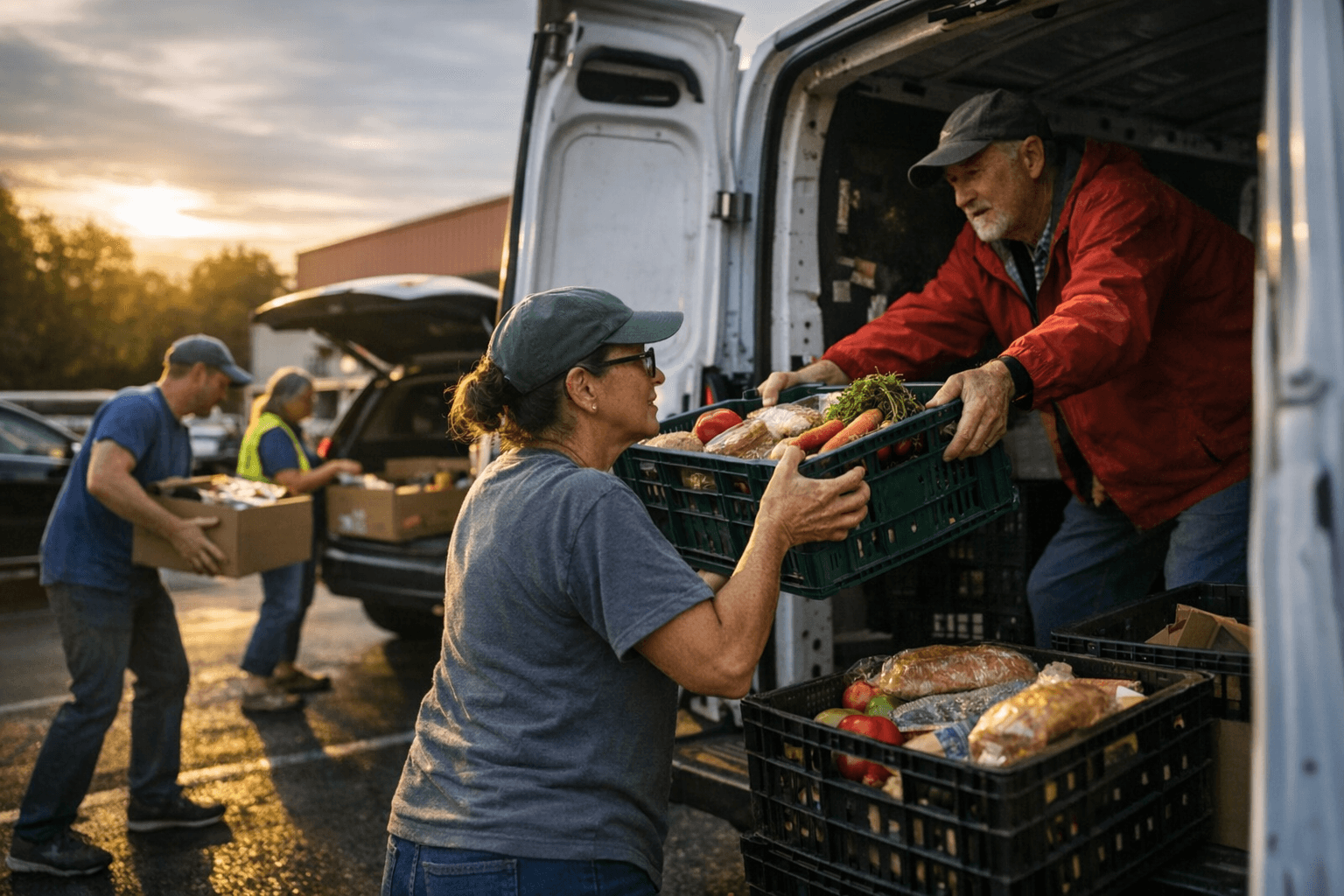
Since 2015, ASG has built its collection model around convenience for donors: individuals sign up to donate food on a regular basis, and volunteer drivers collect donations right from their doorstep. That last-mile pickup role is what the Saturday shift slots on the calendar are designed to fill. Drivers collect from donors and deliver to ASG's pantry partners, closing the loop between a household pledging food and that food reaching people who need it.
The organization also runs a parallel food recovery operation targeting institutional surplus. ASG customizes plans to recover surplus food from grocery stores, restaurants, caterers, corporate cafeterias, and more. Volunteer opportunities tied to that recovery work also appear in the calendar, making it possible for someone interested specifically in institutional food recovery to find relevant shifts without wading through unrelated listings.
Programs visible through the calendar
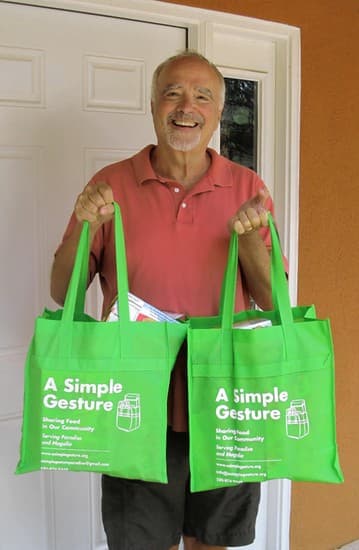
The Events Calendar includes the Green Bag Schedule, which tracks activity for the Green Bag Food Donor program. This is ASG's core residential collection offering, where regular donors place food in green bags for scheduled pickup. The calendar's integration of this schedule means volunteers can see pickup demand in real time alongside available shifts.
The SHARE in Schools program operates somewhat differently. Schools in Guilford County are provided with refrigerators so students can place unopened food items from the school nutrition program to share with other students. While this program doesn't necessarily generate the same driver-shift volume as residential Green Bag pickups, it represents one of the community-facing program areas that ASG coordinates regionally.
The Refugee Feeding Network is listed as a distinct program area within ASG's navigation, signaling a specialized channel for food access that operates alongside the general pantry partner network. Specific calendar activity tied to the Refugee Feeding Network is worth confirming directly with ASG, as the research notes flag this as an area where additional reporting would clarify scope and volunteer roles.
Who ASG needs and how to sign up
ASG is direct about where the operational gap is: "ASG is always in need of drivers to help collect food from our donors and deliver to our pantry partners." The Saturday pickup slots are the most consistent recurring need. Drivers who can commit to regular shifts provide the reliability the collection model depends on, since donors are signing up for ongoing participation, not one-time contributions.
The registration process runs through a dedicated Volunteer Registration page, separate from the calendar itself. The navigation flow on ASG's site is: find the calendar to identify available shifts and opportunities, then use the Volunteer Registration page to formally sign up. Both pages are accessible from ASG's main site under the "Find Your Way To Help" section, which also surfaces options for hosting a food drive, donating directly, and accessing FAQs.
Community event volunteering is an entry point for people who aren't ready to commit to a recurring driver role. ASG notes that it welcomes volunteers at events across Guilford County, and those opportunities appear alongside pickup shifts on the same calendar, making it easier to find a role that fits a given schedule or comfort level.
Hosting a food drive
For organizations rather than individuals, ASG offers a structured path to running a food drive. Anyone can host: individuals, businesses, civic groups, and faith communities are all explicitly named as eligible organizers. ASG provides the tools needed for a successful drive and maintains a dedicated Host a Food Drive page through the same navigational system as the volunteer and calendar pages.
This matters for the calendar in a practical sense: food drives feed the supply that volunteers then collect and distribute. Organizations looking to contribute at scale, rather than through individual pickup shifts, can plug into ASG's logistics infrastructure through the food drive program rather than volunteering as drivers.
Supporting ASG beyond volunteering
For people who want to contribute financially rather than operationally, ASG offers several giving structures that don't require calendar coordination. Options include setting up a monthly monetary contribution, making a one-time gift, purchasing a card in honor or memory of a loved one, and exploring the Planned Giving program for longer-term charitable planning. ASG also maintains online food registries for donors who prefer to give food directly through a purchasing platform rather than managing physical donation bags.
A "Click Here to Donate Food" path exists separately from the monetary giving options, and a Find Food section serves community members looking to access resources rather than contribute them.
What reporters and volunteers should verify
The research underlying this guide is clear about what the calendar contains in structural terms but does not include the specific dates, times, or neighborhood breakdowns that actually populate it at any given moment. Anyone using the calendar to plan volunteer shifts should access the live page directly, as scheduling details for Blue, Green, Purple, White, and Orange tag routes are operational data that changes with program needs.
Open questions worth pursuing include how tag colors are assigned to routes or donor neighborhoods, what the typical shift length looks like for Saturday driver volunteers, and what, if any, screening or orientation steps are required before a first pickup. Those specifics shape the realistic commitment volunteers are making before they sign up, and ASG's Volunteer Registration page or a direct contact to the organization is the right source for those answers.
The calendar has been the operational backbone of Guilford County chapter coordination since ASG formalized its collection programs starting in 2015. For anyone trying to understand where their time fits into ASG's work, the calendar is where that answer lives.
This article was produced by Prism’s automated news system from verified source data, official records, and press releases, then run through automated quality and moderation checks before publishing. The system is built and supervised by the people who set the standards it runs under. Read our full AI policy.
Did this article answer your question?