A Simple Gesture weighs fairer food distribution through smarter route planning
Smart route planning is becoming A Simple Gesture’s fairness test: who gets what, when, and how often depends on the route map as much as the pantry list.
Route planning is where fairness becomes operational
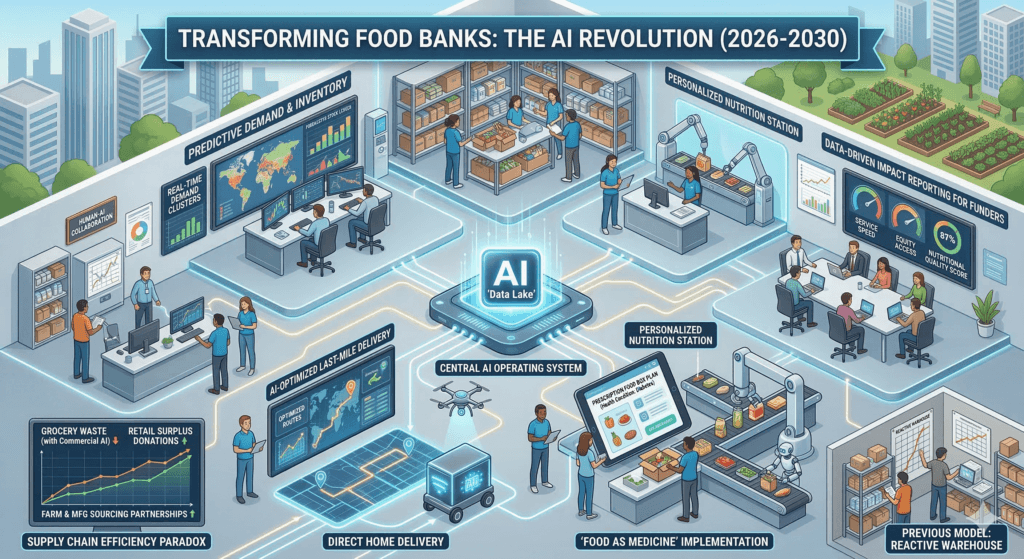
A route map is where food relief either feels orderly or arbitrary. On a typical day, food banks match warehouse inventory to partner agency requests and dispatch drivers along a planned route, but the final delivery can still shift when real-time inventory changes. That gap between plan and reality is where fairness gets decided for A Simple Gesture, because the system is not just moving boxes. It is deciding which pantry gets which product, which neighborhood gets served first, and which volunteer can actually complete the run.
For A Simple Gesture, equitable distribution is more than splitting food evenly. It means balancing partner demand, neighborhood need, transportation access, storage limits, and volunteer availability without letting the easiest routes or best product concentrate in the same places over and over. That is the real management question inside a food-recovery nonprofit: can you make the work consistent enough that volunteers can do it, while still making sure the same partners are not always getting the most convenient delivery?
What the Guilford County model has to balance
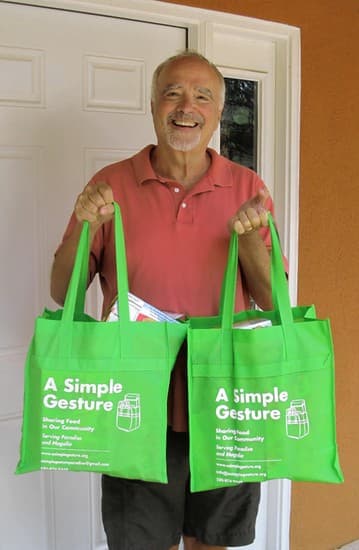
In Guilford County, A Simple Gesture says it works with dozens of local food pantries and makes food donations easy and convenient for donors. The organization also runs door-to-door pickups, corporate pickups, and timely food-recovery pickups, which means it is managing several different distribution streams at once. Each one has its own timing, its own volunteer needs, and its own pressure points, especially when a partner pantry depends on a delivery window that lines up with staffing, refrigeration, or client traffic.
That matters because the Food Recovery Program is not a generic surplus-food lane. A Simple Gesture says it rescues edible food from businesses and delivers it to local nonprofits, and it says the program is designed to match food-industry businesses with vetted nonprofits that serve the community. In practice, that means a restaurant, event venue, or grocery surplus is not just a donation. It is a routing and matching decision, with the nonprofit deciding where the food can be handled, stored, and distributed without waste.
The calendar structure reinforces that this is a segmented operation, not a single donor drop-off line. A Simple Gesture lists separate volunteer and route structures for Green Bag pickups and food-recovery categories such as refugee feeding. That kind of split can make service more precise, but it also forces coordinators to think carefully about who gets assigned, when a route is built, and whether a volunteer pool is large enough to keep every stream moving.

The volunteer side of fairness
The volunteer requirements tell you a lot about the shape of the work. A Simple Gesture says food-recovery drivers must be at least 18, able to lift 20-pound boxes, use a smartphone, wear closed-toe shoes, and use a clean personal car. Those are practical requirements, but they also narrow the pool of who can take a route on short notice, which is why route planning and volunteer recruitment are inseparable from distribution equity.
That is where a lot of good intentions run into operating reality. A route may look efficient on paper, but if it depends on a volunteer who can only drive during certain hours, or on a driver who can handle heavier boxes, the schedule itself starts shaping who gets served and when. The result is that fairness is not a slogan in the field. It is a staffing issue, a vehicle issue, and a scheduling issue all at once.
For coordinators, that means retention matters as much as recruitment. A steady base of 200 monthly volunteers gives A Simple Gesture more room to build predictable pickups and recoveries, but the system still depends on enough reliable drivers to cover the routes that are less convenient, farther away, or more physically demanding. In a food-recovery operation, the most equitable route is often not the easiest one to fill.
Scale changes the stakes
A Simple Gesture’s scale makes these route choices more consequential. The organization says it was established as a 501(c)(3) nonprofit in 2015, with roots that trace back to 2011, and that by December 2025 it had helped donate more than 8,000,000 child-size meals and $13,000,000 worth of food. It also says it works with 75+ pantry partners, 3,900+ recurring food donors, and 200 monthly volunteers. At that size, even a small improvement in route timing or inventory matching can ripple through a very large network.

That also means the organization’s planning decisions are no longer just local logistics. If one pantry consistently gets the easiest route while another gets the late delivery, the imbalance compounds over time. If inventory visibility is weak, the partners with the most flexibility will absorb the uncertainty, while the less flexible ones will take the hit. Fairness in a system this large has to be built into process, or it disappears into habit.
The broader sector has already shown why this matters. Food Bank News reported in June 2020 that the Food Bank of Western Massachusetts found inequitable access to emergency food across its four-county network and identified race as a reason. It also reported that Atlanta Community Food Bank’s five-year strategic plan aimed to provide more consistent, frequent, convenient, and equitable access to food. Those examples point to the same lesson A Simple Gesture is facing now: distribution design is not a back-end detail, it is the policy.
The practical test for A Simple Gesture
The strongest version of A Simple Gesture’s model is not just that it collects more food. It is that it can route food in a way that respects partner capacity, neighborhood need, and volunteer limits without locking the best deliveries into the same hands. That requires close attention to pickup hours, route geography, box contents, and the everyday realities of transportation and storage. It also requires keeping route planning flexible enough to absorb fluctuating inventory without pushing the burden onto the same partners again and again.
That is why smarter route planning is more than a scheduling upgrade. It is how the organization turns a large volunteer network, a growing donor base, and dozens of pantry relationships into a distribution system that actually feels fair on the ground. In food recovery, equity is not announced in a mission statement. It is visible in the route that shows up, the box that arrives intact, and the pantry that can count on the next delivery.
This article was produced by Prism’s automated news system from verified source data, official records, and press releases, then run through automated quality and moderation checks before publishing. The system is built and supervised by the people who set the standards it runs under. Read our full AI policy.
Did this article answer your question?