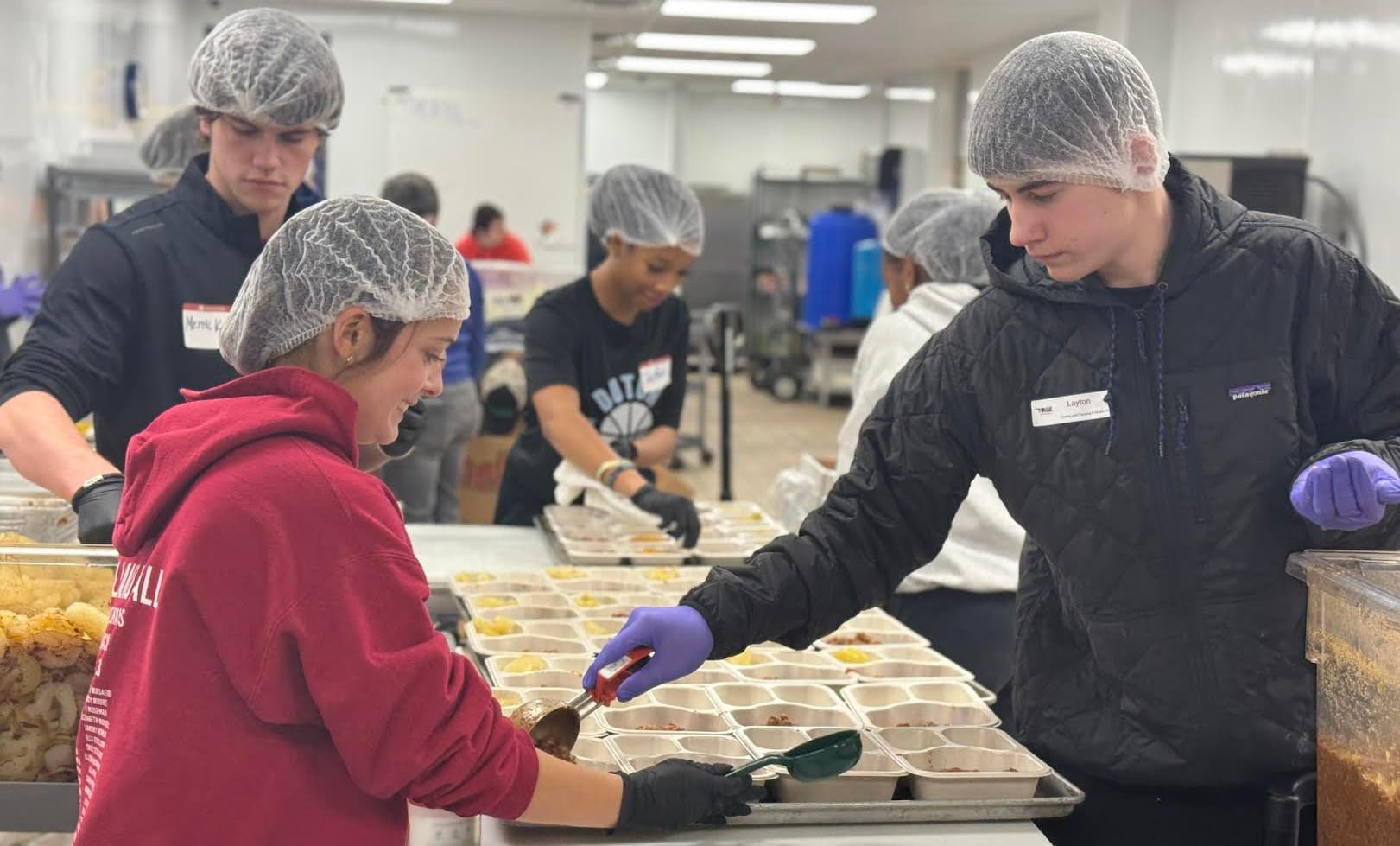
Capital Area Food Bank turns senior hunger conference into action session
Capital Area Food Bank brought nearly 100 leaders to Gallaudet to turn senior hunger data into policy, service, and route-level fixes.

Capital Area Food Bank spent Friday turning its Senior Hunger Conference into a working session, not a talk shop. At the Kellogg Conference Center at Gallaudet University in Northeast Washington, DC, the food bank gathered leaders, front-line providers, community members, and policy voices around the theme Turning Insight into Action: Supporting Seniors Through Recent Policy Shifts.
The structure mattered. CAFB built the day around morning refreshments, a welcome, a presentation on its Hunger Report, a session on hearing from seniors, a policy discussion on HR-1’s impact on senior hunger, a leadership dialogue, and a co-creating-solutions session. CAFB described the event as highly participatory, with storytelling, structured networking, open space discussions, and collaborative problem-solving designed to build new connections, identify overlapping capacities, and generate concrete outcomes.
That emphasis on mechanics was the point. CAFB’s latest Hunger Report, published in September 2025, found that 36% of the Washington region, about 1.5 million people, did not always know where their next meal would come from at some point in the prior year. The same report said 22% of respondents were experiencing very low food security, the most severe category. CAFB has produced annual Hunger Reports since 2020, and it said it distributed enough food for more than 60 million meals in 2025, a reminder that the scale of need still outstrips what any single network can carry alone.
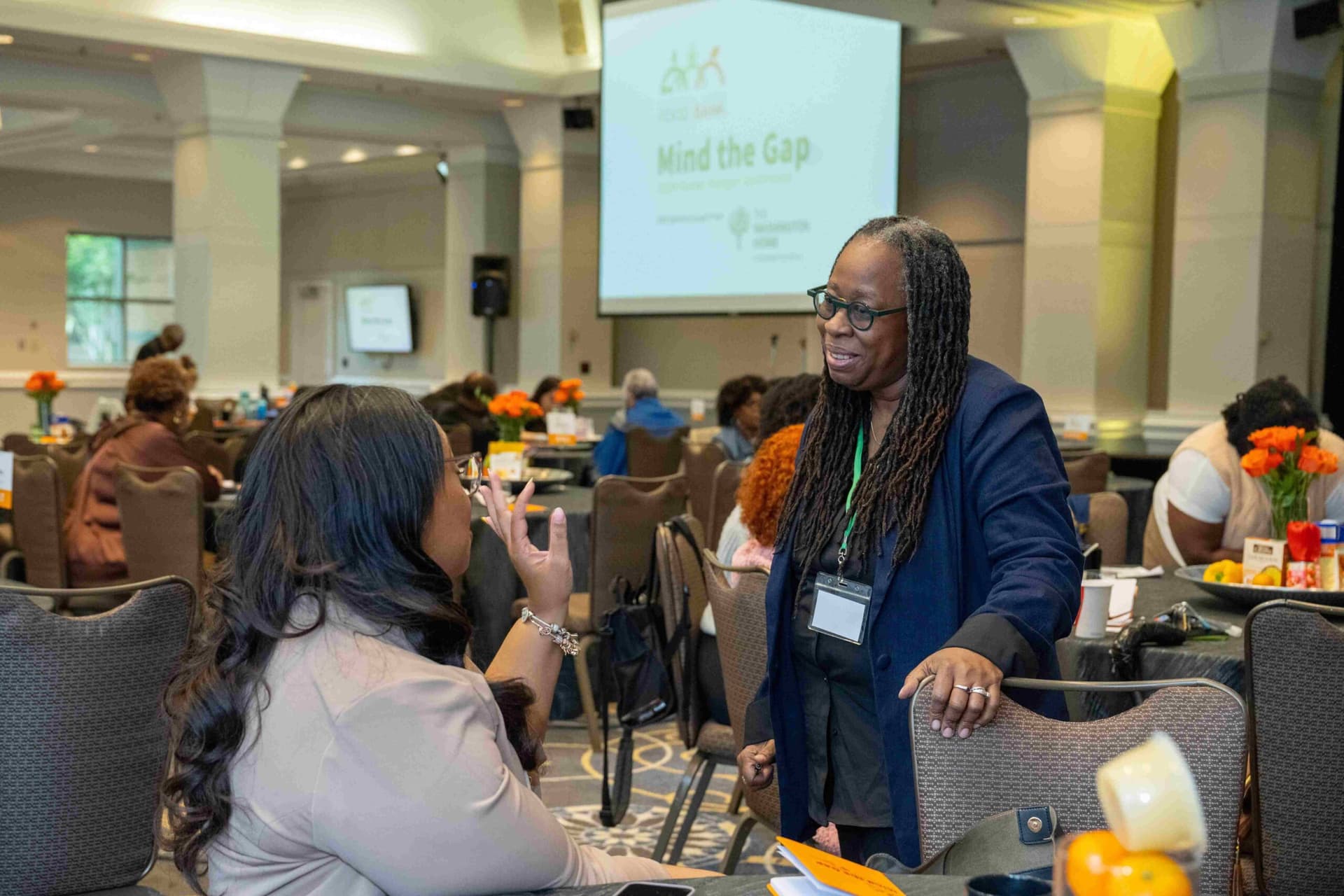
The 2026 conference also built on a first gathering that CAFB held in May 2024, when nearly 100 leaders met with support from The Washington Home. That conference identified Wards 5, 7, and 8 as the areas with the greatest concentrations of older adults experiencing, or at risk of, food insecurity. CAFB’s earlier coverage also said one in three DC seniors experience hunger. In practice, that means the senior hunger map is not uniform: some neighborhoods have deeper gaps in meals, access, and outreach than others.
CAFB’s own policy agenda now says the food bank cannot address hunger alone and that government at every level has a role in reducing hunger and poverty. That framing fits the conference agenda’s focus on policy shifts, lived experience, and cross-sector problem-solving. It also points to the day-to-day work inside neighborhood food recovery efforts like A Simple Gesture: senior hunger is not just about moving food, but about coordinating with pantry partners, adjusting routes and outreach, and understanding how fixed incomes, housing costs, medication bills, and mobility limits shape whether older adults can actually use the help available. CAFB’s Senior Brown Bag program serves people over 55, and its Commodity Supplemental Food Program serves seniors over 60 in DC or Montgomery County, giving the network two concrete channels to pair food access with older adults’ real needs.
Know something we missed? Have a correction or additional information?
Submit a Tip