Clear volunteer roles help A Simple Gesture staff, volunteers collaborate
A Simple Gesture's biggest risk is unclear handoffs. Clear role cards can keep Green Bag pickups, food recovery runs, and pantry deliveries moving.
Role clarity is the operational fix
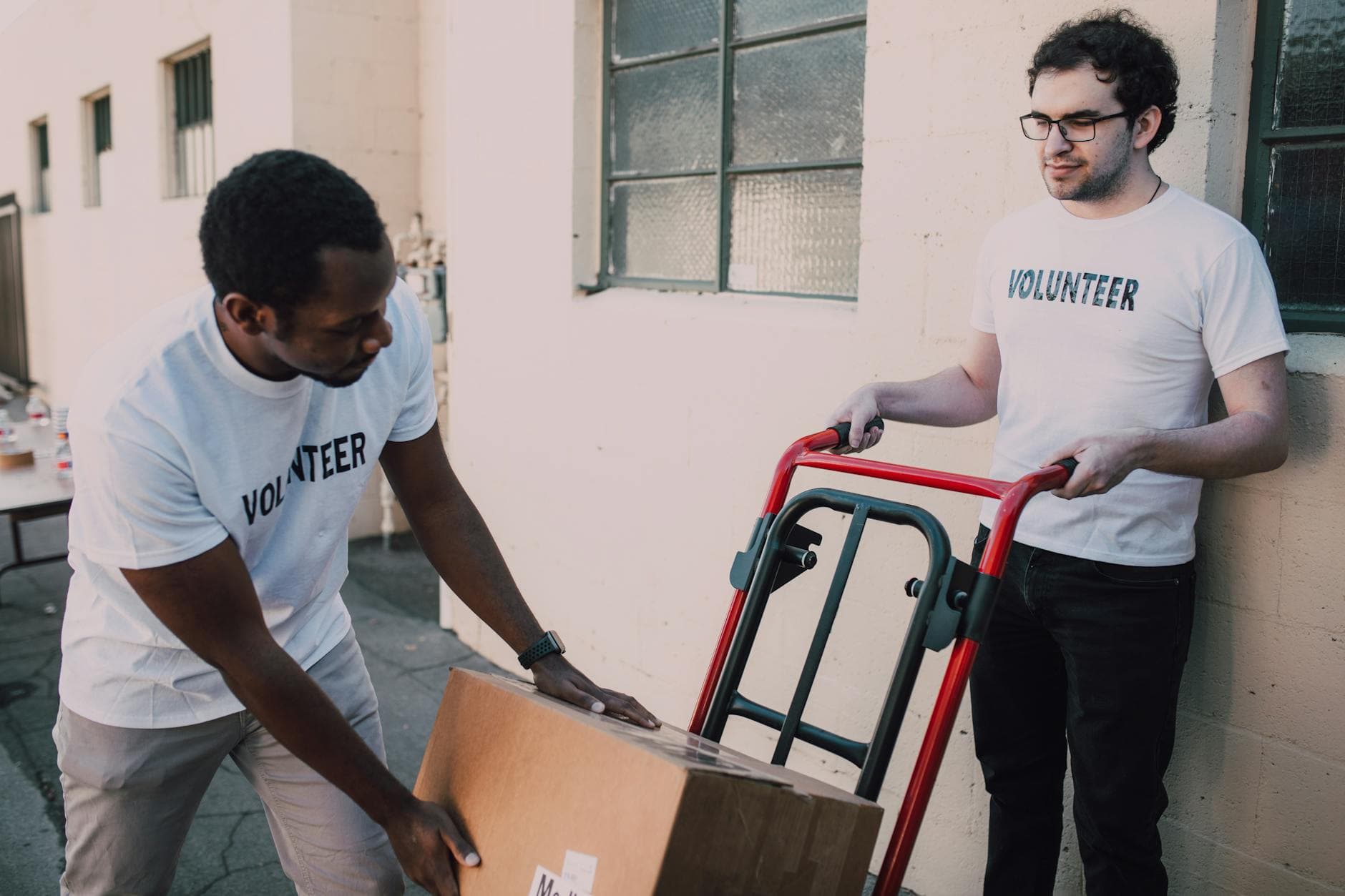
At A Simple Gesture, the hardest part is not convincing people to help. It is making sure the help lands in the right place, at the right time, with the right person owning the next step. When doorstep pickups, sorting, donor communication, pantry deliveries, and school support all happen in one network, vague expectations turn into missed bags, confused donors, and extra work for staff.

That is why the most useful management lesson for this organization is also the simplest: define who does what, and define it in writing. Volunteer job descriptions need to spell out tasks, time commitments, and reporting lines. Staff roles need to make volunteer supervision explicit, not invisible. At a nonprofit built on dozens of small handoffs, that is not paperwork. It is the operating system.
A countywide model with real scale
A Simple Gesture-Guilford County says it was established as a 501(c)(3) nonprofit in 2015, building on a model started by Jonathan Trivers in Paradise, California, in 2011. The group says its mission is to provide a sustainable supply of food to local pantries, recover excess perishable food for nonprofits and community meals, and support SHARE in Guilford County Schools. That mix of green bag pickups, corporate collections, and food recovery routes makes the work broad enough that no single volunteer description can cover everything.
The scale is substantial. As of December 2025, the organization reports more than 8,000,000 child-size meals donated, $13,000,000 in donated-food value, 75+ pantry partners, 3,900+ recurring food donors, and 200 monthly volunteers. Those numbers explain why even small role confusion can ripple across the system. A missed pickup is not just an inconvenience. It affects a pantry shelf, a donor’s trust, and the staff time needed to repair the gap.
Where confusion tends to start
The clearest risk points are the places where one person’s job ends and another’s begins. Green Bag doorstep pickups require coordination with donors. Food recovery runs require drivers who can move quickly, follow route instructions, and deliver food to partner sites. Pantry handoffs require accurate timing and clear expectations about what is arriving, where it goes, and who confirms receipt. If those responsibilities are left fuzzy, volunteers can end up doing more than they were asked to do, or less, or the wrong thing entirely.
The nonprofit-provided guidance on volunteer-staff collaboration is especially relevant here: collaboration does not happen automatically. It works when systems make expectations clear and when supervision is treated as a real management function. That means a volunteer coordinator is not just a friendly face. It means someone owns routing, troubleshooting, follow-up, and escalation when a pickup changes at the last minute.
A Simple Gesture already has the kind of structure that can support that approach. Its staff list includes roles such as President & COO, Director of Food Recovery, Director of Green Bag Donor Program, Director of Corporate Relations, and SHARE & Volunteer Coordinator. That mix suggests the organization understands that volunteer management, donor relations, and recovery logistics are separate jobs, even when they serve the same mission.
What belongs to staff, and what belongs to volunteers
The most useful way to reduce confusion is to draw a hard line between execution and oversight. Volunteers can carry out assigned tasks. Staff should own the systems that make those tasks possible.
- Staff should define the route, the schedule, the partner contact, and the backup plan.
- Volunteers should follow the assigned route, report problems quickly, and stop when instructions change.
- Staff should handle donor communication when a pickup needs to be rescheduled.
- Volunteers should not be left guessing whether to improvise or wait for approval.
- Staff should confirm pantry handoffs, track recurring issues, and close the loop with partners.
- Volunteers should know exactly who to contact when a route is blocked, a box is damaged, or a donor is unavailable.
That division matters because A Simple Gesture’s food recovery driver role is not casual labor. Drivers need to be 18 or older, lift 20-pound boxes, use a smartphone, wear closed-toe shoes, and use a clean personal car. Those requirements show that the organization is relying on volunteers to perform work with real operational and safety implications. The more clearly the role is defined, the easier it is to recruit the right people and keep them coming back.
A simple role-description checklist A Simple Gesture can use now
A strong volunteer role card does not need to be long. It needs to answer the questions people actually ask when they show up.
For every volunteer role, include:
• The exact task, such as doorstep pickup, food recovery driving, sorting, or school support • The time commitment, including frequency and approximate length • The geographic area or route, such as a specific color-coded pickup region • The equipment or requirements, such as a smartphone, a personal car, or closed-toe shoes • The age minimum, if one applies • The staff contact responsible for questions and exceptions • The escalation rule for late donations, missed pickups, or route changes • What the volunteer should not do without staff approval • How success is measured, such as completed pickups, on-time deliveries, or accurate handoffs
For staff roles that oversee volunteers, include:
• Number of volunteers managed • Whether route assignments, donor follow-up, or issue resolution are part of the job • Response time expectations for volunteer questions • Backup coverage if the primary coordinator is unavailable • How partner pantries or donors are notified when plans change • Which issues can be resolved by the volunteer and which must go to staff
That checklist is especially useful in a program that runs multiple recurring pickup types by color-coded route and region. Once a system gets that layered, staff cannot rely on memory alone. A written role card keeps the mission from depending on whoever happens to be in the room.
Why the local need makes the handoffs matter more
The community context in Guilford County raises the stakes. Feeding America estimates that 82,510 people in the county were food insecure in 2023, a rate of 15.2 percent. The estimated annual food budget shortfall was $57,703,000, and the average meal cost was $3.69. Feeding America also notes that Map the Meal Gap has produced annual local food insecurity estimates since 2011.
Those numbers show why A Simple Gesture’s work is not symbolic. The organization operates in a county where the need is deep and persistent, and its model depends on many small, reliable acts of logistics. A missed handoff at the warehouse floor or a pickup site is not just an internal problem. It can mean less food reaching a pantry partner, less consistency for a school program, and more pressure on a system that is already stretched.
The network only works if the lines are clear
A Simple Gesture’s partner list spans dozens of sites across Guilford County, including schools, churches, community pantries, medical centers, and anti-hunger organizations. That breadth is proof of reach, but it also means more opportunities for confusion if roles are vague. In a multi-partner network, clarity protects relationships. It tells volunteers where they fit, tells staff what they own, and tells partner organizations what to expect.
For A Simple Gesture, that is the practical lesson: the mission does not get stronger just because more people are willing to help. It gets stronger when the organization turns goodwill into a system, and when every volunteer handoff is backed by a staff handoff that is equally clear.
This article was produced by Prism’s automated news system from verified source data, official records, and press releases, then run through automated quality and moderation checks before publishing. The system is built and supervised by the people who set the standards it runs under. Read our full AI policy.
Did this article answer your question?