Food bank logistics show how data can improve donation delivery
Better routing and inventory data can turn doorstep food drives into reliable pantry supply. A Simple Gesture’s green-bag system shows how logistics, not just goodwill, moves food efficiently.
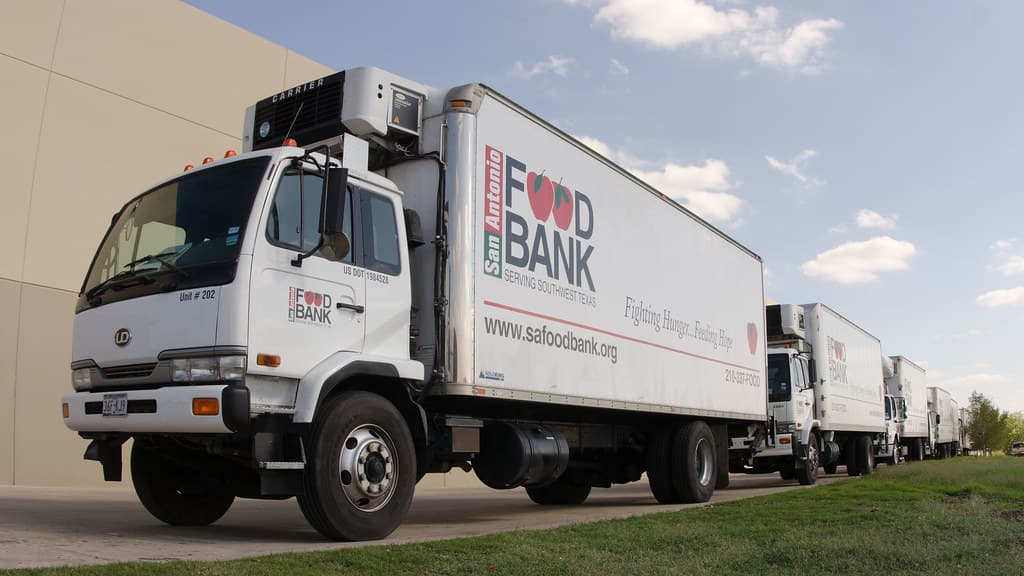
Since 2015, A Simple Gesture’s Guilford County operation has made donating food easy through its collection programs. Its mission is built around a sustainable supply for local food pantries, excess perishable food collection, and food waste reduction. That combination puts route design, volunteer scheduling, and pantry coordination at the center of the work.
Why data matters in food recovery
Food bank logistics rarely move in a straight line. Academic work on food bank operations emphasizes three recurring constraints: demand is uncertain, donations are irregular, and transportation capacity determines how much food can actually be delivered. For a neighborhood program, that means the real question is not whether people want to help, but whether the pickup system can absorb what they give without creating bottlenecks.
Pickup maps, route timing, donor density, pantry receiving hours, and inventory balance all help decide where to place resources and when to send volunteers. They also make it easier to separate shelf-stable food from perishable donations so one category does not sit while the other moves quickly.
How the green bag model works on the ground
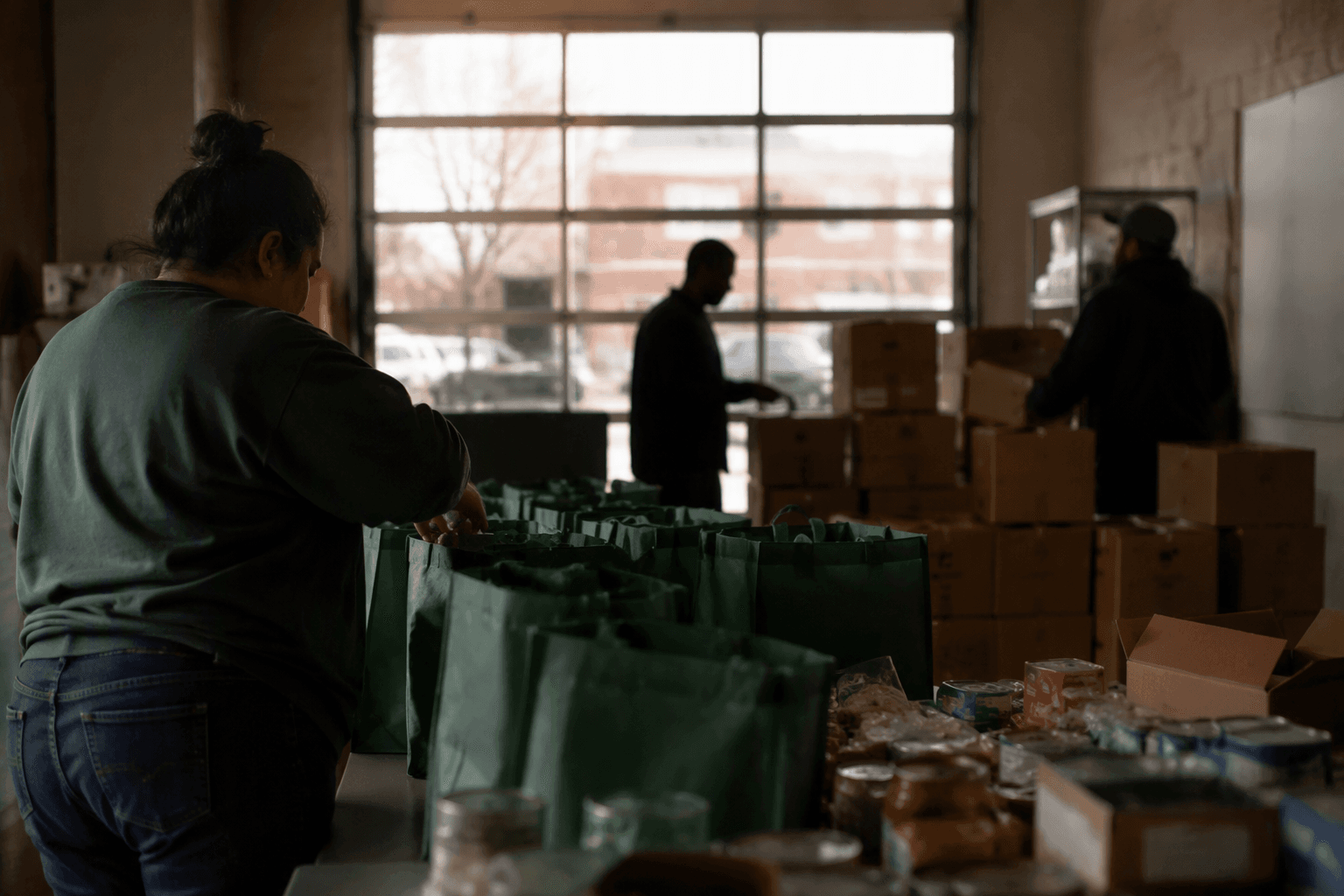
A Simple Gesture’s Green Bag Food Donor Program is built around convenience: “Donate Food Easily from Your Doorstep.” The model depends on a simple handoff, but the simplicity on the donor side only works if the back end is disciplined. Once bags are set out, someone has to know which streets are covered, how many volunteers are available, and how quickly food can be sorted and moved.
In Marysville, Washington, donors fill a green grocery-type bag with non-perishable food and leave it on the front porch for volunteers to pick up. In Stanwood, Washington, donors are told to set out donations based on the driving schedule. Those details matter because the pickup window, not the donation itself, is what prevents missed bags and volunteer confusion.
Volunteer planning is part of the mission
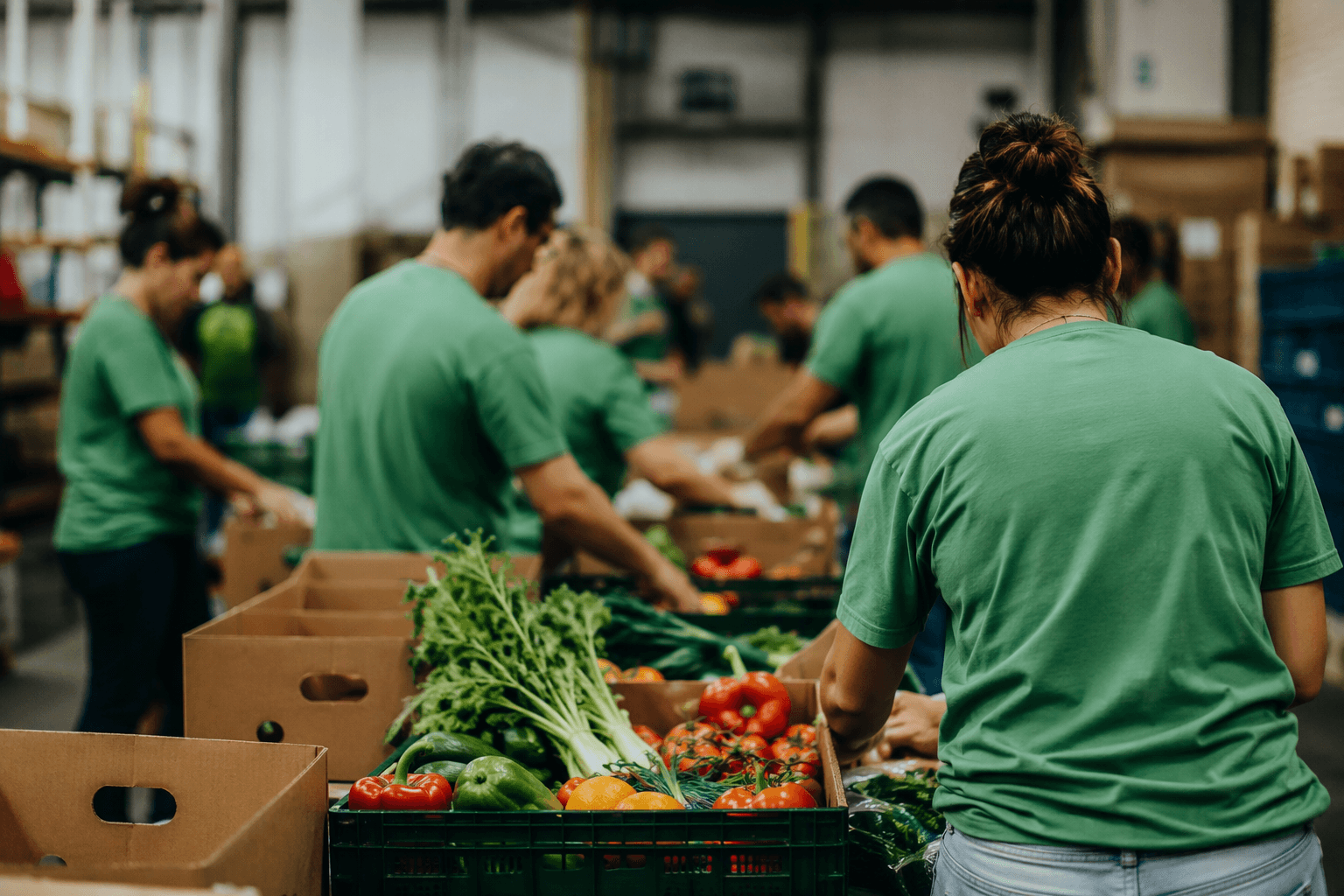
A Simple Gesture offers many ways to help, and labor planning is not a side issue. Volunteer recruitment and retention depend on predictable routes, clear instructions, and a system that feels manageable enough to repeat. When people know when to arrive, where to go, and what they are collecting, the route becomes easier to staff and the experience is less chaotic.
On Nov. 29, 2020, A Simple Gesture Reston expected 61 volunteers to fan out across Northern Virginia to pick up 1,300 bags of food that weekend. That kind of volunteer-led pickup volume only works when routing is tight and the organization can match people to territory without overlap or gaps.
Inventory flow decides what reaches pantries
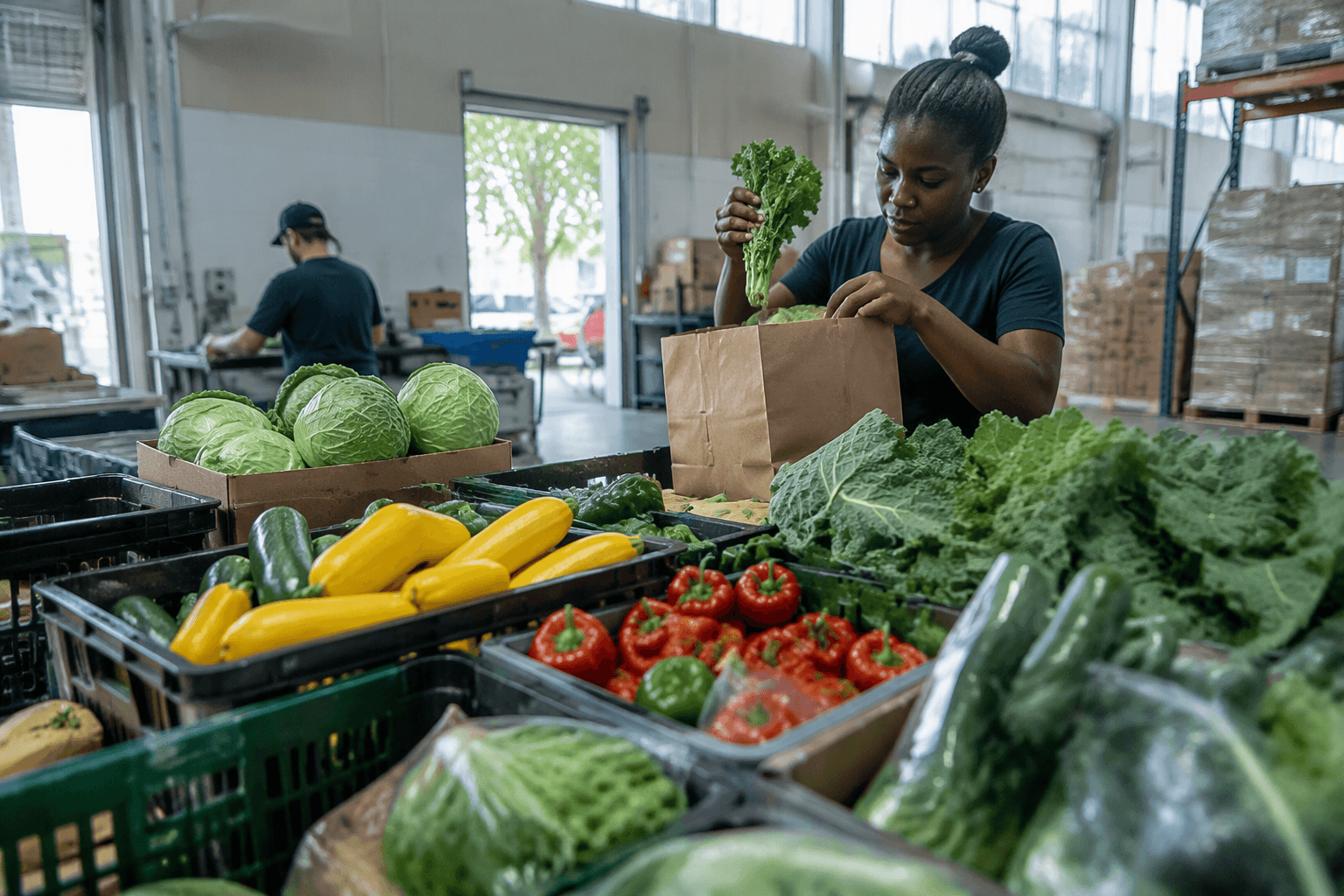
Once donations come in, the work shifts to inventory management. A Simple Gesture’s Guilford County operation includes providing a sustainable supply of food to local food pantries, which means staff and volunteers have to think about what pantries can receive, store, and move quickly. Limited warehouse space and limited labor are not abstract constraints in that setting; they shape how many routes can run, how fast donations can be processed, and how reliably partner pantries are stocked.
Its food recovery page uses two phrases: “Delivering food with a purpose” and “Preventing Good Food From Going to Waste through Food Recovery.”
What the numbers say about scale
A Simple Gesture GSO/Guilford County listed 369,637 pounds of nonperishable food donated by its green bag food donors in the prior year.
The organization’s site also includes an Impact Reports section devoted to annual reports about strengthening Guilford County communities through support of local food pantries. It lets coordinators compare year-over-year output, identify weak spots in collection or distribution, and make a case for staffing or route adjustments based on evidence rather than anecdote.
How employer expertise can strengthen the system
Food recovery groups do not only need donations. They also benefit from companies that can contribute transportation, route-optimization skills, warehouse systems, mapping tools, data analysis, and volunteer-support expertise. A logistics company can help redesign pickup routes. A software team can build better scheduling or donor-tracking tools. A fleet operator can offer vehicles or dispatch support when volunteer transport is stretched thin.
That kind of support is especially valuable for neighborhood programs like A Simple Gesture because the operating challenge is specific: a doorstep donation model works only if pickups are dependable and inventory moves cleanly to pantry partners. Technology can reduce missed bags, analytics can show which routes are overloaded, and transportation partners can help cover gaps when volunteer capacity changes.
What A Simple Gesture’s model shows about community reach
In Arlington, the community food bank calls the program a way to create easy, impactful contributions from the community.
This article was produced by Prism’s automated news system from verified source data, official records, and press releases, then run through automated quality and moderation checks before publishing. The system is built and supervised by the people who set the standards it runs under. Read our full AI policy.
Did this article answer your question?