Food Bank of Eastern Oklahoma launches 2026 Stamp Out Hunger drive
Food Bank of Eastern Oklahoma’s Stamp Out Hunger launch showed how one mailbox pickup day can turn postal routes into a countywide food-recovery network.
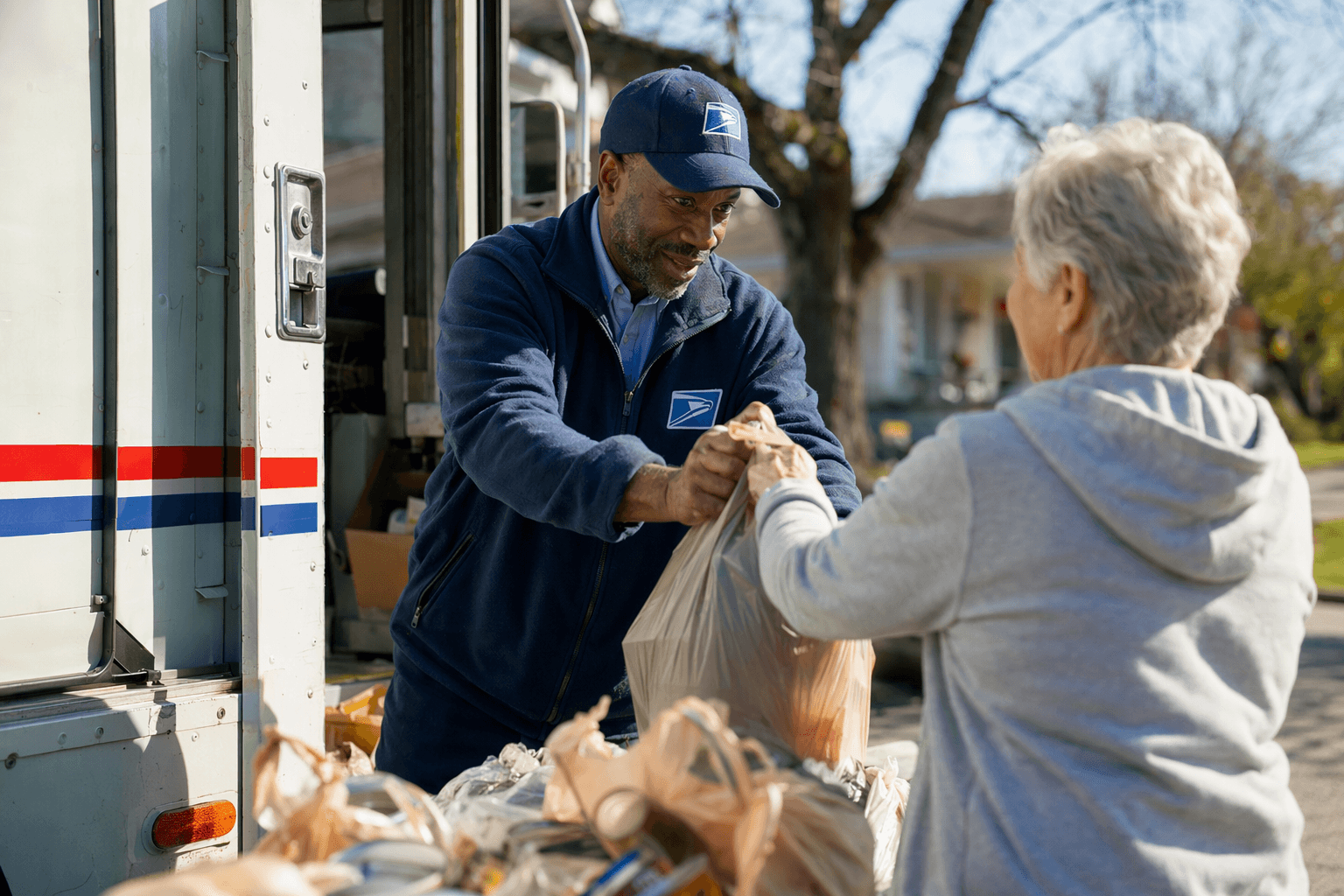
Mail carriers turned ordinary delivery routes into a food-recovery system as Food Bank of Eastern Oklahoma launched its 2026 Stamp Out Hunger drive at a May 1 kickoff. The organization called it the nation’s largest one-day food drive and tied the effort to the National Association of Letter Carriers and local post offices.
The mechanics were intentionally simple. On May 9, households were set to leave a bag of nonperishable food by the mailbox, and carriers would collect it while working their routes. The food would then move to the food bank for sorting and distribution to more than 600 partner agencies across the region.
That route-based design is what makes the campaign useful beyond one day of collections. It lowers the burden on donors, who only need a bag, a pickup point and a date. It also gives the nonprofit a clean handoff: a trusted workforce gathers the donations, then the receiving network takes over with a defined sorting and distribution system. For a doorstep model, that clarity matters as much as the donation itself.
For A Simple Gesture and other food-recovery programs built around neighborhood pickups, Stamp Out Hunger is a large-scale proof of concept. The model works because it aligns route density, household participation and downstream capacity. If the pickup is predictable and the community knows exactly where to leave food, the burden stays low enough for broad participation. If sorting or coordination breaks down, the convenience that drives turnout starts to disappear.
The Food Bank of Eastern Oklahoma’s setup also shows why a strong public call to action matters. Participants did not need a policy lesson or a long explanation of food insecurity. They needed a date, a place to put the bag and confidence that the system would handle the rest. That is the same operational logic that makes neighborhood food drives succeed, and the same weak point when they stall.
Know something we missed? Have a correction or additional information?
Submit a Tip