Food Recovery Network hub helps A Simple Gesture scale food donation programs
A food donation program scales when the rules are simple to hand off. FRN’s hub shows how A Simple Gesture can standardize training, liability, and routes without losing local reach.
A repeatable program starts with a repeatable playbook
A Simple Gesture already runs on logistics, not luck. In Guilford County, the nonprofit says it works with dozens of local food pantries, has more than 1,700 food donors, and relies on volunteer drivers to collect over 132,000 pounds of food a year. That kind of volume only holds if the process is clear enough for staff turnover, volunteer churn, and new partner onboarding.
That is where Food Recovery Network’s Resource Hub matters. The hub is built as a practical guide, with information, toolkits, and step-by-step resources that explain and encourage food rescue, recovery, and donation across the United States. For a group like A Simple Gesture, the value is not inspiration. It is standardization: one place to send donors, one place to explain food safety, and one place to point partners when they ask how a pickup program actually works.
Make donor-facing clarity part of the operating model
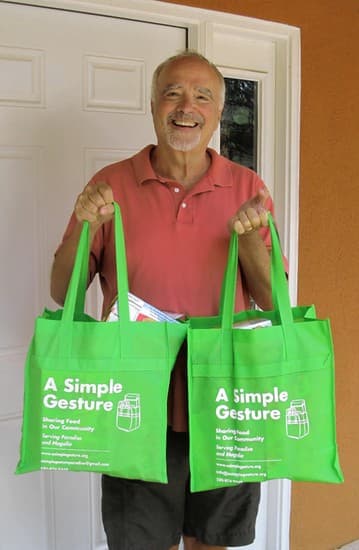
A Simple Gesture’s Green Bag Program works because the ask is simple. Households place recurring donations of nonperishable food in reusable green bags on the doorstep, and volunteer drivers collect them on a regular route, then leave an empty bag behind. That rhythm is easy for neighbors to understand and easy for coordinators to schedule, but only if every household receives the same instructions.
FRN’s related resources reinforce that logic. Its food recovery materials spell out donor responsibilities, transportation logistics, and food-safety training expectations. Its hub also points users toward information on liability protection, policy, and food donors, which is exactly the kind of donor-facing clarity that keeps a local program from becoming confusing as it grows. The lesson for staff is straightforward: if donors have to improvise, the system gets harder to scale.
Treat compliance as a recruitment tool, not a legal afterthought
Food recovery programs often stall when a donor, business owner, or school administrator worries about risk. That is why the legal framework belongs in the operating manual, not buried in a separate folder. The Bill Emerson Good Samaritan Food Donation Act, signed on October 1, 1996, gives limited liability protection to good-faith donors and distributors that feed hungry people, and USDA says the law also protects food banks and other distributors.
USDA’s guidance says the protection covers food and grocery products that meet quality and labeling standards, and it can also extend to donations of items that do not meet those standards if the nonprofit is informed. ReFED notes that the federal framework was expanded and clarified by the Food Donation Improvement Act in 2022. For A Simple Gesture, this matters because liability language is not just legal housekeeping. It helps a grocery manager, caterer, or school partner say yes to a recurring donation without feeling like they are taking on hidden risk.
Standardize training so routes survive turnover
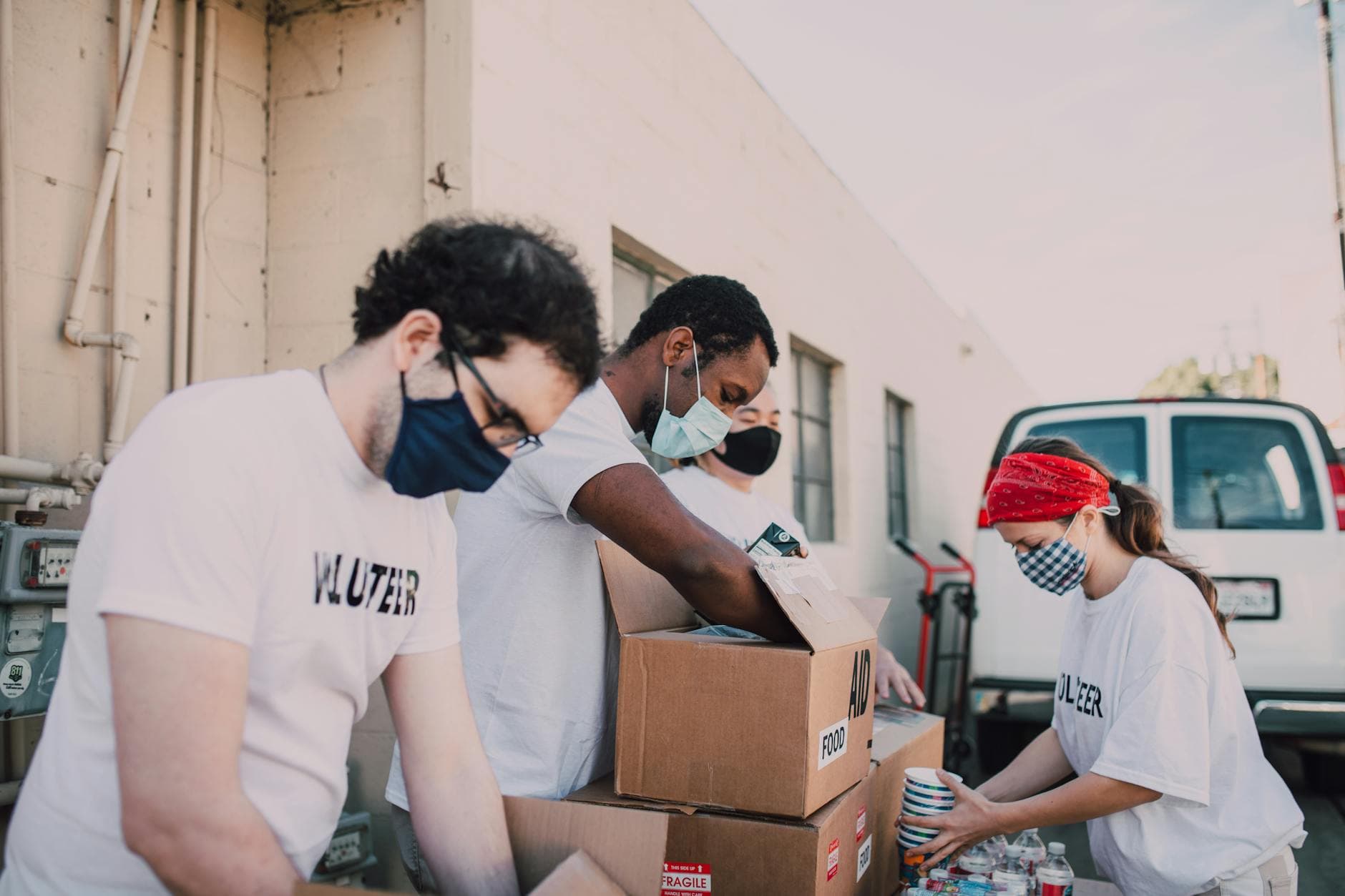
Food recovery is easy to romanticize and easy to break. The volunteer may be kind, but the work still depends on temperature, timing, handoff, and documentation. FRN’s Food Safety Resources reflect that reality by requiring volunteers to watch a food-safety training video and take a quiz before going on a recovery. That is a useful model for any organization that depends on rotating drivers and part-time coordination.
For A Simple Gesture, the practical takeaway is to build a training path that is short, visible, and repeatable. New drivers should know what belongs in the green bag route, what belongs in a business recovery route, and who receives the food when the pickup is complete. A handoff system should be simple enough that a volunteer can follow it without calling the office every time, yet detailed enough that a staff member can audit it later. In food recovery, the real risk is not a bad route. It is knowledge that lives in one person’s head.
Coordinate partners by type, not just by geography
A Simple Gesture says its mission is to provide a sustainable supply of food to local food pantries in Guilford County, collect excess perishable food for local nonprofits and community meals, and support the SHARE program in Guilford County Schools. That mix of partners gives the organization reach, but it also creates different operating needs. Pantries need consistent delivery. Schools need timing that matches the academic calendar. Community meal programs need coordination that respects service windows. Food-industry donors need clear expectations about what gets collected and when.
That is where FRN’s hub offers a useful template. The resource space is designed to help people establish or grow food recovery programs by clarifying the donor role, the transport step, and the food-safety expectations. A Simple Gesture can use that structure to keep partner coordination from becoming a one-off negotiation each time a new school, business, or pantry joins the network.
Measure the work in meals, pounds, and avoided waste
The larger case for food recovery is bigger than any one nonprofit. EPA estimates food is the largest material category in municipal landfills. In 2019, the United States generated 66 million tons of wasted food in the food retail, food service, and residential sectors, plus another 40 million tons in food manufacturing and processing. EPA says about 60 percent of wasted food from the retail, service, and residential stream was landfilled that year. USDA joined EPA in 2015 in setting a national goal to cut food waste by 50 percent by 2030.
Those numbers help explain why programs like A Simple Gesture’s are doing more than local charity work. They sit at the intersection of hunger relief and waste reduction. FRN’s own scale shows what happens when that model is documented well: the organization mobilizes more than 8,000 college students and food system partners across 200-plus college and university student-led chapters, and its FY23 update said it recovered 1,273,987 pounds of surplus food, equal to 1,061,656 meals and 561.06 metric tons of carbon dioxide prevented, since July 2022. Its 2025 impact reporting put its total above 22.9 million pounds recovered and 19 million meals donated, while its public counters show even higher totals.
The real test is whether the system outlasts the people running it
A Simple Gesture began in 2011 in Paradise, California, when Jonathan Trivers and Karen Trivers turned a simple idea into a neighborhood donation model. The Guilford County chapter later established itself as a 501(c)(3) in 2015. That history matters because it shows how a good idea becomes durable: not through a burst of enthusiasm, but through routines that can be handed from one volunteer coordinator to the next.
Food Recovery Network’s hub is useful because it turns that durability into something concrete. It gives organizations a model for donor instructions, food-safety training, transport logistics, and liability basics. For A Simple Gesture, that is the difference between a program that depends on one staffer’s memory and a program that can keep serving pantries, schools, and community meals long after the team changes.
This article was produced by Prism’s automated news system from verified source data, official records, and press releases, then run through automated quality and moderation checks before publishing. The system is built and supervised by the people who set the standards it runs under. Read our full AI policy.
Did this article answer your question?