Food Rescue US app links donors, volunteers and agencies in one system
The real breakthrough is the scheduling layer: one system that matches surplus food, volunteers and agencies, then proves its value through faster, steadier pickups.
A scheduling system that turns surplus into inventory
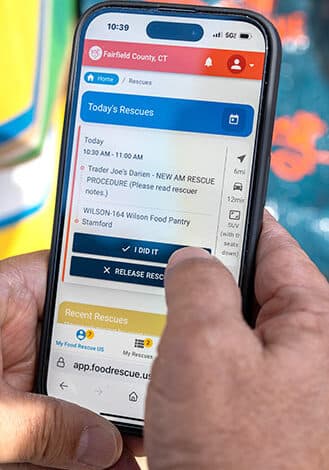
Food Rescue US is built around a simple operational idea: if donors, volunteers, and receiving agencies all work from the same web-based system, surplus food stops being a loose promise and becomes recoverable inventory. The organization says its app is the core of that model, because it lets local agencies post need, volunteers claim a rescue, and food move directly to the nonprofit partner without a lot of back-and-forth.
That matters because food recovery is not just about generosity. It is about timing, routing, and follow-through. Food Rescue US says its proprietary app was designed to make that coordination flexible enough for busy schedules, which is the same pressure point that shapes any doorstep donation network, including A Simple Gesture’s Green Bag model.
Why the mechanics matter more than the branding
Food Rescue US traces its founding to Fairfield County in 2011, when Jeff Schacher and Kevin Mullins saw that food insecurity and food waste could be addressed with an app, volunteers, and a direct-transfer model. The point was not to add another layer of administration. It was to make the next step obvious for everyone involved.
That is the right lens for A Simple Gesture as well. A Simple Gesture-Guilford County says it became a nonprofit in 2015, while the broader model dates to 2011 and was established by Jonathan Trivers in Paradise, California. The Green Bag program is built on convenience, with donors choosing monthly or bi-monthly doorstep pickups. In practice, that means the system succeeds or fails on the quality of its scheduling, reminders, route planning, and handoffs.

For coordinators, the lesson is straightforward: volunteers return when the work fits their lives. If pickup windows are clear, claims are easy to see, and delays can be handled quickly, the operation feels manageable instead of chaotic. That is the difference between a program people try once and one they build into their routine.
What A Simple Gesture already proves at scale
A Simple Gesture’s own numbers show why this kind of coordination matters. As of December 2025, the Guilford County chapter says it has delivered over 8,000,000 child-size meals, representing $13,000,000 in donated food value. It also reports more than 75 pantry partners, 3,900+ recurring food donors, and 200 monthly volunteers.
Those figures point to a system that is doing more than collecting bags at the curb. The network has to match donor supply with pantry demand, move food through recurring routes, and keep volunteers coming back month after month. That is where stronger pantry partnerships matter more than simply increasing volume. More food is useful only if the right food gets to the right agency at the right time.
The same logic applies to Food Recovery and SHARE refrigerators in Guilford County schools. Both depend on reliable coordination, not one-off enthusiasm. The operational challenge is not just finding food. It is preserving the chain of custody from source to partner without wasting volunteer time or creating missed pickups that can erode trust.
The app model shows what low-friction participation looks like
Food Rescue US says its model works because volunteers, food donors, and social service agencies all use the same proprietary app. That matters for participation because the system does not ask volunteers to learn a separate process for each rescue. It asks them to respond to a clear need, accept a task, and complete the transfer.
For chapters trying to recruit or retain volunteers, that is the central design lesson. Real-time matching lowers the burden on people who want to help but cannot commit to a rigid weekly slot. It also creates a cleaner handoff for coordinators who need to know what is happening, when it is happening, and who is responsible if plans change.
The strongest question for any chapter adopting a similar approach is not whether the technology looks modern. It is whether it reduces friction enough to change behavior. A workable system should make it easier to fill routes, easier to cover gaps, and easier for occasional volunteers to become repeat volunteers.
The scale problem is bigger than local hunger relief
The urgency is not hypothetical. The US Department of Agriculture says 13.7 percent of U.S. households were food insecure at some point in 2024, and 5.4 percent experienced very low food security. At the same time, the US Environmental Protection Agency says USDA has set a national goal to halve food loss and waste by 2030.
ReFED’s 2024 fact sheet adds another hard number: 29 percent of food produced in the United States goes unsold or uneaten each year. That is why food recovery sits at the intersection of hunger relief, waste reduction, and climate action. Food Rescue US says its mission includes keeping food out of landfills and reducing greenhouse gas emissions, and that is not just environmental language. It is an operating principle that turns waste prevention into a measurable part of the supply chain.
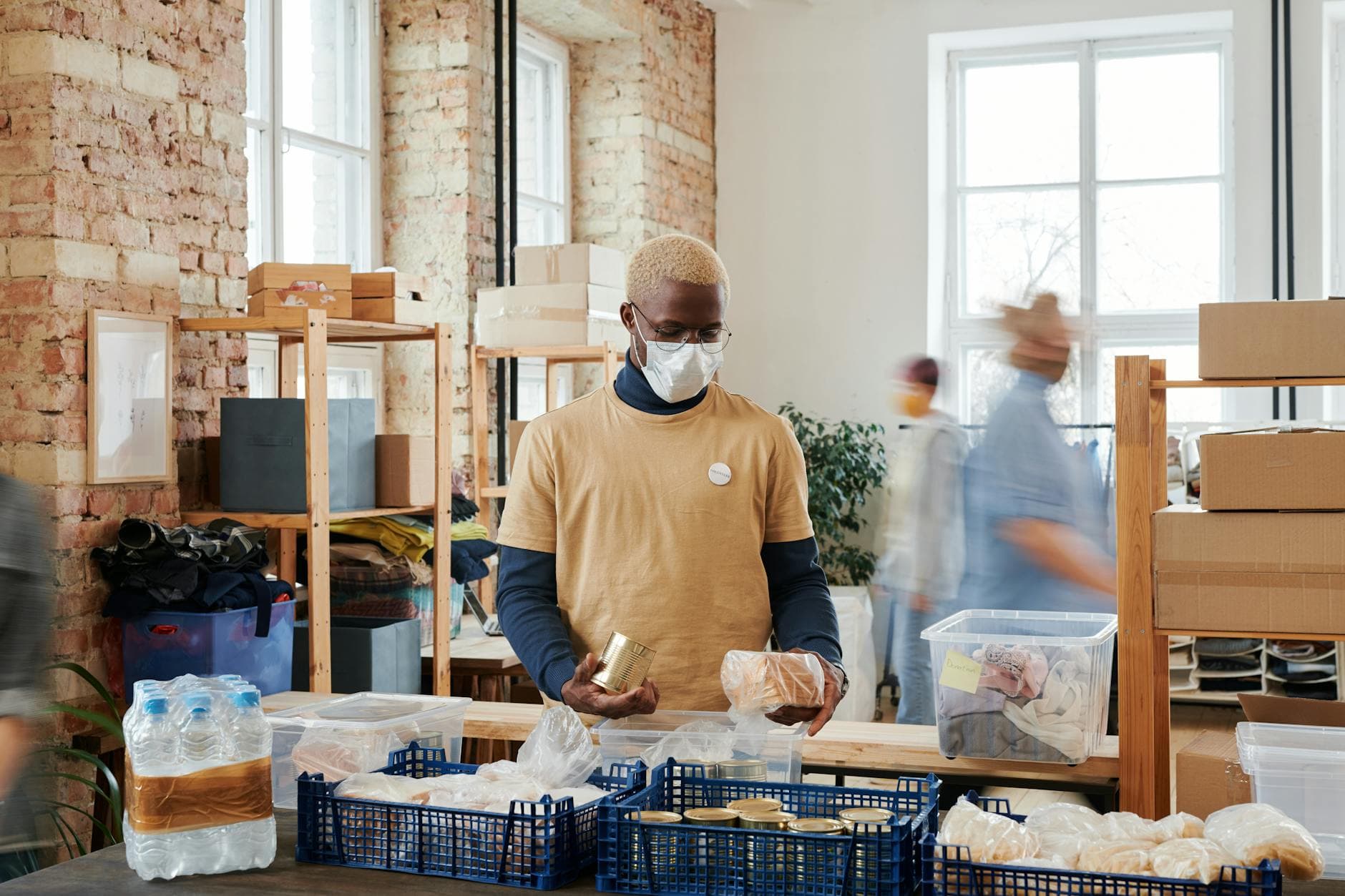
What to measure if the model is working
For A Simple Gesture and similar networks, the next test is concrete evidence. The best systems do not just say they are flexible; they prove it by improving the mechanics.
- Fewer missed pickups, because routes and claims are clear
- Faster routing decisions, because coordinators can see needs in real time
- Higher volunteer retention, because participation fits busy schedules
- Better pantry alignment, because agencies get food that matches demand
- More reliable recurring donors, because the process feels simple enough to repeat
That is the real promise of a scheduling system built for food recovery. The goal is not to make volunteer work feel like software. The goal is to make the work so legible that people keep showing up, pantries can plan around the flow, and usable food does not disappear into the gap between donation and delivery.
Food Rescue US shows how that can scale when donors, volunteers, and agencies all operate from one system. A Simple Gesture shows what happens when the same logic is applied at the neighborhood level, where the route map is local but the operational problem is the same: make the next pickup obvious, and the whole network gets stronger.
Know something we missed? Have a correction or additional information?
Submit a Tip