Gen Z Leads Giving, Social Networks Shape Their Philanthropy
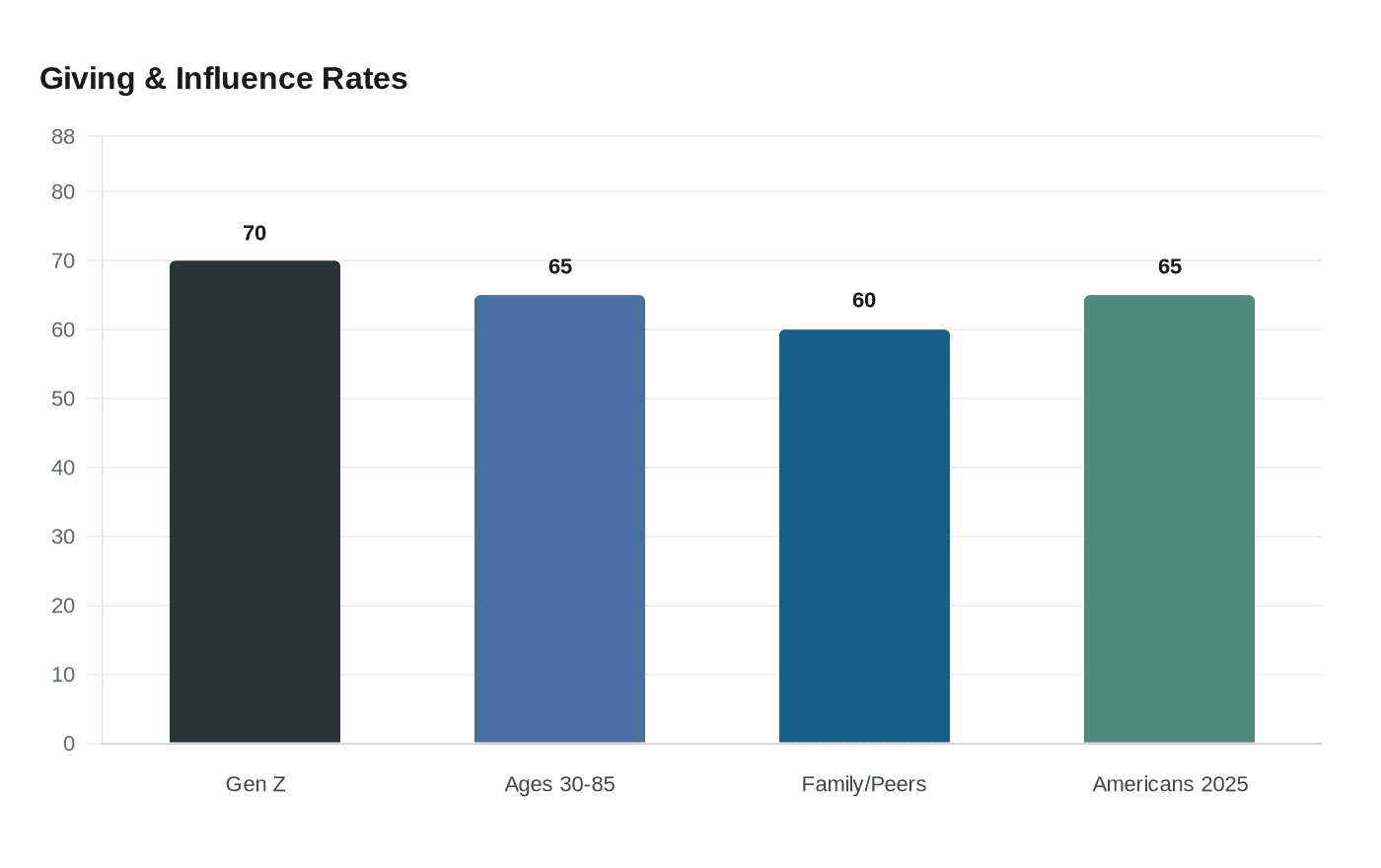
More than 70% of Gen Z respondents gave in the past week, and nearly 60% said family or peers shaped the decision.

More than 70% of Gen Z respondents reported some form of giving in the past week, a sharper signal than the 65% of adults ages 30 to 85 who said the same. For A Simple Gesture, the message is clear: younger supporters are not a donor class to cultivate later. They are already giving now, and they are doing it in ways that fit the organization’s doorstep green bag model, volunteer routes, and neighborhood network.
The new findings from GoFundMe and the GivingTuesday Data Commons show that Gen Z adults, defined in the report as ages 18 to 29, do not limit philanthropy to writing checks. They are active in advocacy, direct support for individuals, informal giving, volunteering, and community fundraising. Nearly 60% said family or peers shape their giving decisions, underscoring how visible and network-driven their generosity can be. That matters operationally for nonprofits because the path from awareness to sharing to mobilization to giving is often shorter than older fundraising models assume.
The broader sector backdrop points the same way. GivingTuesday’s Data Commons now includes more than 180 data partners and 2,000 collaborators, and its GivingPulse 2025 year-in-review found that 65% of Americans gave in some form in 2025, with overall giving rates virtually unchanged from 2024. GivingTuesday also said 38.1 million people participated in GivingTuesday 2025 and $4.0 billion was donated in the United States alone, bringing cumulative U.S. GivingTuesday donations since 2012 to $22.5 billion. The takeaway is not that philanthropy is spiking wildly. It is that giving is steady, social, and increasingly organized around everyday behavior.
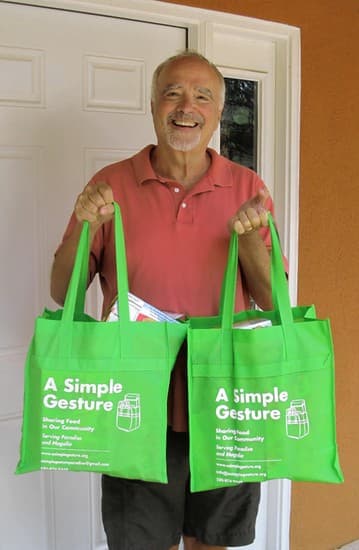
That is where A Simple Gesture has room to grow. Its Guilford County operation partners with dozens of local food pantries, runs a Green Bag program for doorstep donations, and relies on volunteer drivers, bag sorting and folding, special projects, and help signing up new donors. The organization also rescues edible food from businesses through its Food Recovery effort, and it requires volunteers to be at least 18 for food-recovery driving. For an older Gen Z supporter, that creates a natural sequence: sign up for a pickup, recruit friends, post about the experience, and then give again.
The local need is large enough to reward that kind of momentum. Feeding America estimates Guilford County had 82,510 food-insecure people in 2023, a 15.2% food insecurity rate, and a $57,703,000 annual food budget shortfall. Guilford County’s own data puts child food insecurity at 22.5%, and the North Carolina Department of Health and Human Services says about 10.9% of North Carolinians, roughly 1.2 million people, experience food insecurity, including about 394,000 children. In that environment, A Simple Gesture does not need to wait for younger adults to age into philanthropy. It can treat them as a live audience for peer-to-peer challenges, campus ambassador programs, volunteer referral drives, and social content that turns a green bag pickup into a visible act of local impact.
This article was produced by Prism’s automated news system from verified source data, official records, and press releases, then run through automated quality and moderation checks before publishing. The system is built and supervised by the people who set the standards it runs under. Read our full AI policy.
Did this article answer your question?