IRS 2026 Mileage Rates Set New Framework for A Simple Gesture Volunteer Reimbursements
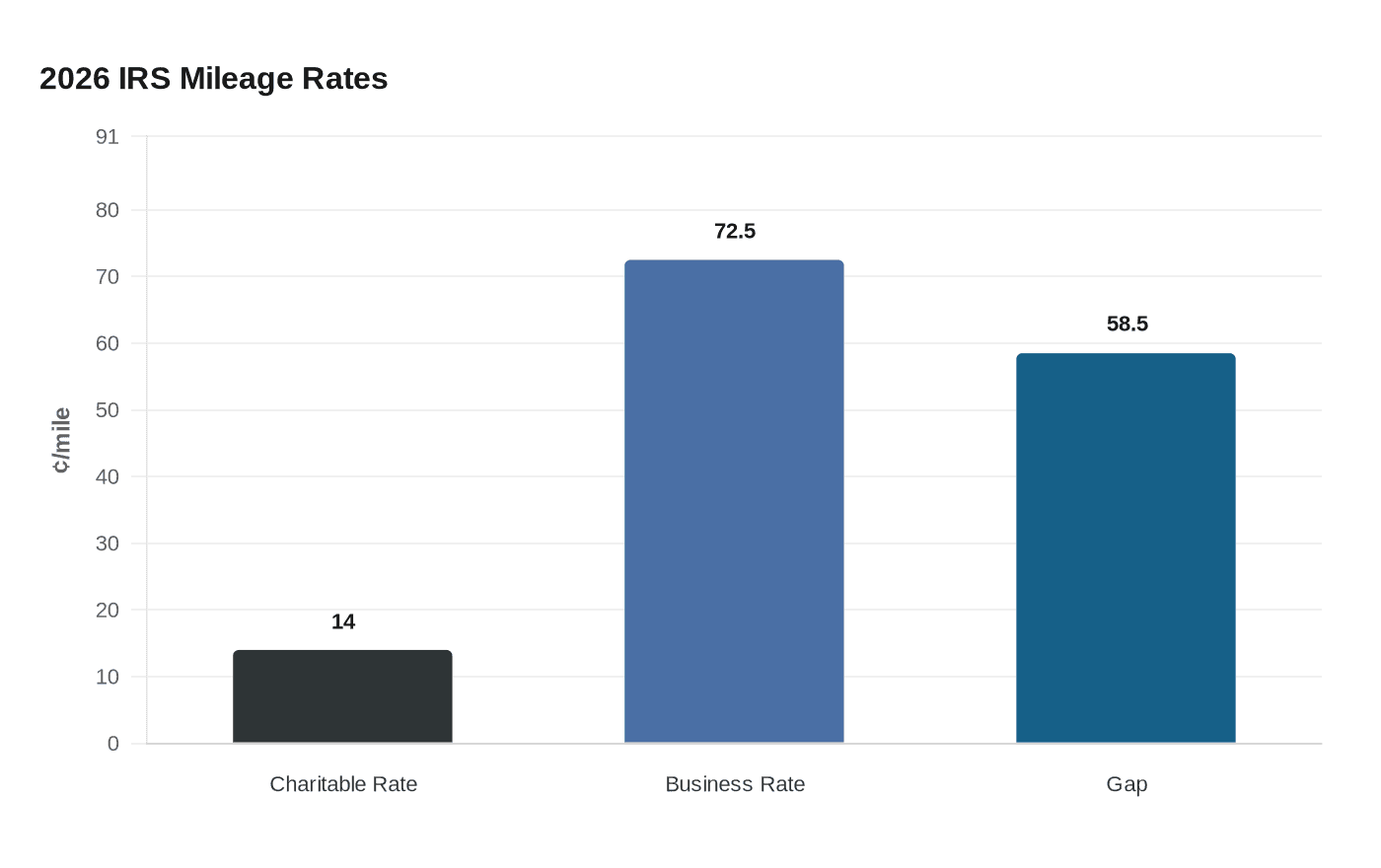
At 14¢ per mile, the IRS charitable rate is 58.5¢ below the 2026 business rate, a gap that turns well-meaning mileage checks into taxable income if ASG chapters aren't careful.

A volunteer finishes a Green Bag collection route, drops donations at a partner pantry, and receives a well-intentioned mileage check from the chapter. If that check reimburses at more than 14 cents per mile without proper documentation backing it up, the chapter has just created taxable income for someone who thought they were simply helping neighbors eat.
That is the compliance exposure IRS Notice 2026-10 makes concrete for A Simple Gesture. Effective January 1, 2026, the IRS set the charitable mileage rate at 14 cents per mile for the calendar year, the statutory ceiling for what a volunteer may deduct as a charitable contribution for unreimbursed driving. The business rate for 2026 climbed to 72.5 cents per mile, leaving a 58.5-cent gap that defines the entire policy challenge for vehicle-intensive programs like Green Bag route collection.
The 14-cent figure is not a suggestion. It is the hard limit on tax-deductible charitable mileage under federal law, codified in statute and unchanged for years despite rising fuel costs. Chapters that want to help Green Bag drivers cover more of their actual costs have a legitimate path: the IRS accountable plan framework allows organizations to reimburse volunteers above 14 cents per mile without creating taxable income, but only when the reimbursements are tied to actual documented expenses, submitted on time, and returned or substantiated when required. Without that structure, any excess above 14 cents per mile is reportable income to the volunteer. ASG bookkeepers and chapter leads should consult a finance advisor before setting any rate above the charitable floor.

The documentation standard matters as much as the rate. For any reimbursement to qualify under an accountable plan, volunteers must submit contemporaneous mileage logs capturing four things: the date of the trip, start and end odometer readings, the purpose (Green Bag pickup, food recovery run, SHARE fridge collection), and the name of the recipient pantry or drop-off location. A seven-day submission window after each run is a workable standard; it keeps records fresh and makes monthly reimbursement cycles predictable for finance staff.
The most common failure modes cluster around exactly these details. Missing odometer readings are the most frequent documentation gap. Next comes volunteers combining personal errands with charity driving in a single log entry, followed by chapters applying inconsistent rates across routes or reimbursing some drivers doing identical work while leaving others uncompensated. Each error creates either a tax problem for the volunteer or a fairness problem across the chapter network, and both erode the trust that keeps drivers showing up on Saturday mornings in Guilford County.
Coordinator approval is a required link in the chain. Each mileage log should clear a named coordinator before going to bookkeeping, creating a two-step check that catches errors before they become payroll complications. Partner pantries that share volunteer resources with ASG should operate under the same log standards to prevent inconsistent reimbursement practices at shared pickup points.
For 2026, a ready-to-adopt chapter policy rests on four specifics: reimburse at the IRS charitable rate of 14 cents per mile as the default; require the four-field mileage log for every trip; enforce a seven-day post-run submission deadline; and route all approvals through a designated coordinator before any payment is processed. Any chapter considering higher reimbursements to support long-route drivers should document the accountable plan structure in writing, with finance counsel sign-off, before the first check is cut. The driver orientation packet and volunteer handbook are the right places to publish this policy so the rules are visible before a single mile is logged.
Volunteer drivers absorb real costs running these routes. Getting the reimbursement policy right is how ASG respects that contribution without delivering a tax surprise in April.
This article was produced by Prism’s automated news system from verified source data, official records, and press releases, then run through automated quality and moderation checks before publishing. The system is built and supervised by the people who set the standards it runs under. Read our full AI policy.
Did this article answer your question?