Nutrition policies help pantries improve food quality and community trust
Nutrition policies do more than clean up pantry shelves. They can improve the food mix, speed sorting, and make donors and neighbors trust the system more.
The hidden lever in a pantry is often not a bigger truck or a fuller warehouse. It is a nutrition policy that tells volunteers, donors, and partner pantries what good food actually means, and why that standard matters.
That shift is bigger than inventory. A calories-first pantry model is built around volume, where the main question is whether enough food came in to fill bags and shelves. A policy-driven quality model asks a second question: does the food support health, culture, and dignity, or is it just moving weight? For A Simple Gesture, that distinction matters because food recovery is not only about collecting more, it is about moving food that people can use, welcome, and trust.
When quantity stops being enough
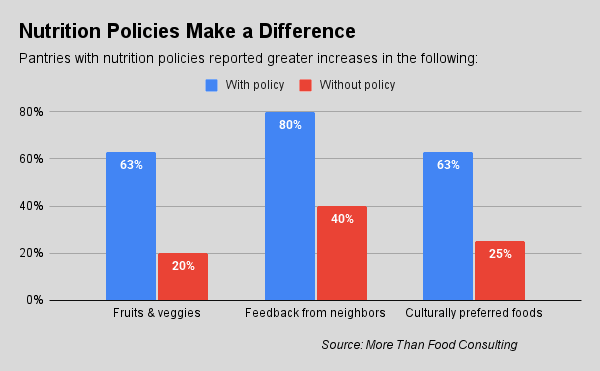
The Washington State evaluation behind this reporting looked at 31 food pantry nutrition policies and gathered feedback from more than 60 charitable food organizations and other stakeholders through surveys, focus groups, and interviews. Its central finding was practical, not abstract: organizations with nutrition policies were more likely to increase fruits and vegetables, collect feedback from neighbors, and include culturally preferred foods in what they offered.
That is a meaningful operational change. Once a pantry defines what it wants to prioritize, staff and volunteers stop making every decision item by item in the moment. The policy becomes a filter for sorting, purchasing, donor conversations, and partner coordination. It also changes the relationship with guests, because the pantry is no longer just saying, “We have food,” but “We are trying to provide the right food.”
The Rudd Center’s culturally relevant-foods guidance says the charitable food system has spent the past decade moving away from a narrow focus on quantity toward food quality, choice, dignity, and cultural fit. That is exactly the tension many pantries now manage. The old model measured success by pounds moved. The newer model asks whether those pounds actually meet the needs of the people who will eat them.
What a policy does that a shelf sign cannot
The Washington Food Coalition draws an important distinction: nutrition policies document a program’s food priorities, while donation guidelines spell out which foods are needed more or less of to meet community needs. That sounds administrative, but it solves a real problem. Generous donors often want to help, yet they may not know which items fit current pantry needs, and staff end up absorbing that mismatch in sorting and storage.
Feeding America’s Nutrition in Food Banking Toolkit takes the same approach, recommending working groups, nutrition policies, and tracking progress as part of improving the food supply in food banking. The lesson is that a pantry cannot make nutrition a strategic priority without building the machinery around it. A policy gives staff a shared standard. A donor guide translates that standard into something a household can act on. Tracking progress shows whether the mix is actually improving.
New Day Ministry in Bremerton, Washington, offers a concrete example. The pantry has a nutrition policy and a food donor guide, and Food Bank News reported that it used a grant-supported freezer and donor guide to support the policy. That matters because better standards usually need better infrastructure. If a pantry wants more fruits and vegetables, it may also need cold storage. If it wants culturally preferred foods, it needs a more deliberate sourcing strategy and more listening to the community.
Why this matters for A Simple Gesture
A Simple Gesture already works in a system where convenience and coordination are central. In Guilford County, North Carolina, the organization says it works with dozens of local food pantries and runs Green Bag donor, food recovery, and SHARE school refrigerator programs. It also says a $1 donation can convert to more than $30 of food going to food banks and pantries, which shows how much value depends on getting the mix right, not just moving more product.
That is where nutrition policy becomes more than a document. For a chapter like A Simple Gesture, clear standards can sharpen donor conversations, reduce sorting friction, and make partner pantries happier with what arrives. If volunteers know what counts as a strong donation, they can sort faster and spend less time making judgment calls about items that look generous but are hard to distribute. If coordinators can explain why certain foods are encouraged and others are discouraged, they can turn a potentially awkward conversation into a shared mission.
The benefit runs both ways. Pantry partners can plan better when they trust the mix will be more nutritious and culturally responsive. Neighbors can receive food that fits their lives more closely, which changes the emotional texture of the exchange. The pantry is no longer just a place where surplus becomes necessity. It becomes a place where care is organized with more precision.
The tradeoffs behind better food
Quality standards are not free. They can create sourcing challenges, especially when donations are unpredictable or when a pantry wants to align with cultural holidays and specific community needs. New Day Ministry said its policy made the pantry more aware of cultural holidays and more deliberate about what it asked donors to provide. That kind of intentionality is valuable, but it also requires more staff attention, clearer messaging, and sometimes new storage or purchasing support.
That is the tradeoff many food-recovery organizations face. A broad “take anything edible” model is easier to explain, but it leaves staff to absorb the hidden costs of sorting, waste, and awkward inventory. A policy-driven model asks for more discipline up front, then pays it back in better food, better trust, and less wasted labor. The pantry becomes more selective, but also more useful.
For A Simple Gesture, the strategic lesson is straightforward. Nutrition standards can improve service and relationships at the same time, but only if they are paired with practical tools, from donor guides to freezer space to strong communication with pantry partners. That is the real mission design issue inside food recovery: not just how much food moves, but how deliberately it moves, and how much dignity it carries when it arrives.
This article was produced by Prism’s automated news system from verified source data, official records, and press releases, then run through automated quality and moderation checks before publishing. The system is built and supervised by the people who set the standards it runs under. Read our full AI policy.
Did this article answer your question?