Open Cupboard Shows How Trust Powers Food-Rescue Pantry Operations
The real breakthrough in food rescue is boring on purpose: fixed routes, safe storage and predictable handoffs make trust possible for donors and pantry users.
Trust is the operating system
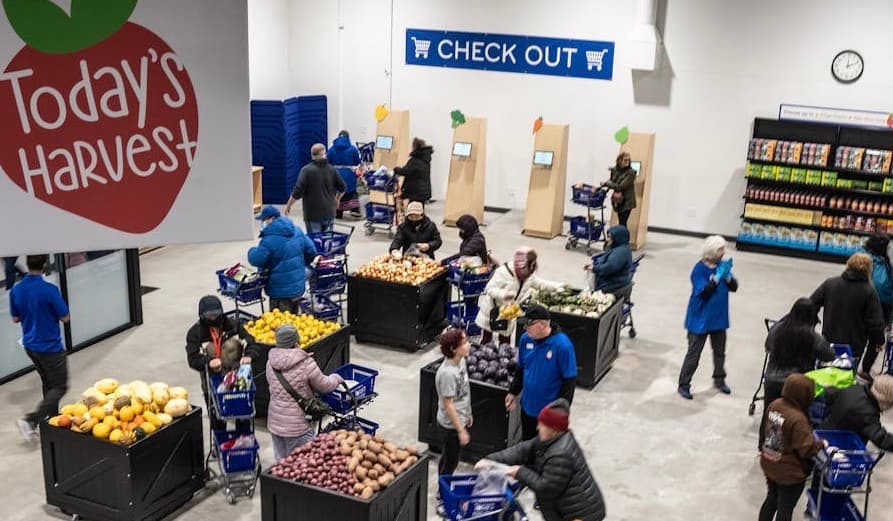
The most effective food-rescue pantry is not the one that improvises best. It is the one that can repeat the same pickup, the same storage handoff and the same shopping experience without making anyone guess what happens next. Open Cupboard’s Today’s Harvest model shows why that matters: when shoppers do not have to clear unnecessary hurdles and suppliers can rely on a clean chain of custody, food rescue starts to behave like a dependable service instead of a charity scramble.
That matters for every part of the system. Donors need to believe the bag or pallet will be collected on schedule. Staff need confidence that temperature-sensitive food was transported safely. Pantry users need to know the inventory will be there and will be usable. Once any one of those links becomes unpredictable, the model gets harder to sustain.
What Today’s Harvest proves
Today’s Harvest first opened in May 2021 with a free-market shopping model powered by food rescue, a setup Open Cupboard describes as the first of its kind. The immediate response was a practical signal, not just a publicity win: more than 200 households came through the market six days a week. That kind of early demand is exactly why low-friction access matters, because shoppers are more likely to return when the system feels organized, respectful and easy to use.
The model kept growing. A second Today’s Harvest location opened in Maplewood in December 2024, showing that the original concept was not just a one-site experiment. It scaled because the operation could support it, and because the organization had already built the muscle to manage food rescue as a regular supply chain rather than an occasional donation drive.
The logistics stack behind trust
Open Cupboard’s operation depends on several kinds of supply moving in sync. Its trucks pick up surplus food from grocers and farmers markets, while other food comes through food banks, food hubs and hunger relief partners. That mix only works when the organization has built infrastructure strong enough to handle time-sensitive inventory and established enough trust that retailers believe the food will move quickly and safely.
The discipline behind that system is what makes it useful as a guide for A Simple Gesture. Reliable pickups are not just about volunteer goodwill. They are about route planning, predictable sorting, clear storage capacity and a chain of custody that downstream partners can trust. If staff do not know what type of food is arriving, or when it will arrive, everything from labor scheduling to refrigeration space becomes harder to manage.
Second Harvest Heartland’s Retail Rescue program makes the same point from another angle: reliable collections, food safety and training are what turn daily retail donations into a workable system. In 2023, the program rescued more than 41.1 million pounds of food from 628 store partners, a scale that would be impossible without repeatable operating standards.
Why the numbers keep pushing the model forward
The broader waste problem explains why food rescue has to be systematized. USDA estimates that U.S. food waste accounts for 30 to 40 percent of the food supply. EPA has said that in 2018 more food was sent to landfills than any other single material in everyday trash. EPA and USDA also set a national goal in 2015 to halve food loss and waste by 2030. Those numbers turn food rescue from a feel-good effort into infrastructure work.
Open Cupboard’s own scale shows what that infrastructure can absorb. Its 2024 impact report says the organization rescued 2,361,928 pounds of food that year. In April 2024, it expanded the food rescue operation by adding another driver, another truck and seven additional local grocery and retail stores. The report also says Open Cupboard distributed 81,223 pounds of fresh, local produce through the Saint Paul Farmers’ Market and Second Harvest Heartland, which shows how local sourcing can be folded into a rescue model without losing operational discipline.
The local expertise behind that growth matters too. April Rog spent ten years leading food rescue operations for Second Harvest Heartland, where she helped grow rescued food from 12 million to 40 million pounds. That kind of experience is not just a résumé detail. It is a reminder that food rescue scales when people understand how to align store relationships, transportation, food safety and partner expectations over time.
What A Simple Gesture can borrow
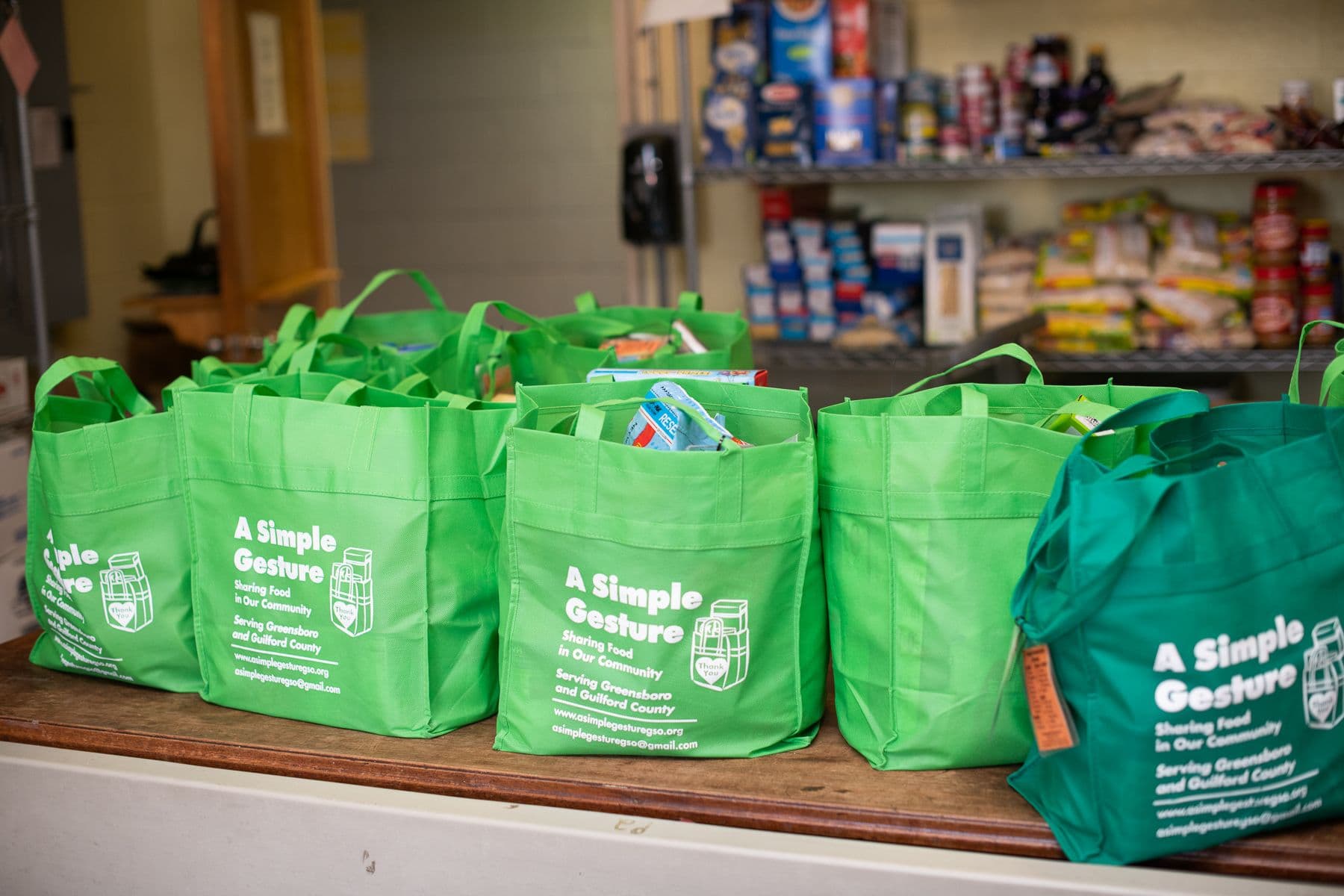
A Simple Gesture already operates in the same practical world. The program began in 2011 in Paradise, California, and became a 501(c)(3) in Guilford County in 2015. Since then it has spread to more than 65 communities nationwide. One chapter page says the network now includes more than 1,700 food donors and collects over 132,000 pounds annually, which is a reminder that dependable neighborhood giving can become a meaningful supply line when the process is simple and repeatable.
The lesson from Open Cupboard is that neighborhood food rescue works best when it is designed like a logistics system, not a campaign. For coordinators, that means tightening route discipline, keeping pickup windows predictable, and making sorting and storage rules easy enough that volunteers can follow them without improvising. For staff, it means treating partner relationships like operating infrastructure, because the grocer, the farmer’s market, the pantry and the rescue nonprofit all have to match pace.
That design pressure is rising as demand rises. Open Cupboard’s news page points to record-high demand in Minnesota in 2025, when residents made 9 million visits to food shelves. When need climbs that high, the value of a dependable pickup system becomes obvious. Trust is not a soft extra in food rescue. It is the mechanism that keeps food moving, keeps partners engaged and keeps more meals out of the waste stream and onto tables.
Know something we missed? Have a correction or additional information?
Submit a Tip