Volunteer retention hinges on matching skills, meaning and nonprofit needs
Retention rises when volunteers fit real jobs. At A Simple Gesture, that protects pickup routes, pantry deliveries and the food flow that donors rely on.
Why volunteer retention is an operations issue
A Simple Gesture does not lose volunteers in a vacuum. When people leave quickly, the organization loses route capacity, repeats training, and weakens the continuity that keeps food moving from front doors to partner pantries. In a field where more than 1.8 million nonprofits in the United States rely heavily on volunteers, that turnover is not a soft morale problem. It is a service-delivery problem, and recent nonprofit research has shown that 38% of leaders still identify volunteer recruitment and retention as a challenge.
The broader lesson is simple: volunteers are not interchangeable. They bring different strengths, schedules, and motivations, which means retention improves when the work matches the person and the organization’s needs. That point matters for A Simple Gesture because its model depends on recurring collections, steady driver coverage, and reliable handoffs to local food partners.
Match the task to the volunteer, not the other way around
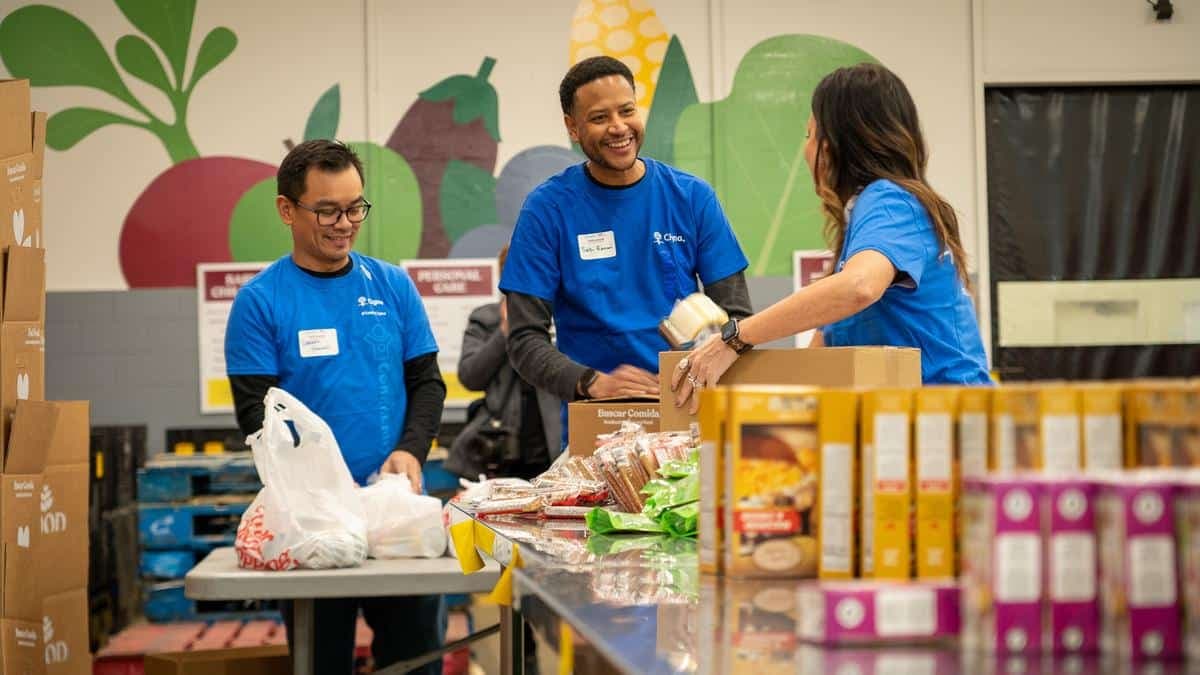
The strongest volunteer programs do more than thank people for showing up. They give them a role that feels useful. In practice, that can mean clerical work, fundraising support, direct engagement with clients, or hands-on logistics, depending on what the person can do well and what the organization actually needs that week.
For food-recovery groups, this is especially important because volunteers are not just sorting donations in a warehouse. They can also support outreach, build relationships with pantry partners, and help with the administrative work that keeps pickup systems functioning. National nonprofit guidance has also pointed to the same pressure points year after year: finding enough volunteers, avoiding burnout among the ones already on the roster, and keeping the work structured enough that people know how to help without guesswork.
What A Simple Gesture’s model asks from volunteers
A Simple Gesture was established as a 501(c)(3) nonprofit in Guilford County in 2015, but its story starts earlier, in 2011 in Paradise, California, through Jonathan Trivers. Today the organization says it has more than 1,700 food donors and numerous volunteer drivers who help collect over 132,000 pounds of food each year. Its model has also spread well beyond Greensboro, with more than 60 chapters nationwide and more than 7 million meals provided through the broader network.
The work itself is built around consistency. Some affiliate pages describe the program as a door-to-door food collection system using reusable green bags, with scheduled pickups that vary by chapter. In Reston, the bag tells donors the six times during the year food is picked up. A Dulles South Food Pantry flyer describes pickups five times per year, while Hunger and Health Coalition materials describe a year-round drive with volunteer drivers returning every two months to leave an empty bag and pick up the full one. That kind of variation means volunteer retention is not abstract: it is what keeps the route calendar intact.
The clearest reason people stay: they know what the job is
A Simple Gesture’s Guilford County food-recovery volunteers are asked to do very specific work. They must be 18 or older, use a clean personal car, use a smartphone, and be able to lift 20-pound boxes. Those requirements sound operational, because they are. They reduce confusion at the start, and they help the organization place people into assignments they can actually sustain.
That clarity is one of the most important retention tools available to a nonprofit. When a volunteer knows the route, the weight, the schedule, and the expected handoff, the shift feels manageable. When the role is vague or mismatched, the organization pays for it later in callbacks, retraining, and missed pickups. For a food-rescue nonprofit, that is lost capacity that never reaches a pantry shelf.
What keeps volunteers coming back
Retention is not built on appreciation alone. It comes from a combination of role clarity, communication, recognition, and feedback. Volunteers stay when they can see how their work connects to the mission and when the next step is obvious, whether that means taking on a route, helping with pantry partnerships, or supporting an event.
- route driving and doorstep pickup
- pantry delivery and food recovery coordination
- donor communication and schedule management
- event planning and outreach tied to community reach
A Simple Gesture has room to build exactly that kind of pathway because its work spans several layers:
That mix gives the organization more than one way to use a volunteer well. Someone who starts as a driver may later become a route lead. Someone who prefers less physical work may move into scheduling, donor communication, or partnership support. The key is making those transitions visible instead of waiting for people to ask.
Why retention matters more in food recovery than in many other volunteer settings
Food recovery depends on repetition. Donors need to know when green bags will be picked up. Pantry partners need to know the food will arrive. Staff need to know the route will be covered without scrambling. When a volunteer leaves, the loss does not stop at one missed shift. It ripples through the schedule, the donor experience, and the pantry network.
That is why retention is really a system question. Every returning volunteer reduces the amount of recruiting, training, and supervision that staff have to do again. Every reliable driver protects the continuity of the service. And every stable route strengthens the organization’s ability to move donated food from a doorstep to a local nonprofit without gaps.
A practical retention model for A Simple Gesture
A stronger volunteer base does not require a complicated overhaul. It requires a more deliberate structure around the work already being done. For A Simple Gesture, that means recruiting from a broad pool, matching people to the right kind of task, and showing them how the mission changes because of their effort.
The organizations that hold volunteers longest are usually the ones that make the role legible. They explain what the person is doing, why it matters, and how it fits into the larger operation. At A Simple Gesture, that clarity protects the green bag system, supports pantry partners, and keeps the food flowing in a way that donors and recipient organizations can count on. In a model built on recurring service, retention is not a feel-good metric. It is the backbone of reliability.
This article was produced by Prism’s automated news system from verified source data, official records, and press releases, then run through automated quality and moderation checks before publishing. The system is built and supervised by the people who set the standards it runs under. Read our full AI policy.
Did this article answer your question?