Why Some Food Banks Decline TEFAP, Despite Its Vital Role
TEFAP can feed millions, but its paperwork can also turn hunger relief into a test of privacy and trust. For A Simple Gesture, that is a real operations question, not just a policy debate.
Why TEFAP matters, and why it can feel intrusive
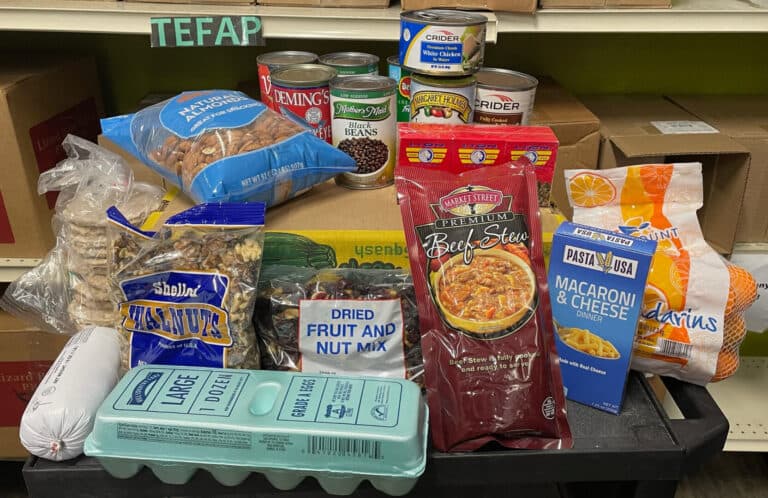
The Emergency Food Assistance Program, better known as TEFAP, is one of the most important food pipelines in the hunger-relief system. USDA says it helps supplement the diets of people with low income by providing emergency food assistance at no cost, and Feeding America calls it a cornerstone of the network’s food supply, accounting for more than 20% of the food distributed through its member food banks and local hunger-relief programs.

That scale matters because TEFAP is not a side program. Feeding America says the network relies on TEFAP and other donations to provide more than 4.2 billion meals a year, while a separate fact sheet says USDA foods supplied 2.4 billion meals in fiscal year 2020, or 39% of all food distributed by the network that year. Feeding America also says TEFAP delivered $399 million in food purchases nationwide in fiscal year 2022, which shows how much public funding moves through the system even before food is handed to families.
The tradeoff behind the pantry line
The same program that strengthens supply can also change the experience of getting help. USDA requires distribution sites to collect a household member’s name, the household address to the extent practicable, the number of people in the household, and the basis for determining eligibility. USDA also notes that people who are homeless or newly arrived in an area may not be able to provide an address.
That is where the policy-versus-dignity tension becomes operational. Food banks that decline TEFAP are often making a deliberate choice: they are giving up a reliable federal food stream in order to preserve a lower-barrier, less intrusive intake process. They are deciding that the chance to keep the experience simple, private, and nonjudgmental is worth more than the reporting benefits that come with federal participation.
For frontline staff, that choice is not abstract. It affects whether the conversation at a pantry table feels like help or scrutiny. It affects whether someone who needs food returns next week, or quietly drops out because the process felt too exposing.
Why some food banks walk away
Some organizations do not want clients to prove poverty before receiving food. That reluctance is not about rejecting accountability. It is about how much proof is too much when the need is immediate.
West Side Campaign Against Hunger is a clear example of that philosophy in action. The organization says it has worked since 1979 to ensure access with dignity to a choice of healthy food and supportive services, serves more than 100,000 people annually, and distributes more than 5 million pounds of healthy food. It also says more than 50% of what it distributes is fresh produce. That model puts dignity and choice ahead of a heavy eligibility screen, which helps explain why some food banks stay outside TEFAP even when the program could bolster supply.
The operational tradeoff is real. Declining TEFAP can mean more dependence on private donations, local partnerships, and surplus food recovery. But it can also mean fewer moments where volunteers must ask a family for information that feels unrelated to the immediate need for groceries.
What TEFAP participation looks like in practice
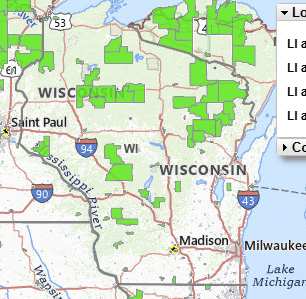
Other organizations choose to participate because the food volume is too important to pass up. Second Harvest Foodbank of Southern Wisconsin says it participates in TEFAP through the Wisconsin Department of Health Services and runs mobile pantries and other distributions across southcentral Wisconsin. Wisconsin DHS lists Second Harvest as a TEFAP provider serving Dane, Rock, and Walworth counties.
That kind of participation is common in a network where public food, state administration, and local distribution have to fit together. It also means the organization must balance reach and compliance every day, especially when mobile pantries and countywide service areas bring different populations through the line. A system that can move food across Dane, Rock, and Walworth counties still has to decide how much information to collect from each household and how to keep the process moving.
The rules are changing toward less friction
USDA finalized the Food Distribution Programs: Improving Access and Parity rule on October 31, 2024, and it became effective on December 30, 2024. Some TEFAP provisions had to be implemented by October 31, 2025. USDA says the rule’s goal is to increase access to TEFAP and make it easier for eligible people to receive food.
The practical shift matters. USDA and state guidance tied to the new rules says extra information may be collected only if it is optional and separate from eligibility, not as a condition for receiving food. Minnesota’s TEFAP FAQ goes even further, saying requesting identification is strictly prohibited under the revised process and that zip code may be asked only if it is optional.
For food banks and pantry operators, that means intake systems are being rewritten in real time. Forms, scripts, and check-in procedures all need to be examined line by line. If a field is required only because it has always been required, the new rules are forcing a hard look at whether it still belongs.
What this means for A Simple Gesture
For A Simple Gesture, TEFAP is useful even if the organization is not a direct TEFAP provider. The bigger lesson is how public-program rules affect the whole food-recovery ecosystem. Volunteers, coordinators, pantry partners, and donors all operate inside a trust network, and that network can be weakened when people feel watched rather than welcomed.
The clearest takeaway for staff is that every form and intake step has a cost. A name, address, household count, or eligibility declaration may be necessary in some programs, but each one also adds friction. For route coordinators managing green bag pickups, pantry partners handling distributions, and staff speaking with donors or volunteers, the question should be the same: does this step improve service, or does it create a barrier that drives people away?
A Simple Gesture’s strongest operational advantage is likely the same one that makes TEFAP controversial in some settings: trust. If the organization can keep data collection minimal, explain why information is being asked for, and separate reporting needs from the client experience, it can preserve dignity while still working within the realities of partner funding and compliance. In a food system where supply and access are both under pressure, that balance is not a philosophical detail. It is the difference between an efficient pipeline and a closed door.
This article was produced by Prism’s automated news system from verified source data, official records, and press releases, then run through automated quality and moderation checks before publishing. The system is built and supervised by the people who set the standards it runs under. Read our full AI policy.
Did this article answer your question?