Big Lots reveals specialized merchandising structure across softlines categories
Big Lots' team page maps a softlines ladder from ladies tops to backpacks, showing how store assortments are shaped by specialized buyers.
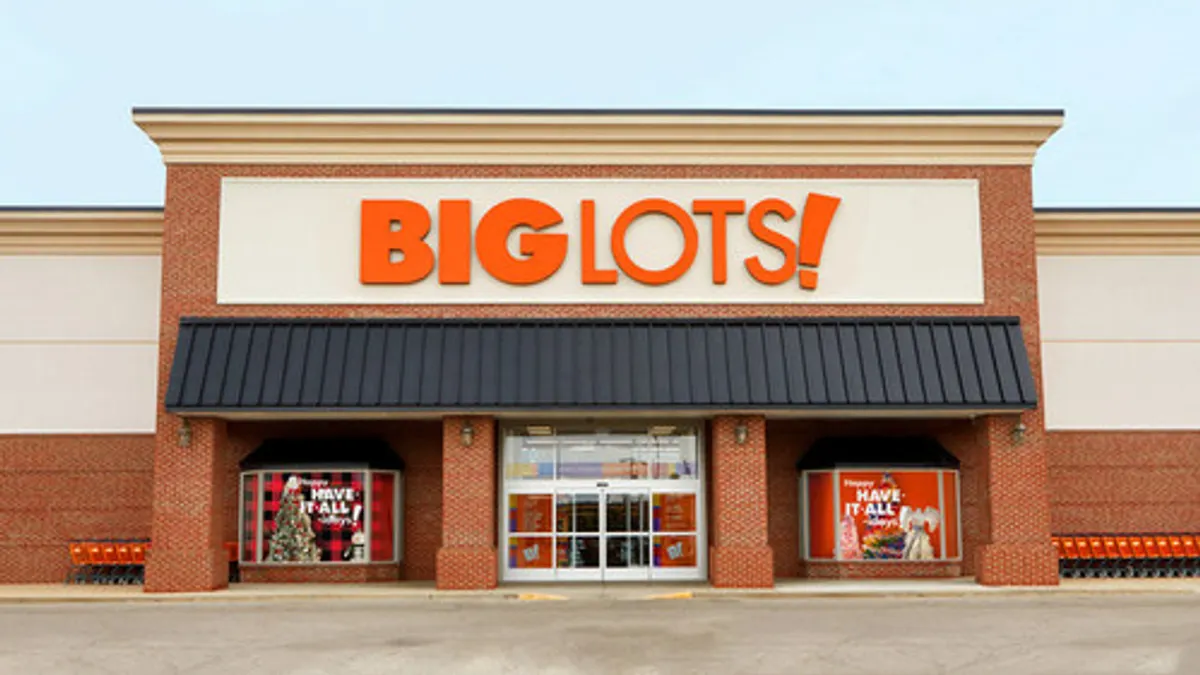
Big Lots’ team page does more than list executives. It lays out a softlines merchandising structure built around category expertise, with senior vice presidents, vice presidents, division merchandise managers and buyers assigned to specific parts of the business rather than one broad buying bucket.
That structure reaches deep into the assortment. The page names buyers for ladies tops, men’s and boys underwear, socks and hosiery, family accessories and handbags, kids basics, infants, newborn and toddlers, ladies sleep, lingerie and scrubs, men’s tops, pants, workwear, thermal and big men’s, ladies swim and outerwear, girls sizes 4-6X and 7-14, young men’s, women’s bottoms and plus bottoms, plus footwear, luggage, backpacks and girls accessories. For a chain like Big Lots, that level of split-up buying tells workers that what lands on the sales floor is being decided by people focused on narrow customer segments, not by a single catch-all merchant.

For store employees, that matters because merchandising is one of the clearest ways a retail career can move beyond operations. A cashier or department associate may never meet a buyer, but the buyer’s decisions shape what gets replenished, what brands get priority and how the mix balances across price points and categories. A store manager may never touch an assortment spreadsheet, but knowing how softlines is organized can sharpen conversations with district leaders and help explain to customers why some items arrive in waves while others disappear fast. The ladder can run from store leadership into category management, planning and corporate merchandising.
The scale behind that ladder was still sizable before Big Lots’ collapse. In a SEC filing, the company said it operated 1,392 stores in 48 states as of May 4, 2024, along with an e-commerce platform. Big Lots later filed voluntary Chapter 11 bankruptcy proceedings on September 9, 2024, in the U.S. Bankruptcy Court for the District of Delaware under Case No. 24-11967, and the cases were converted to Chapter 7 effective November 10, 2025.
That history gives the team page added weight. Big Lots traces its roots to 1967, when Sol Shenk founded the business that became Consolidated Stores in Columbus, Ohio. The chain grew around opportunistic buying and closeout merchandise, a model that made category specialists central to the business. By the time pressure from high interest rates, a sluggish housing market and weaker demand for furniture and home decor pushed the company into bankruptcy, the softlines structure on the team page showed how much of Big Lots’ day-to-day retail identity depended on people deciding, category by category, what deserved a place in stores.
This article was produced by Prism’s automated news system from verified source data, official records, and press releases, then run through automated quality and moderation checks before publishing. The system is built and supervised by the people who set the standards it runs under. Read our full AI policy.
Did this article answer your question?