Big Lots showcases store and corporate jobs across 17 states
Big Lots is hiring across stores and support centers, but the real signal is where the company is putting labor: field execution, category know-how, and a leaner corporate backbone.
Big Lots is hiring like a company still rebuilding its operating map
Big Lots’ current jobs page does more than list openings. It shows where the company thinks labor matters now: in stores, in support centers, and in the pathways that move people from one level to the next. The company says it is building an inclusive workplace where diverse abilities, experiences, opinions, and identities are valued, and that qualified people get opportunities for employment and advancement regardless of protected status.
That language matters, but so does the structure around it. Big Lots separates openings into store careers and store support center roles, which tells candidates this is not just a register-and-stock operation. It is trying to run a store network with a corporate spine behind it, and the jobs page is essentially a map of how that machine is supposed to work.
Where the jobs are: stores first, but not stores only
The clearest hiring signal is the store network. Big Lots says store jobs are available across more than 220 stores in 17 states, while the company’s store locator currently shows 219 locations. Those numbers are close enough to show scale, but not identical, which suggests the footprint is still being sorted out as the business resets.
On the jobs page, store openings span frontline and leadership work: store team members, cashiers, assistant managers, store managers, and district managers. That mix suggests the company is staffing both daily floor coverage and the layers of supervision needed to keep a discount chain moving with tighter payroll and more oversight.

For job seekers, the practical message is simple. If you want hands-on retail work, the opportunity is in the stores. If you want to grow into management, the ladder is visible enough to follow, from team member to assistant manager to store manager and beyond into district leadership.
The support-center split is a clue about how the company wants to operate
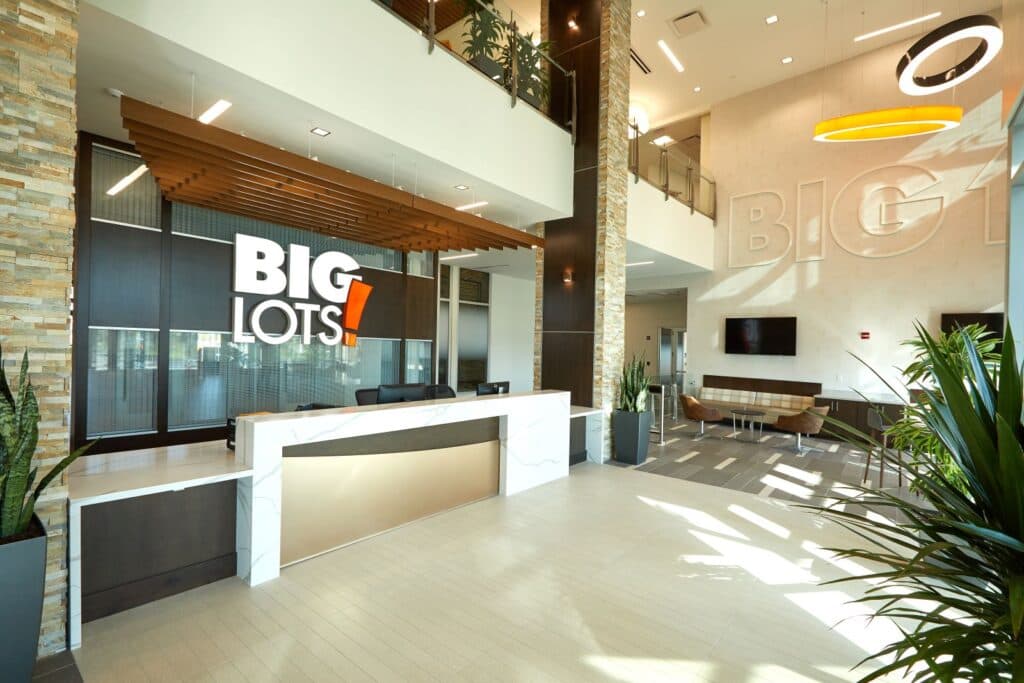
Big Lots also lists store support center roles in Columbus, Ohio, and Henderson, North Carolina. That geographic split is not just a mailing detail. It shows that the company is maintaining a dual-center structure, with corporate and operational support spread across two locations tied to the brand’s current shape.
The listed functions are a fairly complete cross-section of retail back-office work: merchandising, marketing, IT, finance, and human resources. In other words, the company is still investing in the systems that decide what gets bought, how it gets priced, how stores are kept running, and how employees are managed.
The Columbus and Henderson addresses reinforce that division. Big Lots’ headquarters is listed at 4900 E Dublin Granville Road in Columbus, and its P.O. Box is in Henderson. For employees, that signals where power and support sit inside the organization, and for applicants it suggests the best fit depends on whether your strengths are operational, analytical, or administrative.
Merchandising still looks specialized, not generic
One of the more revealing details on the current team page is the category language. Big Lots shows buyers and merchants across areas such as softlines, footwear, luggage, and accessories. That tells you the company is still treating merchandising as a specialized skill, not just a general retail function.
For store workers, that matters because it affects what shows up on the sales floor and how often the mix changes. If a company is organizing buyers by category, it is signaling that product selection, assortment planning, and category knowledge still shape the customer experience. That can create opportunity for employees who understand product flow, seasonal changeovers, and visual execution.
It also hints at what Big Lots values in internal advancement. Someone who learns a category, learns the systems behind it, and proves they can support the store model has a clearer path upward than someone who only stays inside one narrow task. The company’s own job architecture suggests mobility comes from building practical retail fluency, not just tenure.
What the 219-store restart says about the business
Big Lots says it was purchased out of bankruptcy in 2025 by Variety Wholesalers, which says it brings more than 70 years of discount retail experience to the brand. The company also says the new Big Lots will operate 219 stores in 15 states, concentrated across the Midwest, Southeast, and Mid-Atlantic.
That matters because it helps explain why the jobs page looks more expansive than the operating footprint description. The hiring language points to more than 220 stores in 17 states, while the company’s about page and store locator point to 219 stores in 15 states and 219 locations. Taken together, the message is that the brand is still in motion, and the staffing story is evolving along with the footprint.
Variety Wholesalers’ own history gives more context to the reset. The company says it traces its roots to 1930 and now operates more than 400 stores across 18 states under banners including Big Lots!, Roses Discount Stores, Roses Express, and Maxway. That kind of regional discount-retail experience is likely the reason Big Lots is leaning so hard on stores, inventory discipline, and support functions instead of trying to rebuild around a flashy corporate identity.
The backstory explains why labor strategy matters here
Big Lots’ current job mix looks easier to read once you remember how hard the company was squeezed before the reset. An Associated Press report from December 1, 2022 said Big Lots reported a fiscal third-quarter loss of $103 million, or $3.56 per share, on revenue of $1.2 billion. It also noted that the company’s shares had dropped 57% since the beginning of that year.
That kind of financial pressure tends to leave a mark on how a retailer staffs itself. It usually means tighter attention to labor efficiency, more reliance on versatile store teams, and stronger pressure on managers who can keep execution consistent across a reduced footprint. Big Lots’ current jobs page fits that pattern: it is broad enough to show opportunity, but structured enough to show control.
For candidates, the opening is real, but it is not generic. The best fit is likely someone who is comfortable with hands-on retail, category-driven merchandising, or back-office support that keeps stores running. For current employees, the clearest path upward appears to run through learning the business model from the floor up and proving you can help the company hold together as it rebuilds its store base.
Know something we missed? Have a correction or additional information?
Submit a Tip