Big Lots workers face strict EEOC deadlines for discrimination claims
A Big Lots complaint can lose force fast if the EEOC deadline slips. Workers need a clear paper trail, a timely charge, and a plan for what happens next.
Why the filing window matters at Big Lots
If a write-up, shift cut, denied accommodation, or firing feels tied to race, sex, pregnancy, disability, age, national origin, religion, genetic information, or retaliation, the EEOC clock is already running. The agency says a charge of discrimination is a signed statement asking it to take remedial action, and for most federal claims you must file that charge before you can sue. For Big Lots workers, that matters now because the company and its subsidiaries entered voluntary Chapter 11 proceedings on September 9, 2024, and a WARN notice said mass layoffs at the Columbus headquarters on 4900 East Dublin Granville Road were expected to begin the week of December 29, 2024 and continue through April 2025.

The practical takeaway is simple: do not wait to see whether HR, a supervisor, or a restructuring process makes the issue disappear. If the problem involves harassment, disability accommodations, pregnancy-related treatment, age bias, race discrimination, or retaliation after you complained, the legal deadline can arrive long before the workplace problem is resolved. That is especially true in a company-wide upheaval, where schedule changes, discipline, transfers, and layoffs can blur the line between ordinary business decisions and something unlawful.
What to document before the clock runs out
The most useful record is a contemporaneous one. Write down the date, time, place, who was involved, exactly what was said or done, and how the decision affected your pay, schedule, tasks, or standing. Save emails, text messages, schedule screenshots, performance notes, write-ups, witness names, accommodation requests, and any reply you received, because the EEOC’s portal lets users submit and receive documents and messages related to a charge.
If you complained internally, keep that trail too. Note when you reported the issue, to whom, what you asked for, and whether anything changed afterward, especially if a complaint was followed by more discipline, fewer hours, a harsher evaluation, or a sudden loss of desirable shifts. Retaliation is one of the claims the EEOC explicitly covers, so the sequence of events can matter as much as the original insult.
When to file, and why the deadline is stricter than many workers expect
The EEOC says the general filing deadline is 180 calendar days from the discriminatory act. That deadline can stretch to 300 calendar days if a state or local agency enforces a law on the same basis, but the age-discrimination rules are narrower, because the 300-day extension applies only if state law and a state agency cover age bias. In plain terms, workers should assume the shortest timeline until they confirm otherwise.
That deadline rule is why an internal complaint is not the same thing as an EEOC charge. Even if you are still trying to solve the issue inside the company, the charge clock keeps moving. Waiting for a final answer from management, a bankruptcy administrator, or a district-level appeal can cost you the right to pursue a federal claim later.
How the EEOC Public Portal changes the first step
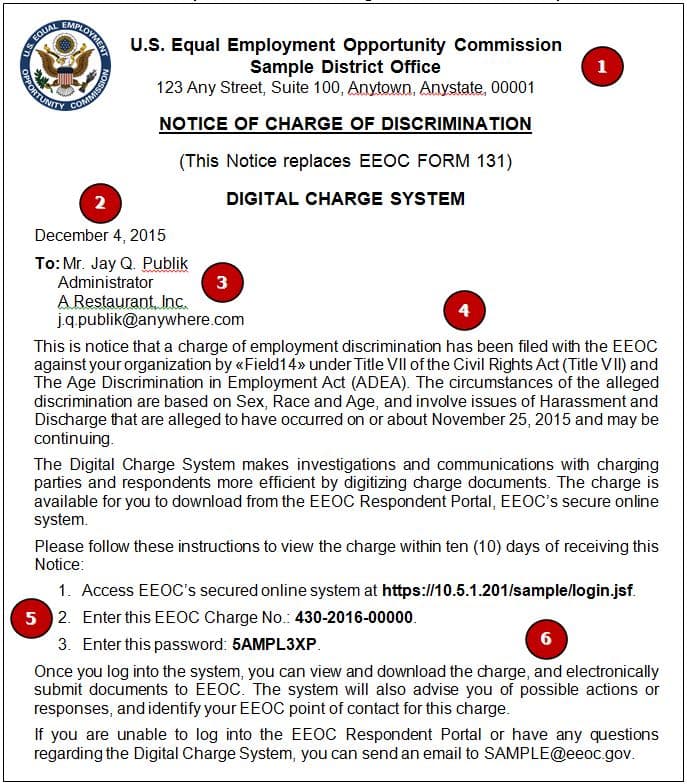
The EEOC Public Portal gives workers a way to start with an online inquiry and request an intake interview, rather than beginning with a paper form or an in-person visit. The agency says the portal also allows users to submit and receive documents and messages connected to the charge, and the system now uses Login.gov for secure sign-in. It launched nationwide on November 1, 2017, so it is now the standard front door for many private-sector complaints.
The portal does not replace the charge itself; it helps get you there. The EEOC says a Charge of Discrimination can be completed after you submit an online inquiry and complete an interview, and the agency requires notice to the employer once a charge is filed. For a worker balancing shifts, stress, and possible layoffs, that matters because the first filing step can be done without waiting for a perfect moment that may never come.
What happens after a charge is submitted
After filing, the case may move into mediation or investigation. EEOC says mediation is voluntary, and if either side declines it, the charge goes to an investigator; if the matter is investigated, both the employee and the employer can be asked to provide information, including a position statement from the employer. Mediation can resolve a case quickly, but if EEOC cannot conclude there is reasonable cause to believe discrimination occurred, it issues a Dismissal and Notice of Rights that tells the worker about the right to sue in federal court within 90 days of receipt.
That process is not a finding against the employer by itself. It is a formal review path, and the results can range from voluntary settlement to conciliation, dismissal, or a right-to-sue notice depending on the statute and the facts. In some cases, the lawsuit rules differ by law, but the key point for most Big Lots workers is that filing the charge is the gatekeeper step that preserves later options.
Pregnancy-related limits deserve the same urgency
Workers dealing with pregnancy, childbirth, or related medical conditions should pay special attention to the EEOC’s 2024 Pregnant Workers Fairness Act rule. The rule says a covered employer must provide reasonable accommodations for known limitations related to pregnancy unless the accommodation would create an undue hardship. That can cover issues that look routine on the floor, such as lifting, standing, hydration, bathroom breaks, or temporary schedule changes.
For a Big Lots worker, the safest approach is to treat pregnancy-related accommodation requests like any other protected issue: make the request in writing if possible, keep the response, and document any discipline or shift changes that follow. The same documentation that helps a race or retaliation claim can also show whether a pregnancy-related request was handled fairly or became the trigger for trouble.
The bottom line
Big Lots’ bankruptcy and layoff pressure do not lengthen EEOC deadlines, and they do not make a charge less important. If a protected problem shows up, the worker who keeps a tight paper trail, files within 180 days, or 300 days where the law allows it, and uses the EEOC portal to move the case forward is in the best position to preserve rights. In a restructuring, that kind of discipline is often the difference between a complaint that survives and one that expires on the calendar.
This article was produced by Prism’s automated news system from verified source data, official records, and press releases, then run through automated quality and moderation checks before publishing. The system is built and supervised by the people who set the standards it runs under. Read our full AI policy.
Did this article answer your question?